
Business
NBS to Normalise December 2025 Inflation Data


The NBS will normalise December 2025 inflation data, correcting base effects from CPI rebasing for accurate economic reporting

The National Bureau of Statistics (NBS) has announced plans to normalise Nigeria’s inflation data for December 2025 following a projected spike in the Consumer Price Index (CPI), which the Bureau attributed to statistical base effects rather than underlying economic conditions.
Also read: Headline Inflation Reduces To 15.99% In October — NBS
The clarification came during a virtual engagement on Monday convened by the NBS and the Nigerian Economic Summit Group (NESG).
Statistician General of the Federation and NBS CEO, Adeyemi Adeniran, explained that the spike stems from the rebasing of the CPI to 2024 as the new base year, marking the first rebasing since 2009.
“Base effects are common in statistical practice, particularly when comparing data across periods with unusually high or low prices. The expected spike in December 2025 arises from this arithmetic effect and is not reflective of structural economic changes,” Adeniran said.
The NBS will apply a normalisation process, using the average CPI from January to December 2024 as the reference period, instead of equating December 2024 to 100.
This adjustment, in line with the CPI Manual 2020, aims to remove artificial distortions and provide a clearer picture of inflation trends.
Dr Ayo Anthony, Director of Price Statistics at NBS, outlined methodological changes resulting from the rebasing, which introduced over 400 new products into the CPI basket and removed more than 200 items, reflecting evolving consumption patterns.
Anthony noted that without adjustment, December 2025 inflation could appear artificially high.
NESG CEO Dr Tayo Aduloju emphasised the importance of credible CPI data for policy formulation, stating that misleading inflation signals could undermine macroeconomic stability as Nigeria transitions from stabilisation to consolidation reforms.
While the normalisation affects published figures from January to December 2025, the NBS assured stakeholders that the impact is minor and will be clearly communicated.
From January 2026 onwards, the base effect will no longer influence CPI calculations, as comparisons will rely solely on actual rebased index values.
However, some economists expressed concerns over credibility.
Former Zenith Bank chief economist Marcel Okeke warned that adjusting figures could undermine confidence and comparability with other economies.
Investment banker Adetilewa Adebajo
echoed these concerns, questioning how inflation could appear to double from November to December without reflecting real price changes.
The NBS affirmed that the normalisation follows global best practices, with consultations from the IMF, World Bank, and Central Bank of Nigeria.
Also read: Access Bank and the Rebirth of the National Theatre: Revitalising Nigeria’s Cultural Future
Adeniran stressed the importance of regular rebasing to avoid distortions and improve the accuracy of economic indicators.




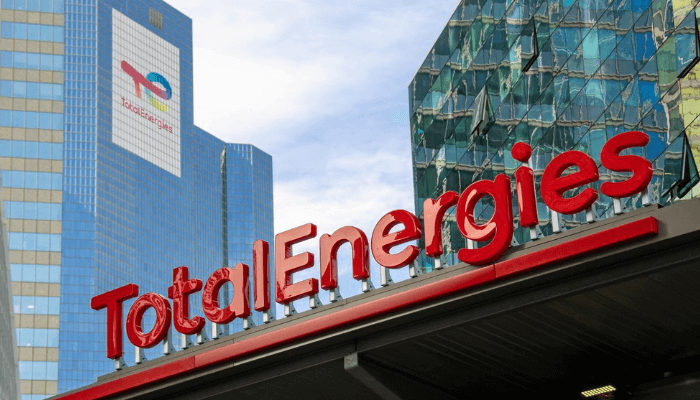
TotalEnergies and Nigerian independent energy company AMNI International have taken the Final Investment Decision on the $800 million Ima Gas Project, more than five decades after the gas field was discovered.
The Ima Gas Project, located in shallow waters across Oil Mining Leases 112 and 117 near Bonny Island, Rivers State, is expected to begin production in 2028 and reach a plateau of 350 million cubic feet of gas per day.
The development is expected to play a major role in supplying feed gas to Nigeria LNG, with the Ima field projected to provide about one-third of the additional gas required for the ongoing Train 7 expansion.
Train 7 is expected to increase Nigeria LNG’s liquefaction capacity from 22 million tonnes per annum to 30 million tonnes per annum, strengthening Nigeria’s capacity to process and export liquefied natural gas.
The Ima field was discovered in 1973 but remained undeveloped for more than 50 years. The Final Investment Decision provides the commercial and financial basis for finally developing the long-dormant resource.
Under the development plan, TotalEnergies will operate the project with a 40 per cent interest, while AMNI will hold the remaining 60 per cent.
The field will be developed using a single offshore platform connected to Nigeria LNG’s facility on Bonny Island through a 22-kilometre pipeline.
TotalEnergies said its investment in the project is more than $600 million, while the Federal Government described the overall Final Investment Decision as an $800 million investment.
At the FID signing ceremony in Abuja, TotalEnergies Exploration and Production Nigeria Managing Director, Mathieu Bouyer, described the decision as the culmination of a development process that had stretched across several decades.
He said the project reflected increased confidence in Nigeria’s investment environment and highlighted reforms targeting the non-associated gas sector as part of the factors that helped make the development commercially viable.
President Bola Tinubu welcomed the investment, saying the project demonstrated the potential of reforms introduced to reduce the cost and time required to develop oil and gas projects.
The President said the government had introduced incentives aimed specifically at unlocking onshore and shallow-water gas projects that had remained undeveloped for years.
He said the Ima development would create opportunities for Nigerian businesses, engineers, technicians and contractors, while generating jobs, economic activity in host communities and additional export earnings.
The project is also expected to have a strong Nigerian content component. TotalEnergies said all key contractors for the development would be Nigerian companies, while about 60 per cent of the workforce during the development phase is expected to come from host communities.
The development will incorporate measures aimed at reducing emissions. TotalEnergies said the platform would receive electricity from shore, operate without routine flaring and use permanent methane detection and monitoring systems.
The Federal Government said the project is part of efforts to turn Nigeria’s large natural gas reserves into productive assets capable of supporting industrialisation, energy supply, jobs and export earnings.
Special Adviser to the President on Energy, Olu Verheijen, said the Ima development illustrated the importance of creating commercial and investment conditions that allow previously stranded resources to be developed.
The government also noted that Nigerian financial institutions arranged 77 per cent of the project’s financing, further highlighting the participation of domestic financial institutions in the development.
For Nigeria LNG, the project comes as the company continues work on the Train 7 expansion, which is designed to increase the Bonny Island plant’s liquefaction capacity and strengthen the country’s position in the global LNG market.

-
Politics3 years ago
13 Ondo Assembly Members Disown Endorsement of Aiyedatiwa
-
Politics3 years ago
APC Group, Ondo Govt, Quarrel Over Money for Endorsement
-

 Trending News5 years ago
Stop unsavoury, inciting statements – DSS warns
-

 Others5 years ago
Adron Homes Celebrates 10 Years Of Housing Excellence
-

 Humanity5 years ago
President Buhari Commiserates With Ambassador Maureen Tamuno Over The Loss Of Her Father
-

 Others7 years ago
EX- CUSTOMS BOSS, IBRAHIM MERA’S DWINDLING FAME
-

 Business2 years ago
Bigi Carbonated Soft Drinks Treats 40 Consumers to an Epic Easter Movie Hangout
-

 Business2 years ago
Wema Bank Shines at Global SME Finance Forum Conference Awards 2024 …Awarded: • SME Financier of the Year (Africa) • Platinum Award for Best Financier for Women Entrepreneurs (Africa)