Business
Headline Inflation Reduces To 15.99% In October — NBS

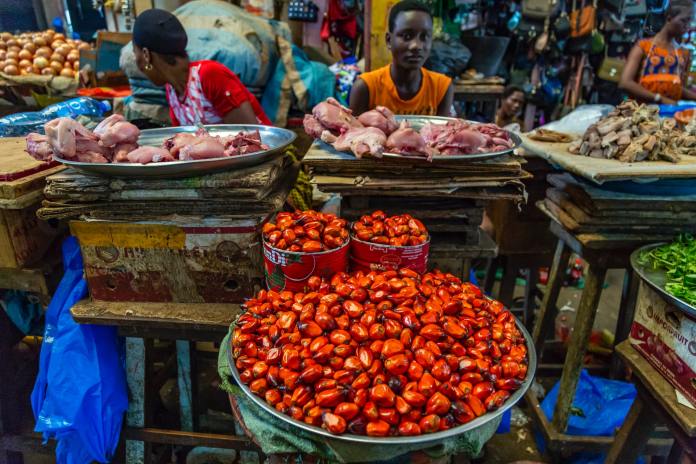
Nigeria’s headline inflation declined for the seventh consecutive month to 15.99 per cent in October, Mr Simon Harry, the Statistician-General of the Federation has said.

He said this on Monday in Abuja at a media conference while presenting the October Consumer Price Index (CPI).
According to Harry, the headline inflation reduced from 16.63 per cent recorded in September, indicating a 0.64 per cent decline.
He said, “With this it means that the declining trend for about seven months portends a positive signal given the favourable economic conditions, that rate of inflation in Nigeria would come down to a bearable level.
“So we are hoping that necessary measures will be put in place by government policymaking bodies to maintain this trend.”
Harry, however, said that it was not expected that the downward trend of the inflation figures would be affected by disruptions to economic activities due to violence in some parts of the country.
He added that it was rather very difficult to have such consecutive decline in the trend affected, except there was a shock in the system.
“We pray that there would be no shock to change the narrative and as long as there is no shock we expect that the decline would continue and the inflation rate would continue to decrease rather than remain static or increase,” he said.
Headline Inflation Reduces To 15.99% In October
The report indicates that the headline index increased by 0.98 per cent in October, indicating a 0.17 per cent decline than the 1.15 per cent recorded in September.
It also said the percentage change in the average composite CPI for the 12 months period ending in October over the average of the CPI for the previous 12 months period was 16.96 per cent, showing 0.13 per cent point from 16.83 per cent recorded in September.
It said, “The urban inflation rate increased by 16.52 per cent (year-on-year) in October 2021 from 14.81 per cent recorded in October 2020, while the rural inflation rate increased by 15.48 per cent in October 2021 from 13.68 per cent in October 2020.
“On a month-on-month basis, the urban index rose by 1.02 per cent in October, down by 0.19 per cent than the rate recorded in September (1.21) percent, while the rural index also rose by 0.95 per cent in October, down by 0.15 per cent than what was recorded in September (1.10) per cent.”
The NBS said that composite food index rose by 18.34 per cent in October 2021 compared with 17.38 per cent in October 2020.
It added that the rise in the food index was caused by increase in prices of food products such as coffee, tea and cocoa, milk, cheese and eggs, bread and cereals, vegetables and potatoes, yam and other tuber.
However, on month-on-month basis, the food sub-index increased by 0.91 per cent in October, down by 0.35 per cent points from 1.26 per cent recorded in September.
The ‘’All items less farm produce’’ or Core inflation, which excludes the prices of volatile agricultural produce stood at 13.24 per cent in October, up by 2.10 per cent points when compared with 11.14 per cent recorded in October.
According to the report, on month-on-month basis, the core sub-index increased by 0.80 per cent in October, down by 0.44 per cent point when compared with 1.24 per cent recorded in September.
“The highest increases were recorded in prices of gas, fuels and lubricants for personal transport equipment, vehicle spare parts, non-durable household goods, solid fuel, passenger transport by road, passenger transport by air, garments and cleaning.
“Others are repair and hire of clothing, major household appliances whether electric or not, wine, clothing materials, other articles of clothing and clothing accessories and Liquid fuel,” it said.
For state profiles, the report said that for the month under review, all items inflation on a year-on-year basis was highest in Bauchi at 19.63 per cent, Gombe at 19.33 per cent and Jigawa at 19.07 per cent.
Meanwhile, Kwara at 11.82 per cent, Edo at 13.31 per cent, and Rivers at 13.66 per cent recorded the slowest rise in headline year-on-year inflation.
On a month-on-month basis, however, October 2021, recorded the highest increases in Cross River at 2.14 per cent, Benue/Kebbi tied at 2.02 percent and Yobe 1.71.
The slowest rise in inflation for all item occurred in Adamawa at 0.18 per cent with Kano and Kogi recording price deflation or negative inflation (general decrease in the prices of goods and services or a negative inflation rate).
The report also said that food inflation on a year-on-year basis was highest in Kogi at 23.69 per cent, Gombe at 23.29 per cent and Jigawa at 21.91 per cent, while Edo at 13.16 per cent, Rivers 14.46 per cent and Adamawa at 15.42 per cent recorded the slowest rise in year on year food inflation.
On month-on-month basis, food inflation was highest in Kebbi at 2.29 per cent, Yobe at 2.23 per cent and Akwa Ibom at 2.16 per cent with Kano, Kogi, Osun and Oyo recording price deflation or negative inflation.
The CPI measures the average change over time in prices of goods and services consumed by people for day-to-day living.




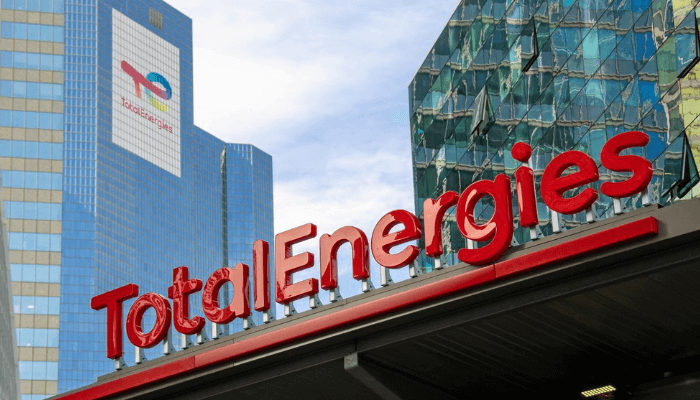
TotalEnergies and Nigerian independent energy company AMNI International have taken the Final Investment Decision on the $800 million Ima Gas Project, more than five decades after the gas field was discovered.
The Ima Gas Project, located in shallow waters across Oil Mining Leases 112 and 117 near Bonny Island, Rivers State, is expected to begin production in 2028 and reach a plateau of 350 million cubic feet of gas per day.
The development is expected to play a major role in supplying feed gas to Nigeria LNG, with the Ima field projected to provide about one-third of the additional gas required for the ongoing Train 7 expansion.
Train 7 is expected to increase Nigeria LNG’s liquefaction capacity from 22 million tonnes per annum to 30 million tonnes per annum, strengthening Nigeria’s capacity to process and export liquefied natural gas.
The Ima field was discovered in 1973 but remained undeveloped for more than 50 years. The Final Investment Decision provides the commercial and financial basis for finally developing the long-dormant resource.
Under the development plan, TotalEnergies will operate the project with a 40 per cent interest, while AMNI will hold the remaining 60 per cent.
The field will be developed using a single offshore platform connected to Nigeria LNG’s facility on Bonny Island through a 22-kilometre pipeline.
TotalEnergies said its investment in the project is more than $600 million, while the Federal Government described the overall Final Investment Decision as an $800 million investment.
At the FID signing ceremony in Abuja, TotalEnergies Exploration and Production Nigeria Managing Director, Mathieu Bouyer, described the decision as the culmination of a development process that had stretched across several decades.
He said the project reflected increased confidence in Nigeria’s investment environment and highlighted reforms targeting the non-associated gas sector as part of the factors that helped make the development commercially viable.
President Bola Tinubu welcomed the investment, saying the project demonstrated the potential of reforms introduced to reduce the cost and time required to develop oil and gas projects.
The President said the government had introduced incentives aimed specifically at unlocking onshore and shallow-water gas projects that had remained undeveloped for years.
He said the Ima development would create opportunities for Nigerian businesses, engineers, technicians and contractors, while generating jobs, economic activity in host communities and additional export earnings.
The project is also expected to have a strong Nigerian content component. TotalEnergies said all key contractors for the development would be Nigerian companies, while about 60 per cent of the workforce during the development phase is expected to come from host communities.
The development will incorporate measures aimed at reducing emissions. TotalEnergies said the platform would receive electricity from shore, operate without routine flaring and use permanent methane detection and monitoring systems.
The Federal Government said the project is part of efforts to turn Nigeria’s large natural gas reserves into productive assets capable of supporting industrialisation, energy supply, jobs and export earnings.
Special Adviser to the President on Energy, Olu Verheijen, said the Ima development illustrated the importance of creating commercial and investment conditions that allow previously stranded resources to be developed.
The government also noted that Nigerian financial institutions arranged 77 per cent of the project’s financing, further highlighting the participation of domestic financial institutions in the development.
For Nigeria LNG, the project comes as the company continues work on the Train 7 expansion, which is designed to increase the Bonny Island plant’s liquefaction capacity and strengthen the country’s position in the global LNG market.

-
Politics3 years ago
13 Ondo Assembly Members Disown Endorsement of Aiyedatiwa
-
Politics3 years ago
APC Group, Ondo Govt, Quarrel Over Money for Endorsement
-

 Trending News5 years ago
Stop unsavoury, inciting statements – DSS warns
-

 Others5 years ago
Adron Homes Celebrates 10 Years Of Housing Excellence
-

 Humanity5 years ago
President Buhari Commiserates With Ambassador Maureen Tamuno Over The Loss Of Her Father
-

 Others7 years ago
EX- CUSTOMS BOSS, IBRAHIM MERA’S DWINDLING FAME
-

 Business2 years ago
Bigi Carbonated Soft Drinks Treats 40 Consumers to an Epic Easter Movie Hangout
-

 Business2 years ago
Wema Bank Shines at Global SME Finance Forum Conference Awards 2024 …Awarded: • SME Financier of the Year (Africa) • Platinum Award for Best Financier for Women Entrepreneurs (Africa)