
News
MAN Targets Lower Factory Energy Costs at Lagos Summit

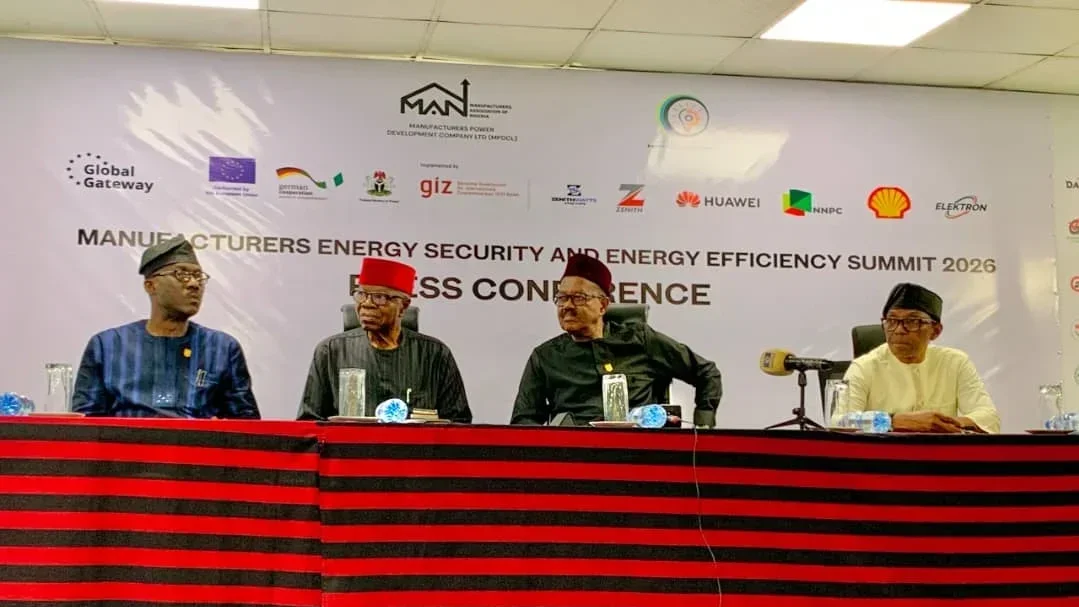
MAN energy efficiency summit opens in Lagos to explore cheaper power, alternative energy and financing solutions for Nigerian manufacturers

The Manufacturers Association of Nigeria (MAN), led by its President, Dr Ifeanyi Okoye, is convening a two-day energy security and efficiency summit in Ikeja, Lagos, on Tuesday, November 3, 2026, to address rising industrial energy costs and attract investment in alternative power solutions.
Also read: Ondo police uncover suspected fake dollar factory, arrest one
The meeting, organised through the association’s power and energy subsidiary, Manufacturers Power Development Company Ltd (MPDCL), in partnership with the German Development Agency (GIZ) and the Nigerian Energy Support Programme (NESP), will hold at Legend Hotel Lagos Airport.
The summit, themed “Innovative Energy for Cost-Effective Smart Manufacturing with Structured Financing”, will bring together manufacturers, policymakers, regulators, technology providers, development partners and financial institutions to examine practical ways of improving industrial energy security and reducing production costs.
The gathering comes as energy expenses continue to weigh heavily on Nigerian manufacturers, many of whom rely on diesel, gas and other self-generation options to keep their factories running when public electricity supply is inadequate.
Okoye identified high electricity tariffs, unreliable grid supply, fuel price volatility and dependence on expensive self-generation as major obstacles to industrial competitiveness.
He warned that these pressures also contribute to inflation, restrict job creation and make it harder for Nigerian businesses to benefit from opportunities under the African Continental Free Trade Area.
“To build a resilient, self-sustaining economy, we must address these challenges through a multi-faceted approach by expanding our energy infrastructure, accelerating energy efficiency adoption, diversifying industrial energy sources, and forging deep public-private capital partnerships,” he said.
The scale of the challenge is reflected in figures reported by industry sources.
Nigerian manufacturers spent about ₦1.35 trillion on alternative power generation in 2025, compared with approximately ₦1.11 trillion in 2024, according to figures attributed to MAN.
The rising expenditure highlights the financial burden of maintaining production with privately sourced electricity.
MAN Director-General, Segun Ajayi-Kadir, has also put energy costs at about 40 per cent of manufacturing expenses in Nigeria, compared with between five and 10 per cent in some other African countries.
The association says the disparity threatens the ability of local producers to compete across the continent.
Ajayi-Kadir said previous editions of the summit had helped manufacturers engage with energy solution providers and encouraged greater adoption of off-grid power systems.
He identified investment mobilisation as a central objective of the forthcoming discussions, noting that inadequate capital in the power sector and an unfavourable business environment had restricted investment, particularly from foreign investors.
Beyond discussions, the summit is expected to provide a platform for the launch of MAN’s Industrial Energy Cost Reduction and Adoption Programme. The initiative is designed to accelerate the adoption of cleaner and more efficient power systems across manufacturing facilities.
The programme will cover rooftop solar photovoltaic systems, battery energy storage, captive natural gas-to-power and green hydrogen solutions.
It will also explore access to carbon credits and financing mechanisms to help businesses manage the initial costs of switching to alternative energy.
According to Okoye, the initiative will support factory solarisation and wider clean-energy integration, while a case study has already been identified in Nkpor, Anambra State.
The summit will also feature technical masterclasses, energy technology demonstrations, business-to-business meetings and structured financing discussions.
Other areas expected to receive attention include smart manufacturing technologies, artificial intelligence applications, energy efficiency networks, net-metering policies and the development of decentralised electricity markets.
However, the scale of adoption will depend on whether manufacturers can secure affordable financing for equipment, installation and maintenance.
Solar panels and battery systems require substantial upfront investment, while the conversion of existing factory machinery and production facilities can add to the cost.
The summit therefore places financing alongside technology and energy supply as key parts of the industry’s response to rising costs.
Its outcome will be measured not only by the solutions presented but also by manufacturers’ ability to implement them and achieve sustained reductions in operating expenses.
Also read: Ondo police uncover suspected fake dollar factory, arrest one
For MAN, improving access to reliable and affordable energy remains central to strengthening domestic manufacturing, expanding production and positioning Nigerian businesses to compete more effectively in regional and international markets.



Niger NSCDC Commandant warns of fresh danger after 34 miners died in custody, alleging illegal miners have regrouped and are threatening residents.
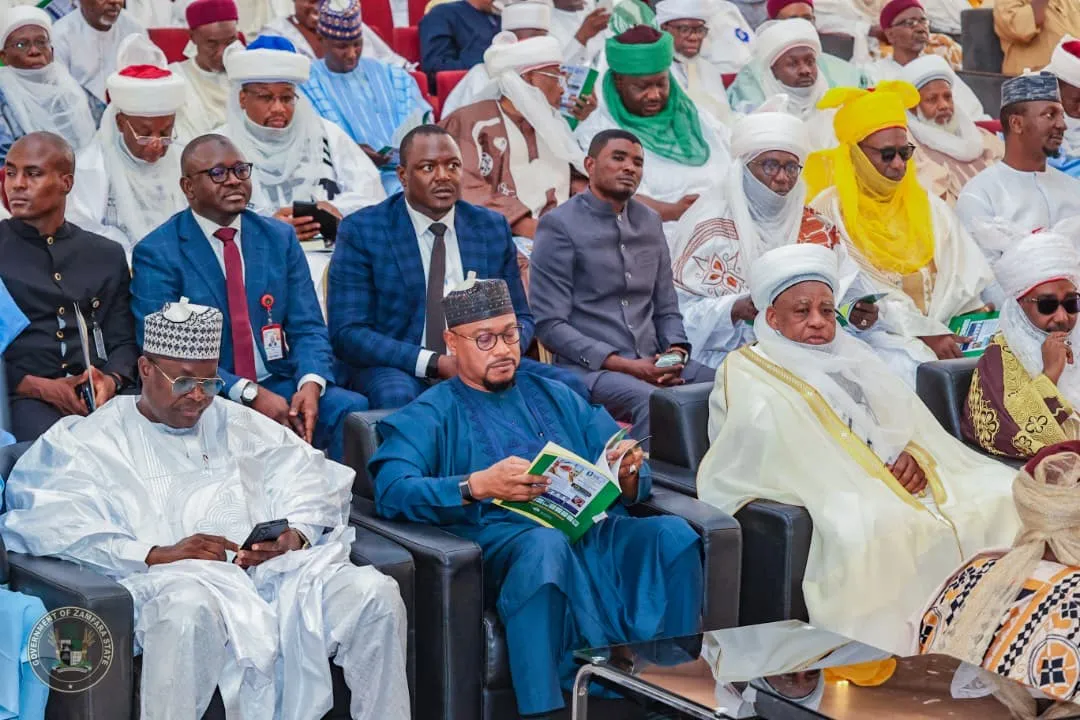
Dauda Lawal hails the Sultan of Sokoto at his 20th anniversary, praising his leadership and calling for peace, justice and social harmony

BUA Foods profit rose 11% to N450.47bn in nine months as lower production costs lifted margins despite a 19% revenue decline
-
Politics3 years ago
13 Ondo Assembly Members Disown Endorsement of Aiyedatiwa
-
Politics3 years ago
APC Group, Ondo Govt, Quarrel Over Money for Endorsement
-

 Trending News6 years ago
Stop unsavoury, inciting statements – DSS warns
-

 Others5 years ago
Adron Homes Celebrates 10 Years Of Housing Excellence
-

 Humanity5 years ago
President Buhari Commiserates With Ambassador Maureen Tamuno Over The Loss Of Her Father
-

 Others7 years ago
EX- CUSTOMS BOSS, IBRAHIM MERA’S DWINDLING FAME
-

 Business3 years ago
Bigi Carbonated Soft Drinks Treats 40 Consumers to an Epic Easter Movie Hangout
-

 Business2 years ago
Wema Bank Shines at Global SME Finance Forum Conference Awards 2024 …Awarded: • SME Financier of the Year (Africa) • Platinum Award for Best Financier for Women Entrepreneurs (Africa)