
Business
Fidelity Bank Names Amuchie CEO After Strong Growth


Fidelity Bank CEO Amuchie takes over in January 2027 as Nneka Onyeali-Ikpe exits after five years of strong earnings, expansion and transformation
Fidelity Bank Plc has appointed Stanley Chiedoziem Amuchie as its next Managing Director and Chief Executive Officer, marking a leadership transition at the Nigerian lender after five years of significant earnings growth, capital expansion and international business development under outgoing chief executive Nneka Onyeali-Ikpe.
Also read:Gombe Plans N3.6bn Hospital for Billiri

Amuchie, currently the bank’s Executive Director and Chief Operations and Information Officer, will assume office on January 1, 2027, following approval by the Central Bank of Nigeria (CBN). He will succeed Onyeali-Ikpe, whose tenure ends on December 31, 2026.
The appointment, announced on November 19, 2026, follows a succession process overseen by the bank’s board and signals its preference for continuity as Fidelity Bank consolidates its recent expansion, strengthens its capital base and pursues further growth in digital and international banking.
The transition also places an executive who has been closely involved in the bank’s operations, technology, capital raising and international expansion at the centre of its next strategic phase.

Amuchie’s appointment comes as Onyeali-Ikpe prepares to leave behind a record of substantial financial growth. She joined Fidelity Bank’s board in 2015 as Executive Director for the Lagos and South-West Directorate before becoming Managing Director and CEO on January 1, 2021.
During her tenure, she pursued a seven-point strategy centred on brand repositioning, performance discipline, digital transformation, workforce development, service excellence, innovation and accelerated growth.
The bank’s reported financial performance illustrates the scale of the transformation. Profit before tax increased from ₦28.1bn in 2020 to ₦347.7bn in 2025, representing a compound annual growth rate of 65.4 per cent, according to figures released by the bank.
Return on average equity rose from 10.5 per cent to 24.4 per cent over the same period, while customer deposits expanded from ₦1.699tn to ₦6.891tn.
The bank’s loan portfolio also grew, with net loans and advances increasing from ₦1.326tn in 2020 to ₦4.282tn in 2025. Its customer base more than doubled from approximately 5.7 million to over 12 million accounts, reflecting increased business activity and customer acquisition.
Fidelity Bank’s capital position was also strengthened through a series of fundraising exercises designed to support growth and comply with the CBN’s revised capital requirements.
In 2024, the bank raised approximately ₦175.85bn through a public offer and rights issue, followed by a private placement of about ₦227.045bn in 2025.
The combined equity proceeds from the exercises amounted to approximately ₦402.9bn, providing additional capacity for lending, expansion and strategic investment.
Its international expansion was another defining feature of Onyeali-Ikpe’s tenure. In July 2023, Fidelity Bank completed the acquisition of Union Bank UK, subsequently rebranded as FidBank UK, giving the Nigerian lender a stronger foothold in the British market and expanding its capacity to support international transactions.
The UK subsidiary provides a platform for cross-border banking, trade finance and investment connections between Nigeria, the United Kingdom and other markets.
The bank also pursued initiatives aimed at connecting Nigerian businesses to international markets through its Fidelity Nigeria International Trade and Creative Connect programme, which has hosted business engagements in London, Houston and Atlanta.
Beyond large-scale banking and corporate expansion, the lender has supported small and medium-sized businesses through training initiatives and community-focused programmes, including its SME Hub and Fidelity Food Bank.
These programmes form part of a wider strategy to combine commercial growth with financial inclusion, enterprise development and social intervention.
Onyeali-Ikpe’s exit comes after a period of increased visibility for the bank and its leadership. She received the national honour of Officer of the Order of the Niger (OON) in 2023 and was recognised in the banking industry for her leadership and contributions to financial services.
The board has expressed appreciation for her service, crediting her with strengthening the bank’s market position, improving competitiveness and expanding its strategic reach.
Amuchie, however, will inherit a bank facing a different set of priorities. Nigeria’s banking industry is navigating recapitalisation requirements, increasing competition from digital financial institutions, evolving customer expectations, cybersecurity risks and pressure to improve operational efficiency.
His background in finance, banking operations, technology and corporate strategy is expected to shape how Fidelity Bank responds to these challenges.
The incoming CEO brings more than three decades of financial services experience, having begun his professional career at Arthur Andersen, now KPMG Professional Services, in September 1995.
He joined Zenith Bank in February 2000, where he spent more than 18 years rising through several management positions. He eventually became Group Chief Financial Officer in July 2015 before later serving as Group Zonal Head.
During his time at Zenith, he was involved in financial management, strategic planning, capital markets transactions and international operations.
His experience in capital markets includes involvement in Zenith Bank’s listing on the Nigerian Stock Exchange, its London Stock Exchange Global Depositary Receipts listing and international bond transactions.
Amuchie joined Fidelity Bank in March 2021 as Chief Technical Consultant before being appointed to the board as Executive Director and Chief Operations and Information Officer in January 2022.
In that role, he oversaw a broad operational portfolio, including information technology, banking operations, treasury, financial control, corporate finance and investor relations, while contributing to the bank’s expansion and technology-driven transformation.
He was also involved in the acquisition of Union Bank UK and Fidelity Bank’s capital-raising programme, as well as its $400m Eurobond refinancing initiative.
The bank said the refinancing helped improve funding costs and supported its financial position.
His digital banking experience is another area likely to influence the next phase of the lender’s strategy.
Fidelity Bank has invested in process automation, digital payments, self-service banking, technology infrastructure and cybersecurity as transaction volumes and customer demand for digital services increase.
Amuchie’s appointment therefore represents more than a change at the top.
It places an executive with direct knowledge of the bank’s systems, financial structure and expansion plans in charge of executing the next stage of its development.
Academically, he holds a First Class degree in Industrial Chemistry from the University of Benin, where he was reportedly the best graduating student in his department.
He also obtained a Master’s degree in Corporate Governance from Leeds Metropolitan University, now Leeds Beckett University, in the United Kingdom.
He is pursuing a doctorate in Management of Technology and Innovation at the University of Nigeria, Nsukka, and is a Fellow of the Institute of Chartered Accountants of Nigeria, as well as an Honorary Senior Member of the Chartered Institute of Bankers of Nigeria.
He has also attended executive programmes at Harvard Business School, Wharton, INSEAD and Lagos Business School.
Fidelity Bank’s board chairman, Amaka Onwughalu, said the appointment reflected the board’s confidence in Amuchie’s leadership ability, strategic insight, industry experience and understanding of the institution.
“We are confident that he will provide the leadership required to consolidate our achievements and drive the Bank’s next phase of growth,” Onwughalu said.
The succession was also anticipated during the bank’s 38th Annual General Meeting on October 9, when shareholders sought clarity on the transition. The board had indicated that its succession planning committee was managing the process before Amuchie’s appointment was formally announced.
With regulatory approval secured and the transition date established, Fidelity Bank is preparing for a leadership change designed to preserve institutional continuity while responding to the demands of a rapidly changing financial sector.
Onyeali-Ikpe leaves after a period of strong earnings growth, increased customer reach and international expansion. Amuchie now faces the challenge of sustaining that momentum while finding new opportunities for profitability, technology adoption and long-term shareholder value.
Also read:Gombe Plans N3.6bn Hospital for Billiri
The success of the transition will ultimately depend not only on maintaining the bank’s recent performance, but also on how effectively the incoming CEO converts its strengthened financial position and expanded capabilities into durable growth in an increasingly competitive banking market.


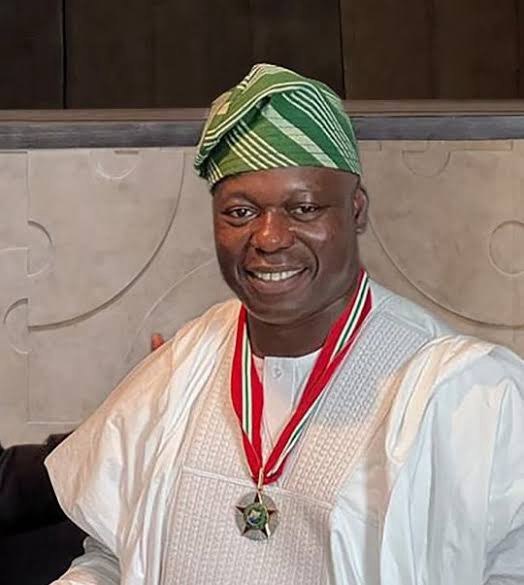
Oando Plc, under the leadership of its Group Chief Executive, Jubril Adewale Tinubu, has recorded a significant improvement in its operating performance, returning to profitability at the operating level as revenue rose to ₦2.78 trillion in the first nine months of 2026.
The indigenous energy company reported revenue of ₦2.776 trillion for the nine months ended September 30, 2026, representing a nine per cent increase from the ₦2.541 trillion recorded during the corresponding period of 2025.
The latest unaudited results, released on October 30, also showed a substantial recovery in gross profit, which increased to ₦174.5 billion from ₦29.8 billion in the previous year.
One of the most notable developments was the company’s return to operating profit. Oando recorded an operating profit of ₦159.7 billion, reversing the operating loss of ₦109.7 billion reported in the corresponding period of 2025.
The improvement reflects stronger performance across its operations, supported by higher production volumes, improved realised prices and the absence of a significant fair value loss recorded in the previous year.
The figures provide an indication of the progress made by the company as it continues to pursue its expansion and operational efficiency objectives under Tinubu’s leadership.
Oando’s production performance also improved during the reporting period. Average daily production increased by 14 per cent to 42,985 barrels of oil equivalent per day, compared with 37,614 barrels in the corresponding period of 2025.
The growth was supported by higher output from crude oil, natural gas and natural gas liquids operations.
The company also reported a 22 per cent reduction in production operating costs, which fell to $15.39 per barrel of oil equivalent from $19.67 recorded a year earlier.
Facility uptime improved to 96.1 per cent from 85 per cent, indicating greater reliability across its production infrastructure.
These improvements reflect the impact of drilling activities, workover programmes and efforts to restore previously constrained facilities. Oando said the measures helped increase production and improve operational efficiency across its enlarged asset base.
During the period, the company generated ₦285 billion in cash from operations and invested ₦110.7 billion in capital expenditure, with a significant portion directed towards drilling activities across its operated OML 60–63 assets.
Its seven-well drilling programme for 2026 also progressed, with two new wells completed and brought on stream, while workovers and additional drilling activities continued.
Oando further reported an improvement in its debt position, with total borrowings declining by 20 per cent from ₦2.70 trillion at the end of December 2025 to ₦2.16 trillion as of September 30, 2026.
Net debt also fell by ₦286 billion to ₦1.99 trillion during the nine-month period.
The reduction forms part of the company’s broader capital management strategy, which is aimed at lowering acquisition-related debt, reducing financing costs and strengthening its balance sheet.
Despite the stronger operating performance, however, Oando’s profit after tax declined by 47 per cent to ₦106.5 billion, compared with ₦201.3 billion recorded in the corresponding period of 2025.
The company attributed the decline largely to the swing from net finance income in the previous year to net finance costs in 2026, alongside the continuing burden of acquisition-related debt.
Its results showed finance costs of ₦244.2 billion during the period, while the company also recognised a tax credit of ₦181.1 billion arising from the reversal of previously recognised tax provisions.
The figures underline the distinction between Oando’s improved operating performance and the financial pressure it continues to face from its debt obligations.
Nevertheless, the return to operating profitability, higher production, lower unit operating costs and declining borrowings represent important developments in the company’s financial and operational position.
For Tinubu, who has remained central to Oando’s corporate transformation, the latest results provide further evidence of the company’s efforts to consolidate its position in Nigeria’s energy industry and expand its presence across Africa.
The company has also outlined plans to continue its seven-well development programme, sustain production reliability and strengthen its financial position through an equity-raising initiative.
With its operating performance improving and debt reduction remaining a priority, Oando’s next challenge will be to translate its production and revenue growth into stronger bottom-line earnings while managing the cost of financing its expansion.
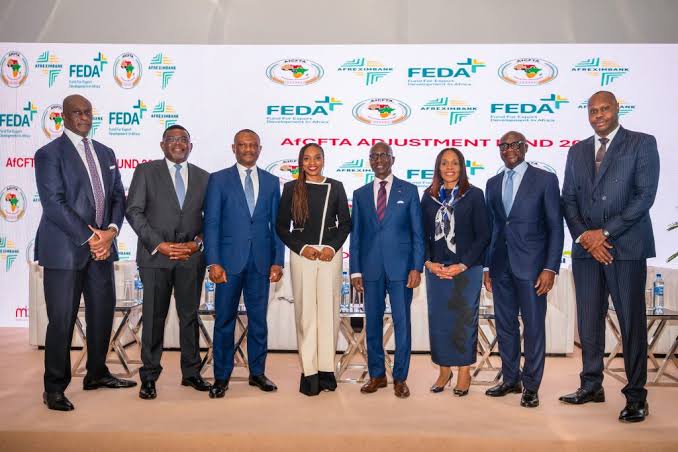
Ehi Braimah urges Afreximbank and AfDB to strengthen Africa’s economic integration through trade finance, infrastructure and industrial investment

Nigerian Breweries celebrates its 80th anniversary with an N80m consumer reward initiative and the unveiling of Legendary Christmas 2026
-
Politics3 years ago
13 Ondo Assembly Members Disown Endorsement of Aiyedatiwa
-
Politics3 years ago
APC Group, Ondo Govt, Quarrel Over Money for Endorsement
-

 Trending News6 years ago
Stop unsavoury, inciting statements – DSS warns
-

 Others5 years ago
Adron Homes Celebrates 10 Years Of Housing Excellence
-

 Humanity5 years ago
President Buhari Commiserates With Ambassador Maureen Tamuno Over The Loss Of Her Father
-

 Others7 years ago
EX- CUSTOMS BOSS, IBRAHIM MERA’S DWINDLING FAME
-

 Business3 years ago
Bigi Carbonated Soft Drinks Treats 40 Consumers to an Epic Easter Movie Hangout
-

 Business2 years ago
Wema Bank Shines at Global SME Finance Forum Conference Awards 2024 …Awarded: • SME Financier of the Year (Africa) • Platinum Award for Best Financier for Women Entrepreneurs (Africa)