
News
Calabar Investor Seeks Justice After Property Demolition

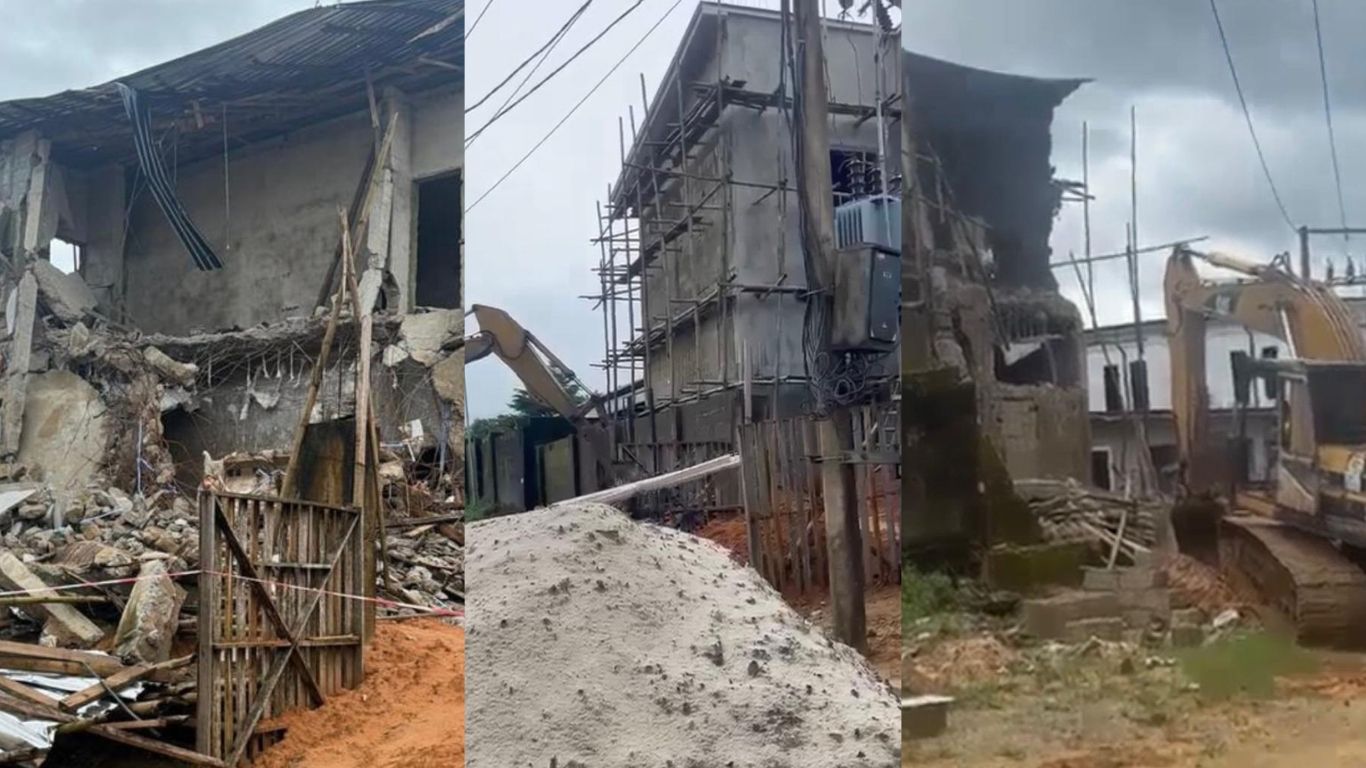
Calabar property demolition sparks an investor’s appeal to President Tinubu over alleged abuses, disputed building approvals and investor protection

A New York-based Nigerian property investor has appealed to President Bola Ahmed Tinubu for intervention following the alleged demolition of his serviced-apartment development in Calabar, Cross River State, on August 14, 2026, raising questions about property rights, government enforcement procedures and the protection of private investment in Nigeria.
Also read:Oshiomhole Defends Tinubu Over Absence at APC Rallies
The investor, whose full identity was not disclosed in the report published by GistReel on November 7, 2026, said operatives of the Cross River State Planning and Development Control Taskforce pulled down the development despite his possession of a temporary building permit and the submission of architectural drawings to the relevant town planning authorities.
The appeal has drawn attention to a difficult question surrounding Nigeria’s investment environment: how can the country encourage Nigerians abroad and international investors to commit capital to local businesses when disputes over property development can lead to substantial financial losses?
The property owner specifically recalled President Tinubu’s September 2023 visit to New York, where the Nigerian leader addressed business representatives during an investment engagement at the Nasdaq Stock Market.
Speaking at the event, Tinubu encouraged American businesses and prospective investors to consider opportunities in Nigeria, assuring them that their investments could be made without fear.
“There is an immense opportunity in Nigeria where you can invest your money without fear,” the President said.
Tinubu also emphasised the movement of investment capital, adding: “You’re free to take in your money and bring out your money. I count on you to invest in Nigeria.”
The remarks formed part of the administration’s broader effort to attract foreign capital and strengthen confidence in Nigeria’s business environment.
The investor’s latest appeal has now brought those assurances into focus against the backdrop of his reported experience in Calabar.
According to the investor’s account, the demolition took place after officials allegedly told him they were acting on an “order from above” and did not require a court order to proceed.
He further claimed that the town planning department denied knowledge of the demolition exercise, creating uncertainty about the administrative authority behind the operation.
The dispute reportedly did not end with the destruction of the property. The investor alleged that armed men returned to the site several days later, threatened construction workers and warned them against resuming work.
Those alleged threats have prevented him from returning to the development, despite his claim that he subsequently obtained permanent approval for the project.
For the investor, the financial consequences extend beyond the physical destruction of the building.
Construction involves substantial commitments to building materials, skilled labour, contractors and, in many cases, borrowed funds that remain payable regardless of whether a project is completed.
In his appeal, he questioned the justification for demolishing the development, particularly given the availability of undeveloped land elsewhere in Calabar.
“Building is expensive. Materials, labour and loans do not disappear because a building has been demolished,” he said.
He also called for greater transparency from the relevant authorities, insisting that public officials should be prepared to explain the legal and administrative basis of enforcement actions.
“We appeal to the President and the public to demand the records: the approvals, the notices, the demolition order, and a clear account of what happened afterward,” the investor stated.
His appeal concluded with a pointed reminder about accountability: “No investor is above the law. No agency should be above explaining its power.”
The incident comes against the background of the Cross River State Government’s efforts to strengthen development control and regulate construction activities across the state.
On February 10, 2026, Governor Bassey Edet Otu inaugurated the State Building Planning and Development Control Taskforce at Government House in Calabar.
The governor, represented by Deputy Governor Peter Odey, said the taskforce was established to address unapproved construction, enforce planning regulations and promote safer urban development.
However, the governor also urged members to discharge their responsibilities with professionalism, fairness and integrity, specifically warning against victimisation.
The taskforce’s inauguration was presented as part of a wider effort to improve urban planning, address indiscriminate construction and ensure compliance with approved building designs.
In a July 28, 2025 public announcement, the Cross River State Ministry of Lands clarified that statutory responsibility for granting building plan approvals and related development permits rested with the ministry through the Urban Development Authority.
The clarification followed conflicting information about the appropriate government department responsible for building approvals.
Although the announcement does not establish whether the investor’s particular permits were valid or whether the demolition was authorised, it highlights why the documentation and administrative records surrounding the Calabar development are important.
The temporary permit, subsequently obtained permanent approval, demolition notices and any enforcement authorisation would all be relevant to establishing what happened and whether the applicable procedures were followed.
Cross River State has also previously defended demolition-related enforcement measures on planning and public safety grounds.
In July 2026, the state government explained that demolition notices issued to 39 buildings in Calabar’s Water Board area were connected to concerns about structures allegedly erected over major water pipelines.
Commissioner for Information Erasmus Ekpang said the exercise was intended to address environmental, public health and infrastructure risks.
That separate controversy illustrates the government’s stated position that development control is necessary to protect public infrastructure and maintain orderly urban growth. However, it does not establish that the same considerations applied to the New York-based investor’s property.
The investor’s allegations have not been independently established, and no detailed response from the Cross River State Government or the taskforce concerning this particular property was identified in the reports reviewed.
A transparent account of the incident would require the relevant authorities to clarify the grounds for the demolition, identify the officials who authorised and conducted the operation, and explain the status of the investor’s building approvals.
The alleged threats against workers also warrant clarification, particularly if construction activities were subsequently restricted despite the reported grant of permanent approval.
For President Tinubu, the appeal presents a broader issue concerning the relationship between investment promotion and the practical protection of investors’ property interests.
Nigeria’s ability to attract capital depends not only on assurances made at international business gatherings but also on predictable regulations, transparent administrative decisions and accessible channels for resolving disputes.
In Calabar, the investor is asking for more than a public acknowledgement of his complaint. He wants the circumstances surrounding the demolition investigated, the relevant records made available and those responsible held accountable if wrongdoing is established.
His closing appeal captures the central concern behind the dispute: “Let the state answer. Let the court decide. ‘Invest without fear’ must mean something in Calabar, too.”
Whether the state will provide the requested clarification remains to be seen.
Also read:Oshiomhole Defends Tinubu Over Absence at APC Rallies
For the investor, however, the immediate concern is securing justice and finding a way to protect an investment that he says was destroyed before it could fulfil its commercial purpose.



NAFDAC confiscates counterfeit cosmetics including Listerine and Nivea at Igbudu Market in Warri. Official operation details, public caution and refutation of attack claims

Nigeria ends its Dakar 2026 swimming campaign without a medal as Kashope Obatoyinbo makes history with a sixth-place final finish

Nigerian centre Stephanie Okechukwu makes her Texas Tech debut at 7ft 1in, recording six points, 10 rebounds and three blocks
-
Politics3 years ago
13 Ondo Assembly Members Disown Endorsement of Aiyedatiwa
-
Politics3 years ago
APC Group, Ondo Govt, Quarrel Over Money for Endorsement
-

 Trending News6 years ago
Stop unsavoury, inciting statements – DSS warns
-

 Others5 years ago
Adron Homes Celebrates 10 Years Of Housing Excellence
-

 Humanity5 years ago
President Buhari Commiserates With Ambassador Maureen Tamuno Over The Loss Of Her Father
-

 Others7 years ago
EX- CUSTOMS BOSS, IBRAHIM MERA’S DWINDLING FAME
-

 Business3 years ago
Bigi Carbonated Soft Drinks Treats 40 Consumers to an Epic Easter Movie Hangout
-

 Business2 years ago
Wema Bank Shines at Global SME Finance Forum Conference Awards 2024 …Awarded: • SME Financier of the Year (Africa) • Platinum Award for Best Financier for Women Entrepreneurs (Africa)