
Politics
Orbunde Warns Tinubu of APC Rift in Benue

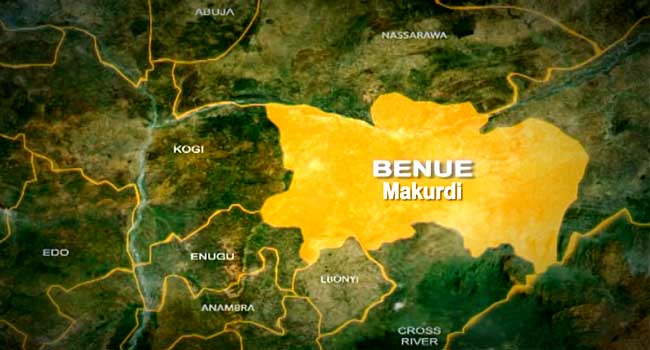
APC rift in Benue may hurt Tinubu’s 2027 chances as Terwase Orbunde warns of factional disputes, court battles and insecurity
A governorship aspirant says factional disputes, court battles and insecurity could weaken the APC’s electoral prospects in Benue ahead of 2027.
Also read:Magodo Land Dispute: Police Deployment Sparks Fresh Tension

A former House of Representatives member and Benue State All Progressives Congress (APC) governorship aspirant, Terwase Orbunde, has warned that unresolved party divisions, alleged disregard for court judgments and insecurity could undermine President Bola Tinubu’s electoral prospects in Benue State ahead of the 2027 general elections.
Orbunde made the warning on Wednesday, November 25, 2026, while addressing journalists in Abuja, where he called on the APC leadership to urgently address the party’s internal crisis and prevent further political fragmentation in the state.
He argued that Tinubu’s political support in Benue could be weakened if the party continued to rely heavily on Governor Hyacinth Alia while failing to resolve disagreements over its leadership structure and internal democratic processes.

According to the aspirant, the party’s major challenge was not necessarily the governor’s popularity but the failure to establish an inclusive political structure capable of accommodating competing interests and maintaining unity.
Orbunde warned that the President should not allow unresolved factional disagreements to jeopardise the party’s prospects in a state where political loyalty, grassroots mobilisation and internal cohesion could prove decisive.
He said, “President Tinubu cannot afford to allow unresolved factional disputes, contested party structures, and unenforced judicial decisions to weaken the APC in Benue State.”
The former lawmaker alleged that divisions within the Benue APC had deepened since Alia assumed office in 2023, with rival camps reportedly aligned with the governor and the Secretary to the Government of the Federation, Senator George Akume.
Orbunde described Akume as an influential political figure and a dependable ally of the President, insisting that his contribution to the party’s fortunes in the North-Central region should not be overlooked.
He cautioned against decisions that could alienate established political stakeholders, saying the President should not move from a position of electoral strength into uncertainty because of unresolved party disputes.
The leadership dispute has also extended beyond competing party executives. Earlier disagreements over campaign structures for Tinubu’s 2027 re-election exposed tensions between the Alia and Akume camps, with both sides facing questions over how the President’s support base in Benue should be mobilised.
Orbunde further criticised the failure to establish a peace committee reportedly proposed by Tinubu during his 2025 visit to Benue.
He said the proposed committee was expected to bring together former governors, elders and traditional rulers to support reconciliation and address security concerns.
He argued that the failure to implement the initiative was particularly troubling amid persistent insecurity and displacement affecting communities across the state.
The aspirant claimed that more than 15 of Benue’s 23 local government areas had experienced displacement, with residents continuing to face security challenges and loss of lives.
He called on the APC leadership to enforce court judgments, restore confidence in the party’s structures and ensure that its forthcoming primaries were transparent and free from intimidation.
Orbunde maintained that the party could not sustain political loyalty through unresolved disagreements, insisting that unity, internal democracy and respect for judicial authority were essential to its chances of retaining Benue in 2027.
He urged the party’s national leadership to intervene before the crisis further damages its electoral strength, warning that political divisions could undermine Tinubu’s support in the state.
The warning adds to growing concerns over the Benue APC’s internal divisions as political alignments ahead of the 2027 general elections continue to take shape.
Also read:Magodo Land Dispute: Police Deployment Sparks Fresh Tension
Analysts and party stakeholders will be watching whether reconciliation efforts can translate into a unified political structure before election campaigns intensify.


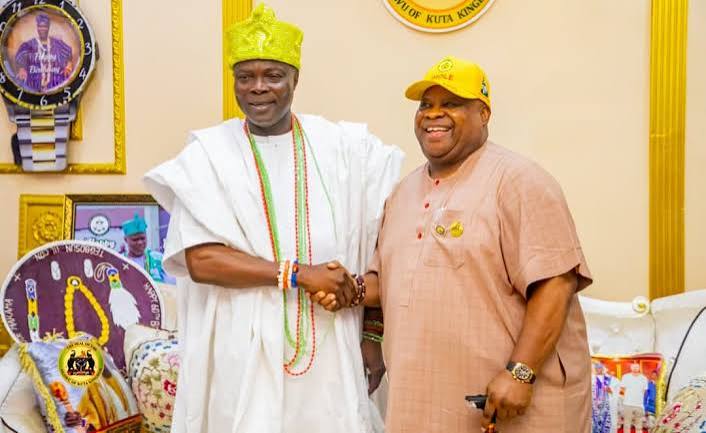
Olowu Kuta urges peace as he congratulates Adeleke’s reappointed officials and warns Osun political actors against bitterness ahead of 2027

Amaechi accused of neglecting Ikwerre as APC chieftain Princewill Dike alleges missed development opportunities and predicts backlash in 2027
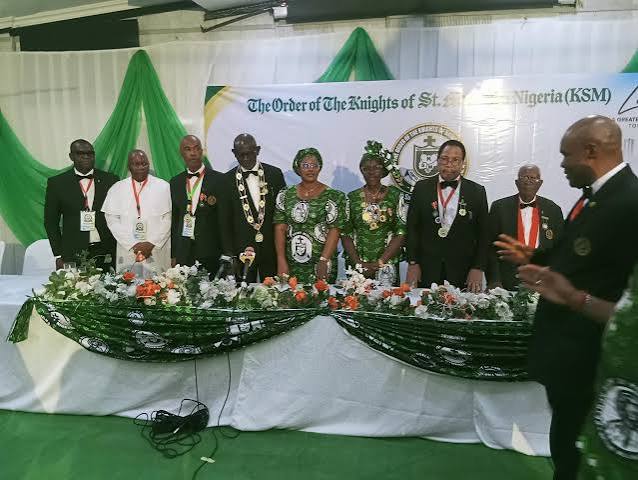
Catholic Knights reject vote buying and ethnic politics, urging Nigerians to choose credible leaders and protect democracy ahead of the 2027 elections
-
Politics3 years ago
13 Ondo Assembly Members Disown Endorsement of Aiyedatiwa
-
Politics3 years ago
APC Group, Ondo Govt, Quarrel Over Money for Endorsement
-

 Trending News6 years ago
Stop unsavoury, inciting statements – DSS warns
-

 Others5 years ago
Adron Homes Celebrates 10 Years Of Housing Excellence
-

 Humanity5 years ago
President Buhari Commiserates With Ambassador Maureen Tamuno Over The Loss Of Her Father
-

 Others7 years ago
EX- CUSTOMS BOSS, IBRAHIM MERA’S DWINDLING FAME
-

 Business3 years ago
Bigi Carbonated Soft Drinks Treats 40 Consumers to an Epic Easter Movie Hangout
-

 Business2 years ago
Wema Bank Shines at Global SME Finance Forum Conference Awards 2024 …Awarded: • SME Financier of the Year (Africa) • Platinum Award for Best Financier for Women Entrepreneurs (Africa)