
Technology
Adesina Proposes $50bn African Space Investment Fund

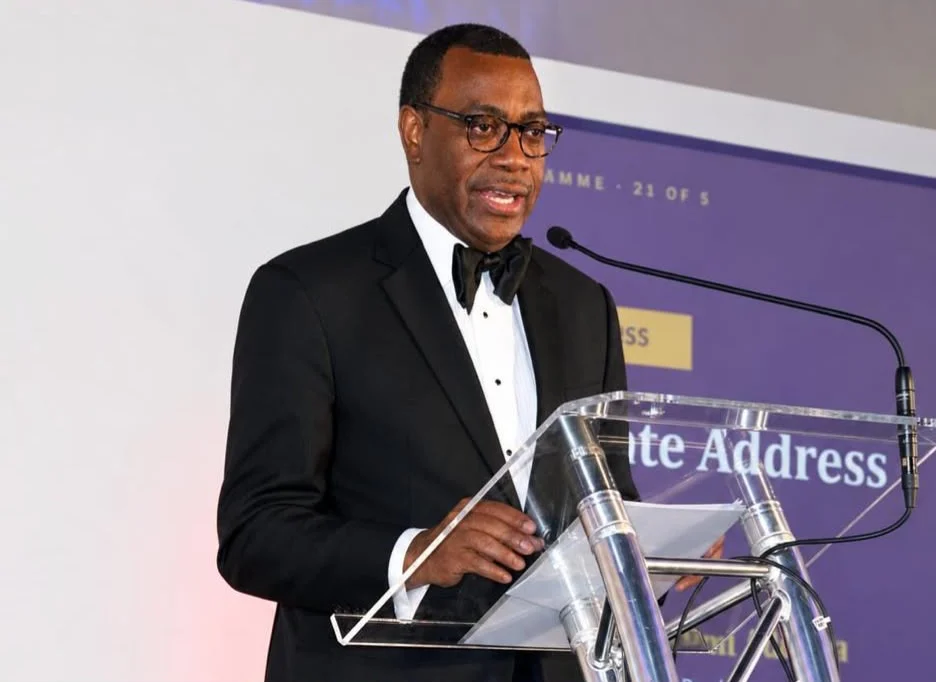
Akinwumi Adesina proposes a $50bn African space investment fund to finance satellite technology, research, connectivity and space industry growth.
Former African Development Bank (AfDB) president, Dr Akinwumi Adesina, has proposed a $50 billion investment mobilisation initiative to accelerate Africa’s space economy, urging Nigerian President Bola Tinubu and his counterparts in Rwanda and Egypt to provide political leadership for the ambitious continental programme.
Also read:NDLEA Busts ₦303.9bn Meth Lab, Arrests Drug Baron

Adesina proposed the establishment of an **Africa Space Future Fund**, with an initial capitalisation target of $5 billion and the capacity to mobilise up to $50 billion in investments over the next 10 to 15 years.
He made the proposal at the Africa Space Economy, Innovation and Communication Conference 2026 in Abuja, where he argued that Africa must move beyond consuming imported space technology and begin developing, financing and owning its critical space infrastructure.
The proposed initiative would bring together governments, sovereign wealth funds, development finance institutions, pension funds, insurance companies, private investors, international partners and members of the African diaspora to finance the continent’s growing space industry.

Adesina identified Tinubu, Rwandan President Paul Kagame and Egyptian President Abdel Fattah el-Sisi as potential founding political anchors of the initiative, citing their countries’ existing commitments to technological innovation and space development.
He proposed that the three leaders convene a founding presidential summit to secure political backing, attract initial investment commitments and establish the institutional framework for the fund.
The former AfDB president stressed that the $50 billion target should not be interpreted as a demand for direct government spending, but rather as a long-term strategy to attract investment from multiple sources over a decade or more.
“This is not a request for charity. It is an investment proposition,” he said, arguing that Africa must build a commercially sustainable space industry capable of generating economic value, jobs and technological advancement.
Adesina said the fund would support investments in satellite communications, broadband connectivity, Earth observation, scientific research, satellite manufacturing, artificial intelligence, robotics and emerging African space technology businesses.
He pointed to the funding gap between Africa and major global space players as a major obstacle to the continent’s ambitions.
According to figures cited during his address, Africa had 321 active commercial space companies across 36 countries generating about $373 million in revenue in 2024, while combined public spending on the continent’s space programmes remained significantly below that of major international space agencies.
He argued that increased investment would enable African countries to develop indigenous technologies, strengthen research institutions, improve satellite connectivity and reduce dependence on foreign-owned infrastructure.
The proposed fund would also support startups, local manufacturing, innovation centres and commercial ventures, with an emphasis on building African expertise and ensuring that the continent retains more economic value from its participation in the global space industry.
Adesina further proposed Africa Link, a continental satellite connectivity initiative aimed at expanding affordable internet access, aggregating demand across African countries and strengthening shared digital infrastructure.
He warned that Africa risked remaining dependent on external providers if it failed to invest in the ownership and development of its space-based communication systems.
“We must move from renting the infrastructure of the digital future to owning a meaningful share of it,” he said.
The former AfDB chief also highlighted the potential of space technology to transform agriculture, food security, telecommunications, climate resilience, disaster management, infrastructure planning and natural resource monitoring.
Recounting his experience as Nigeria’s Minister of Agriculture, Adesina said satellite imagery and remote sensing had helped assess the impact of flooding and inform agricultural interventions, demonstrating how space-based technology could support national planning and crisis response.
He advocated blended financing, public-private partnerships, African Space Bonds, venture capital and development finance to support the proposed initiative, while calling for transparent governance, professional fund management and independent oversight.
Adesina maintained that Africa’s ambitions should extend beyond launching satellites to developing the manufacturing capacity, intellectual property, software, data analytics and specialised equipment needed to compete in the global space industry.
He expressed optimism that the continent could eventually produce globally competitive space businesses and contribute to major international exploration efforts, including sending an African to the Moon.
In a direct appeal to Tinubu, he urged the Nigerian President to extend his economic transformation vision to the country’s space ambitions.
“Mr President, you conquered the Atlantic! With your vision and boldness, why stop there? Now, Mr President, conquer space!” he said.
Also read:NDLEA Busts ₦303.9bn Meth Lab, Arrests Drug Baron
The proposed Africa Space Future Fund is expected to require substantial institutional coordination, investment commitments and partnerships before it can become operational, but Adesina said Africa must begin building the financial and technological foundations for its future in space now.



NVIDIA reinstates Jensen Huang as CEO 11 days after his resignation, with the board citing confidence in his leadership and no national security risk

Microsoft struggles to restore Outlook after a global outage disrupts email, Teams and Copilot across 74 countries and territories


Platform College wins The Encounter 2026 AI debate in Lagos, taking home ₦500,000 as Ali Baba discusses AI’s impact on Africa’s creative economy
-
Politics3 years ago
13 Ondo Assembly Members Disown Endorsement of Aiyedatiwa
-
Politics3 years ago
APC Group, Ondo Govt, Quarrel Over Money for Endorsement
-

 Trending News6 years ago
Stop unsavoury, inciting statements – DSS warns
-

 Others5 years ago
Adron Homes Celebrates 10 Years Of Housing Excellence
-

 Humanity5 years ago
President Buhari Commiserates With Ambassador Maureen Tamuno Over The Loss Of Her Father
-

 Others7 years ago
EX- CUSTOMS BOSS, IBRAHIM MERA’S DWINDLING FAME
-

 Business3 years ago
Bigi Carbonated Soft Drinks Treats 40 Consumers to an Epic Easter Movie Hangout
-

 Business2 years ago
Wema Bank Shines at Global SME Finance Forum Conference Awards 2024 …Awarded: • SME Financier of the Year (Africa) • Platinum Award for Best Financier for Women Entrepreneurs (Africa)