
Economy
Tinubu’s Fiscal Governance Reforms Seek to Rebuild Trust, Drive Growth


Tinubu’s fiscal governance reforms aim to restore public trust, promote transparency, and shift Nigeria’s economy towards inclusive and sustainable growth

Tinubu’s fiscal governance reforms were the central theme on Monday as President Bola Ahmed Tinubu reaffirmed his administration’s determination to restore public trust and reshape Nigeria’s economic future through transparency and responsible financial practices.
Also read: President Tinubu Pushes for State Police, Calls for Urgent Constitutional Reform to Tackle Insecurity
Speaking at a national conference on public accounts and fiscal governance in Abuja, Tinubu, represented by Minister of State for Finance, Doris Uzoka-Anite, stated that his policies aim to drive inclusive development by tackling structural inefficiencies and redirecting national resources to critical sectors.
He defended the removal of fuel subsidy, describing it as a difficult but necessary decision.
“In 2022 alone, Nigeria spent over ₦4 trillion on fuel subsidies, more than our entire capital expenditure. It was unjust and fiscally unsustainable,” he said.
According to the President, funds saved from the subsidy removal have been channelled into infrastructure, public transport, and targeted interventions, all aligned with the broader Tinubu fiscal governance reforms.
The President also noted that the newly enacted tax laws would simplify compliance, expand the tax base, and eliminate leakages through digitisation.
These measures, he said, are designed to support small businesses and enhance national revenue without overburdening the informal sector.
“There is now better coordination between fiscal and monetary policies,” Tinubu added. “We are addressing inflation by removing bottlenecks in food supply chains and boosting domestic production.”
Senate President Godswill Akpabio, represented by Senator Abdul Ningi, charged the Public Accounts Committees of the National Assembly to strengthen their oversight functions, saying, “Without accountability, there will be no prosperity.”
In his remarks, Speaker of the House of Representatives Tajudeen Abbas, represented by House Leader Julius Ihonbvere, decried Nigeria’s unresolved fiscal infractions. He revealed that over ₦300 billion flagged in audit reports remains unrecovered.
“We are refining our processes and promoting real-time tracking to ensure compliance,” Abbas said. “Fiscal responsibility cannot thrive where there are no consequences for mismanagement.”
Chairman of the Senate Public Accounts Committee, Senator Ahmed Wadada, called for a renewed national commitment to financial integrity. He emphasised the importance of transparency, saying, “Public funds must be seen as a sacred trust.”
Wadada added that the Tinubu fiscal governance reforms must go beyond policy and translate into measurable outcomes for Nigerians, especially in education, healthcare, and infrastructure.
Hon Bamidele Salam, Chairman of the House PAC, echoed this sentiment, urging all public officials to move from rhetoric to results. “Making public funds work for public good must be more than a mantra,” he said.
Also read: Tinubu Backs INEC With New Abuja Complex To Boost Electoral Integrity
The conference, themed “Fiscal Governance in Nigeria: Charting a New Course for Transparency and Sustainable Development”, highlighted how these reforms are shaping a more accountable and inclusive economy.


Economy
Governor Dauda Lawal woos investors, highlights Zamfara’s economic opportunities at CEO Forum

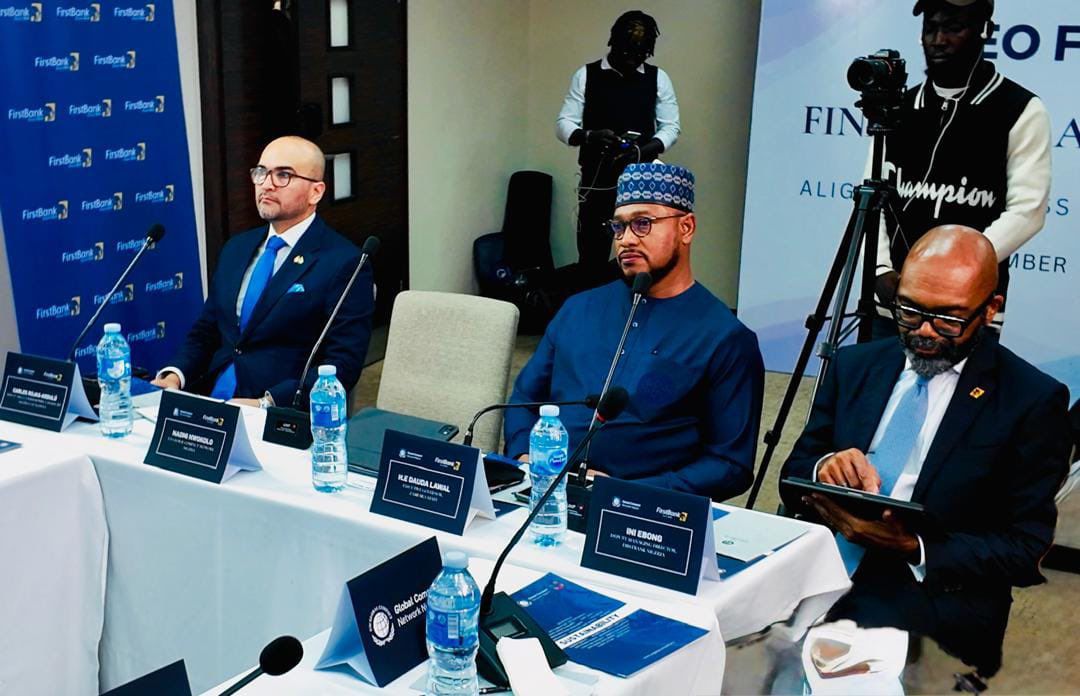
Zamfara State Governor, Dauda Lawal, has called for stronger collaboration between government, businesses and investors to unlock private capital and drive inclusive economic growth in the state.
Lawal made the call while delivering a Special Policy Address at the 2026 CEO Forum organised by the Global Compact Network Nigeria in Lagos.
The forum, held under the theme “Financing a Dignified Future: Aligning Business Action, Policy and Capital,” brought together chief executives, senior government officials, industry leaders, diplomats, trade commissioners and international development partners.
Participants were drawn from key sectors of the economy, including oil and gas, energy, manufacturing, construction and infrastructure.
The governor spoke on the growing competition among states for increasingly selective private capital and the factors that could transform an economic opportunity into an investable proposition.
He explained how his administration was working to bridge the gap between available economic opportunities and investment, with emphasis on building investor confidence while ensuring that investments deliver meaningful outcomes for the people of Zamfara.
According to him, attracting investment requires more than identifying economic opportunities, but also creating the conditions, policies and partnerships capable of giving investors confidence to commit capital.
The forum provided a platform for business leaders, government officials and investors to examine ways of aligning business strategies, public policies and capital deployment to unlock productive investment.
Discussions also focused on identifying businesses, sectors and projects with strong potential but facing difficulties in accessing financing, as well as measures to make such opportunities more attractive to investors.
The organisers also introduced the concept of the “Dignity Dividend,” examining how investment-led growth could translate into better jobs, stronger businesses, increased productivity, local value creation and broader economic participation.
Another key component of the forum was the identification of actionable commitments and partnerships that participating institutions could advance over the next six to 12 months.
Notable speakers at the event included chief executives of First Bank Group, Access Bank, Flour Mills of Nigeria Plc, Nigeria Economic Summit Group, Nigerian Exchange Group, Chellarams Plc, SecureID Group and Greenwich Merchant Bank Plc, among others.
The organisers said the session would culminate in a live showcase of the Business Value and Sustainability Platform (BVSP), described as a standing coalition of business, capital and policy actors designed to sustain the dialogue.
The platform is also expected to contribute to shaping Nigeria’s private-sector engagement during the United Nations General Assembly High-Level Week.
The governor’s participation in the forum comes as Zamfara seeks to strengthen its economic base, attract productive investment and create opportunities that can support sustainable livelihoods and wider participation in the state’s economy.


Atiku petrol subsidy plans have reignited Nigeria’s 2027 debate as the ADC candidate promises relief while the Presidency demands clarity
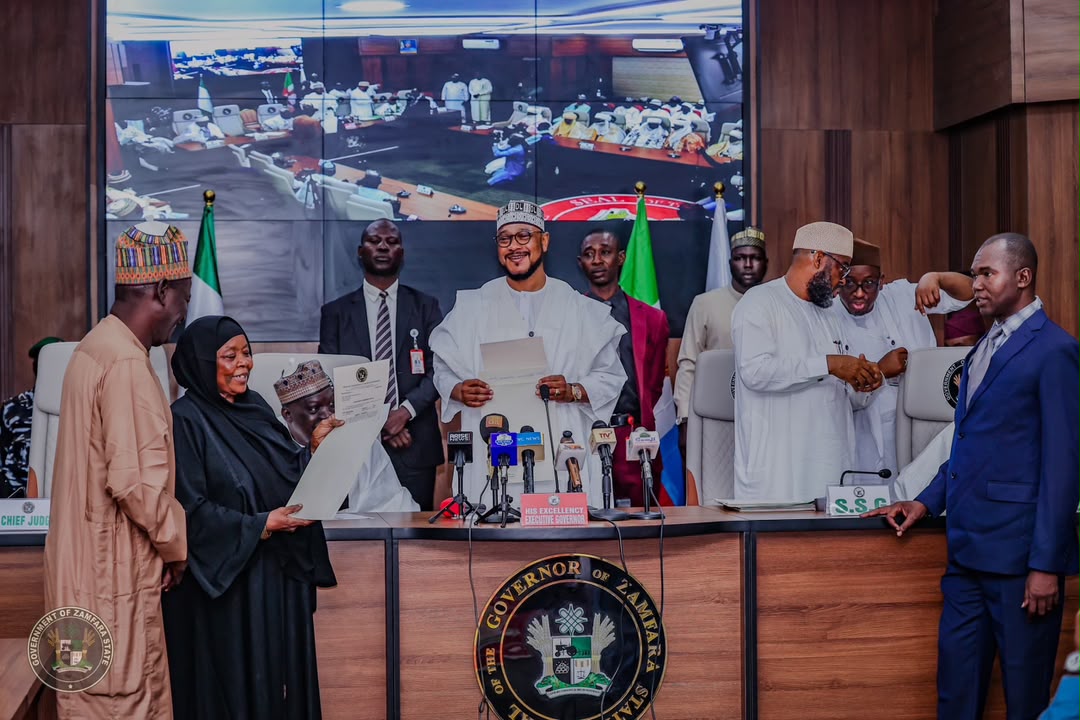
The governor distributed official vehicles to judicial officers and said about 90 per cent of court rehabilitation projects across the state had been completed
-
Politics2 years ago
13 Ondo Assembly Members Disown Endorsement of Aiyedatiwa
-
Politics2 years ago
APC Group, Ondo Govt, Quarrel Over Money for Endorsement
-

 Trending News5 years ago
Stop unsavoury, inciting statements – DSS warns
-

 Others5 years ago
Adron Homes Celebrates 10 Years Of Housing Excellence
-

 Humanity5 years ago
President Buhari Commiserates With Ambassador Maureen Tamuno Over The Loss Of Her Father
-

 Others7 years ago
EX- CUSTOMS BOSS, IBRAHIM MERA’S DWINDLING FAME
-

 Business2 years ago
Bigi Carbonated Soft Drinks Treats 40 Consumers to an Epic Easter Movie Hangout
-

 Business2 years ago
Wema Bank Shines at Global SME Finance Forum Conference Awards 2024 …Awarded: • SME Financier of the Year (Africa) • Platinum Award for Best Financier for Women Entrepreneurs (Africa)