
Politics
Rivers state of emergency: Is Nigeria’s democracy safe with its courts?


Tinubu emergency powers face renewed legal scrutiny as Nigerian courts again avoid ruling on the scope of presidential authority

NIGERIA’S democracy swooped into the unease mood after the 2023 elections. The state of emergency in Rivers State raised more questions about the extent of presidential powers when declaring emergency rule.
Also read: Rivers Police arrest 12 after Aluu estate attack
Section 305 of Nigeria’s 1999 Constitution sets out those powers with striking clarity. Yet time and again, Nigerian courts have avoided definite answers, finding refuge in procedural hedges and technicality.
In doing so, they dodge their most solemn duty: safeguarding constitutional democracy.
Nigeria is run on a written Constitution.
The boundaries of separation of power are known. Disputes are to be resolved by courts applying settled principles of interpretation. When judges refuse to engage the substance of constitutional questions, the consequences are grave.
Their indecisions also become precedents – dangerous precedents.
Afam Osigwe, SAN, President of the Nigerian Bar Association, NBA, has warned that judicial silence in the face of emergency rule litigation “erodes public confidence” and emboldens executive over-reach. He urged Judges to rise above political pressure and rule without fear or favour.
The Federal High Court in Abuja, maybe, in reaction to Mr. Osigwe’s remarks swiftly heard several suits that challenged President Bola Ahmed Tinubu’s proclamation of a state of emergency in Rivers State.
Again, the courts declined jurisdiction; reclining on a supposed Emergency Powers (Jurisdiction) Act, 1962 said to have been modified by presidential order in 2025 and avoided ruling on the merits of the matters. The pattern is familiar or a precedent.
In Plateau State v. Attorney-General of the Federation (2006), the Supreme Court similarly refused to determine the scope of presidential emergency powers, citing procedural defects.
A decision then, could have saved Nigeria from the spectacle of an elected President suspending an elected Governor and legislature, as occurred in Rivers State in March 2025.
The matter is still alive. On 16 January 2026, an NGO, the Incorporated Trustees of the Civil Society Observatory for Constitutional and Legal Compliance, CSOCLC, returned to the Federal High Court, Abuja, urging Justice J.K. Omotosho to revisit his earlier decisions on emergency rule in Rivers State.
In Suit No. FHC/ABJ/CS/1148/2025, with the President, the Attorney-General of the Federation, Rivers State, electoral authorities and others as defendants, the group argues that the Court has jurisdiction, and that the President’s emergency powers do not include suspending elected officials.
Crucially, the plaintiffs do not deny the President’s authority to declare a state of emergency. Their case is narrower and more fundamental. Section 305, they argue, authorises a proclamation, not the removal of a Governor, Deputy Governor or State Legislature.
Their counsel, Nnamdi Nwokocha-Ahaaiwe, contends that under the doctrine of “covering the field,” once the Constitution has exhaustively regulated a subject, neither Parliament nor the executive may add, enlarge or subtract from it.
A proclamation that purports to do so, he argued, is void, citing Supreme Court precedents, including A.G. Abia v. A.G. Federation and INEC v. Musa, in support of their position.
Even on a political precedent, former President Goodluck Jonathan declared state of emergency in May 2013 on television,
“I hereby declare a state of emergency in Borno, Yobe and Adamawa States. The Governors and other political office holders in the affected States will continue to discharge their constitutional responsibilities”.
Jonathan made the correct interpretation of the Section 305, a fact that is barely acknowledged and a counterpoise to the two instances that former President Olusegun Obasanjo imposed emergency rules in Plateau 2004, and Ekiti 2006, and removed their elected officials.
There is also a jurisdictional elephant in the room. Government’s lawyers insist that only the Supreme Court may hear emergency-related disputes, relying on colonial-era statutes from 1961 and 1962.
But those laws were omitted from Nigeria’s revised statutes as “spent” long before the 1999 Constitution came into force. Would the government lawyers not know?
Section 315 of the Constitution permits modification only of existing laws. How is a non-existent law modified?
Amending a dead statute, the plaintiffs argue, is a constitutional impossibility.
An Executive Order that strips the Federal High Court of jurisdiction and transfers it to the Supreme Court would amount to an unconstitutional usurpation of powers of Parliament and Judiciary.
In anticipation of a technicality, the plaintiffs invoked Adesanya v. President (1981), where the Supreme Court affirmed that citizens have not only the right but an obligation to challenge unconstitutional acts.
More recently, in Okonjo-Iweala v. Fawehinmi (2025), the court reaffirmed liberal standing for public interest litigation by civil society groups.
Once a President can suspend elected governments and rewrite court jurisdiction by executive fiat, separation of powers collapses, authoritarianism beckons and democracy would have departed.
Nigerians now wait to see whether the courts will confront this question at last, rein in the President or once again look away, as Nigeria’s democracy totters.
Finally…
A YOUNGER colleague reacted to my column on Mrs. Kemi Adeosun saying it was “written in a hurry”, and “uniformed”. When I engaged him, I found out that he was determined to hear nothing order than that Mrs. Adeosun was clean, as sparkling as crystal.
I asked him to send a rejoinder.
He countered that he was not working for Mrs. Adeosun. By Friday night I again asked for the rejoinder. “Good evening Oga. I didn’t promise any rejoinder sir. I just made a comment based on what I know. I am sorry if you feel offended by my comment”.
“You are insisting that Mrs. Adeosun did not submit a forged NYSC certificate of exemption?,” I asked him. “Yes, because she had no reason to,” he retorted.
Also read: Police arrest suspect after Rivers university cult clash
I am still in shock about how some individuals make their decisions. I didn’t name him, because I didn’t think there was any point in making the fellow involved more popular.


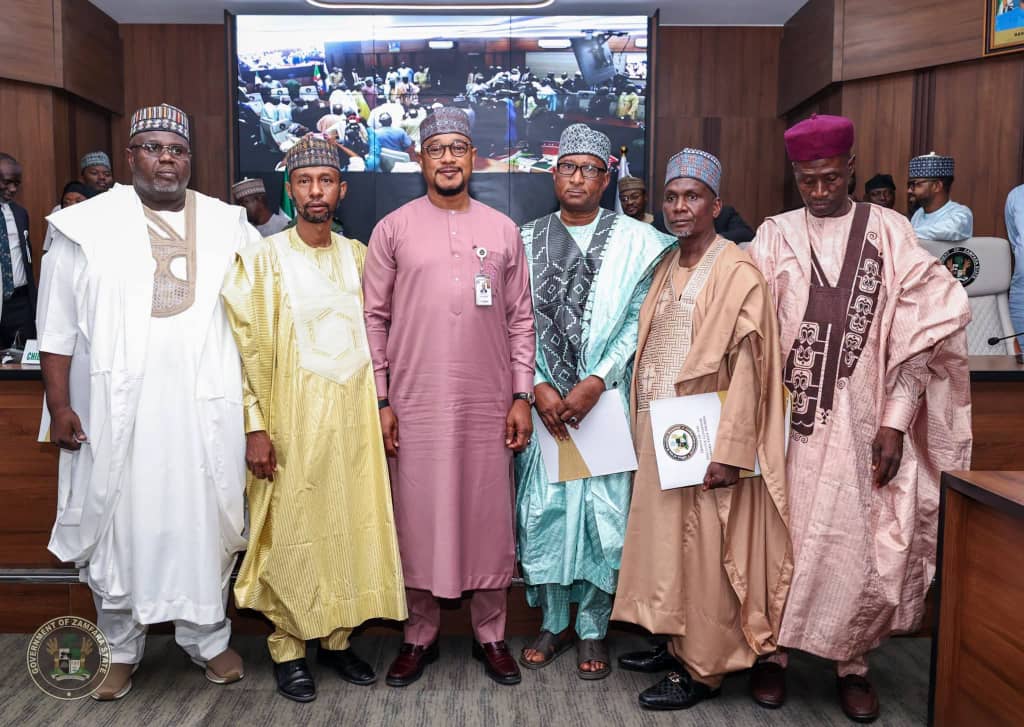
Dauda Lawal swears in five permanent secretaries in Zamfara, urging them to follow public service rules, financial regulations and relevant laws
Zamfara State Governor, Dauda Lawal, has sworn in five new permanent secretaries, urging them to comply with Public Service Rules, financial regulations and other relevant laws in the discharge of their duties.
Also read: 2027: 21 Adamawa LG Chairmen, 226 Councillors Dump PDP for APC
The swearing-in ceremony took place on Thursday at the Grand Chamber of the Government House in Gusau, the state capital.
The newly appointed permanent secretaries are Ahmad S. Zamfara, Nasiru Halilu Anka, Mu’azu Jibril Guraguri, Adamu Abdullahi Kanoma and Sani Muhammad Shinkafi.
The Chief Judge of Zamfara State, Justice Kulu Aliyu, administered the oath of office to the appointees, who pledged allegiance to the Federal Republic of Nigeria in accordance with the Constitution and the law.
Speaking at the ceremony, Lawal congratulated the new permanent secretaries, describing their appointments as recognition of their experience, abilities and readiness to take on greater responsibilities.
He said their roles extended beyond personal career advancement, noting that their decisions and conduct would influence government performance and the welfare of residents.
“The Permanent Secretary is central to Government, providing administrative leadership, institutional continuity, and policy advice while implementing approved programs,” the governor said.
He added that permanent secretaries were responsible for maintaining discipline, coordinating their establishments and ensuring that public resources were used for their intended purposes.
Lawal said his administration remained committed to strengthening government institutions and improving public administration to support Zamfara’s development priorities.
He noted that the civil service played a critical role in translating government decisions into practical results, particularly in the delivery of essential services.
The governor urged the new appointees to align their work with his administration’s priorities through proper planning, realistic implementation strategies, effective supervision and continuous assessment of results.
He also called on them to maintain constructive and professional relationships with commissioners and other political officeholders.
According to Lawal, political leaders are responsible for setting policy, while career civil servants provide the institutional knowledge, technical advice and administrative capacity needed to implement it.
He stressed that mutual respect and cooperation between political officeholders and career civil servants were essential to effective governance.
Also read: 2027: 21 Adamawa LG Chairmen, 226 Councillors Dump PDP for APC
The governor urged the permanent secretaries to uphold discipline and professionalism while ensuring that their departments supported the administration’s development agenda and served the needs of the people of Zamfara.
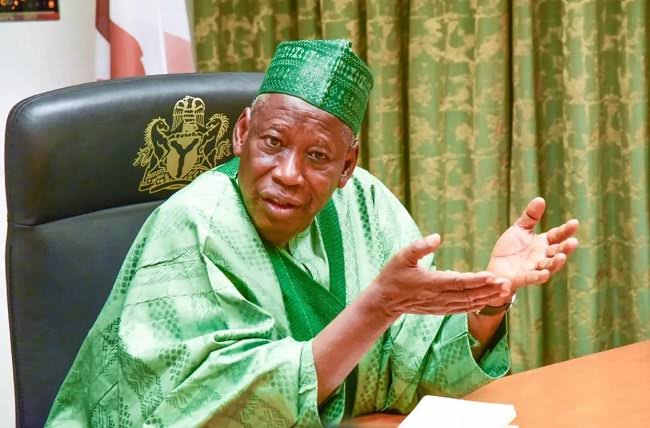
Adamawa APC candidate Ahmed Galadima welcomes 21 local government chairmen and 226 councillors who defected from the PDP to the APC

-
Politics3 years ago
13 Ondo Assembly Members Disown Endorsement of Aiyedatiwa
-
Politics3 years ago
APC Group, Ondo Govt, Quarrel Over Money for Endorsement
-

 Trending News5 years ago
Stop unsavoury, inciting statements – DSS warns
-

 Others5 years ago
Adron Homes Celebrates 10 Years Of Housing Excellence
-

 Humanity5 years ago
President Buhari Commiserates With Ambassador Maureen Tamuno Over The Loss Of Her Father
-

 Others7 years ago
EX- CUSTOMS BOSS, IBRAHIM MERA’S DWINDLING FAME
-

 Business2 years ago
Bigi Carbonated Soft Drinks Treats 40 Consumers to an Epic Easter Movie Hangout
-

 Business2 years ago
Wema Bank Shines at Global SME Finance Forum Conference Awards 2024 …Awarded: • SME Financier of the Year (Africa) • Platinum Award for Best Financier for Women Entrepreneurs (Africa)