Opinion
The Taxman: Dr. Zacch Adedeji at 48 — His Revolution for Nigerian Taxes

By Seun Oloketuyi

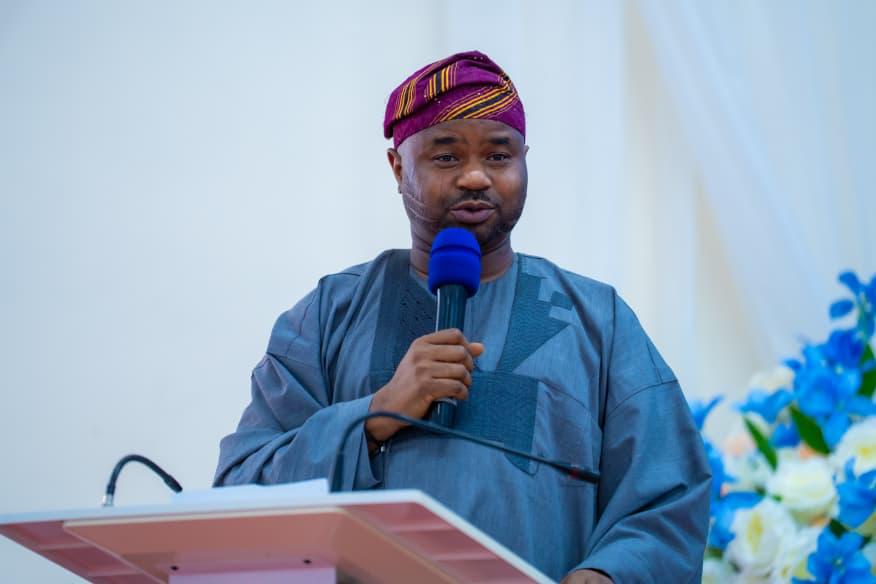
At 48, Dr. Zacch Adedeji stands at the centre of one of the most consequential reforms in Nigeria’s economic history. Calm, methodical, and unapologetically reform-minded, Adedeji has earned the moniker “The Taxman” not through rhetoric, but through action — by leading a sweeping transformation of Nigeria’s tax system designed to make it fairer, broader, more efficient, and fit for a modern economy.
In a country long dependent on oil revenues and burdened by a fragmented tax structure, Adedeji’s work represents a decisive break from the past.
Rewriting the Architecture of Taxation
Under President Bola Ahmed Tinubu’s administration, Nigeria enacted a landmark set of tax reform laws that fundamentally altered the nation’s revenue framework. Central to this reform was the replacement of the Federal Inland Revenue Service (FIRS) with the Nigeria Revenue Service (NRS) not merely a change of name, but a redefinition of mandate, structure, and philosophy.
The reforms harmonised previously overlapping tax laws, streamlined administration across federal and sub-national levels, and created a single, modern revenue authority with clearer powers and stronger accountability. For decades, Nigeria’s tax system had been characterised by complexity, inefficiency, and duplication. Adedeji’s reforms sought to eliminate these bottlenecks and build a system capable of supporting long-term national development.
From Tax Burden to Tax Fairness
A defining feature of Adedeji’s revolution is its emphasis on fair taxation. Rather than increasing tax rates, the reforms focused on correcting structural injustice within the system.
One of the most significant interventions was the removal of VAT from essential goods and services, including food, healthcare, education, and accommodation. This move directly addressed the cost of living pressures faced by ordinary Nigerians and signalled a shift from revenue extraction to social sensitivity.
At the same time, multiple nuisance taxes and overlapping levies were eliminated, reducing the burden on businesses especially small and medium-scale enterprises that form the backbone of the Nigerian economy. By broadening the tax base instead of raising rates, the reforms aimed to ensure that more people participate in the system without punishing productivity.
Digitalising Revenue, Blocking Leakages
Adedeji’s tax revolution is also a technology-driven one. Under his leadership, Nigeria’s revenue administration has embraced digital transformation as a tool for transparency, efficiency, and enforcement.
New systems for e-invoicing, improved taxpayer identification, data integration, and intelligence-led compliance have strengthened the government’s ability to track revenue and curb evasion. These measures have reduced human interference, limited corruption opportunities, and improved the ease of compliance for taxpayers.
International partnerships, including technical cooperation with advanced tax authorities, have further strengthened institutional capacity positioning Nigeria’s tax administration among the most forward-looking in Africa.
People-Centred Reform, Not Just Numbers
Unlike traditional fiscal reforms focused solely on revenue figures, Adedeji’s approach places the citizen at the centre. Low-income earners have been shielded through personal income tax exemptions, while simplified payment channels including digital and mobile platforms have made compliance more accessible.
For small businesses, artisans, and informal sector participants, the reforms represent a shift from fear and harassment to clarity and inclusion. The message is clear: taxation should be understandable, predictable, and fair not punitive.
A Long-Term Vision for National Stability
Adedeji has consistently emphasised that tax reform is not an overnight fix. The full stabilisation and optimisation of the new system, he argues, will take years of disciplined implementation. This long-term outlook reflects a commitment to sustainability rather than short-term political wins.
If successfully executed, the reforms are expected to significantly improve Nigeria’s tax-to-GDP ratio, reduce dependence on volatile oil revenues, and provide government with predictable funding for infrastructure, healthcare, education, and social services.
A Legacy Taking Shape
At 48, Dr. Zacch Adedeji is not merely administering taxes he is redefining Nigeria’s fiscal future. By transforming revenue collection from a fragmented, mistrusted system into a unified, modern institution, he has laid the groundwork for a more resilient and inclusive economy.
History will judge the full impact of these reforms in the years to come. But already, one fact is undeniable: Nigeria’s tax conversation has changed. And at the heart of that change stands The Taxman a reformer whose revolution is reshaping how a nation funds its future.


By Victor Ojelabi,
The Rotary Foundation has recognised the polio eradication efforts of Rotary International District 9112 under Immediate Past District Governor Lanre Adedoyin, following the District’s transfer of District Designated Funds to the PolioPlus Fund during the 2025 to 2026 Rotary year, a contribution acknowledged recently, as part of the global funding effort to protect children from the disease.
Also read: Rotary Club Ikeja Trains 60 Interactors in Leadership
The recognition brings a fitting international dimension to a Rotary year in which Adedoyin, a lawyer and member of the Rotary Club of Surulere South, repeatedly placed polio eradication among District 9112’s major humanitarian priorities across Lagos and Ogun states.
In a message addressed to District 9112, The Rotary Foundation thanked the District for committing its District Designated Funds to the campaign, saying the collective support from Rotary districts helped the organisation reach its fundraising target and secure matching funds that translate into US$150 million for polio eradication.
“Your support helped Rotary reach our goal and secure the matching funds that translate into US$150 million toward eradicating polio,” the Foundation said.
The money has consequences far beyond the balance sheet.
According to the Foundation, polio funding supports frontline workers taking vaccines into remote communities, environmental surveillance capable of detecting the virus in wastewater and programmes designed to interrupt transmission in affected areas.

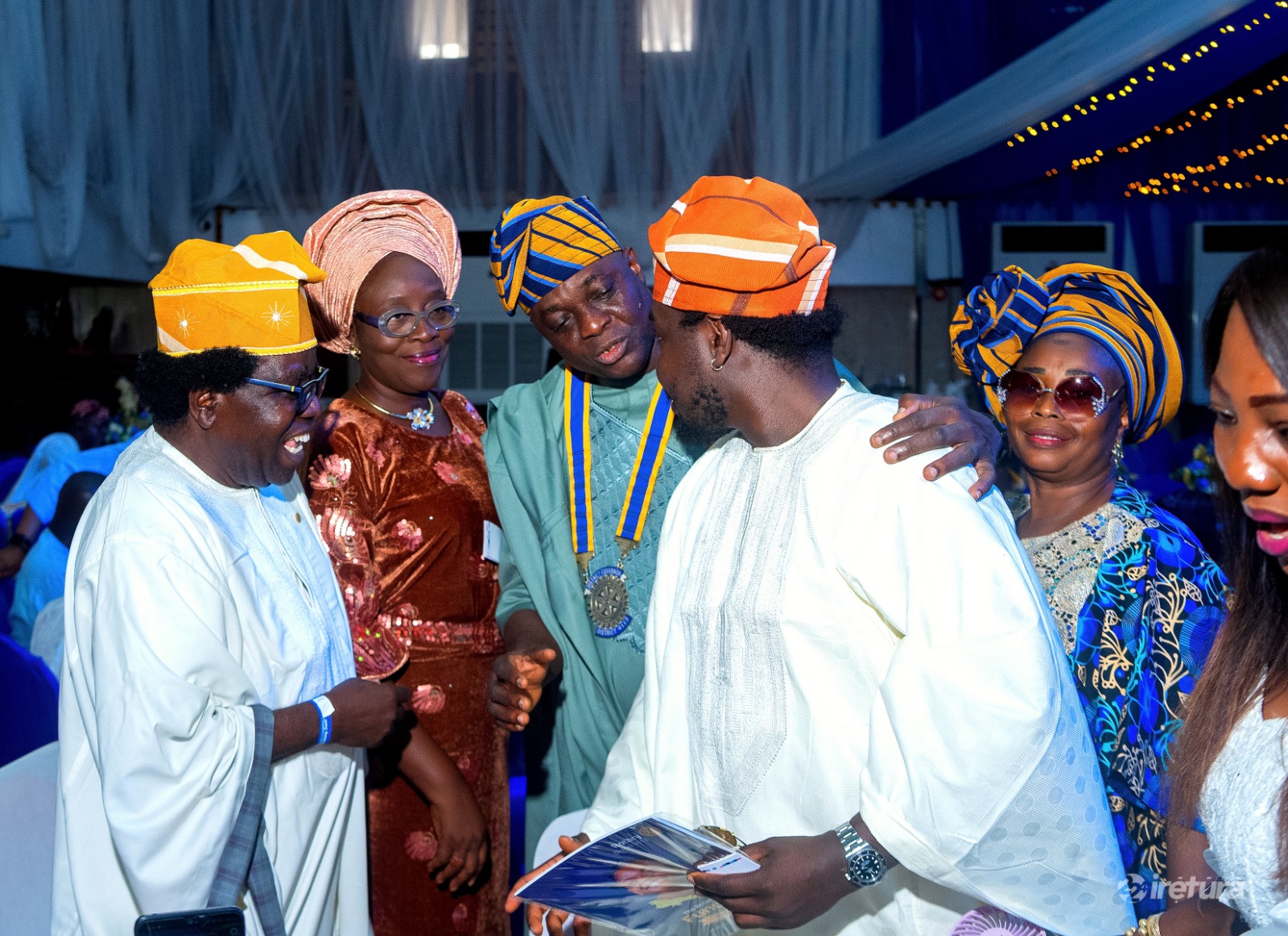
IPDG Lanre Adedoyin with wife at a Rotary event recently
The Foundation said the continuing effort was particularly important in Afghanistan and Pakistan, the only two countries where wild poliovirus remains endemic.
That assessment is consistent with Rotary International’s latest account of the global campaign.
Rotary says its partnership with the Gates Foundation generates up to US$150 million annually for polio eradication, with Rotary raising US$50 million and the Foundation providing a two-to-one match.
The money supports vaccine procurement, social mobilisation, outbreak response, surveillance and other operational requirements.
Rotary’s involvement stretches back decades. Its first polio vaccination project began in the Philippines in 1979, and the organisation became a founding partner of the Global Polio Eradication Initiative in 1988. Since then, global polio cases have fallen by 99.9 per cent.
For Nigeria, the story carries particular resonance.
The country recorded its last case of wild poliovirus in Borno State in August 2016.
Four years later, the World Health Organisation African Region was formally certified free of wild poliovirus, leaving Afghanistan and Pakistan as the remaining countries with endemic transmission.
That historic achievement, however, did not mean the end of the polio challenge in Nigeria.
Circulating vaccine-derived poliovirus can still emerge in communities with low immunisation coverage, making vaccination and surveillance essential even in countries that have eliminated wild poliovirus.
It was against that backdrop that the IPDG’s polio drive developed during the 2025 to 2026 Rotary year.
Adedoyin, who became the second District Governor of District 9112 following the division of the former District 9110, had signalled early in his tenure that healthcare would remain a central part of the District’s service programme.
His installation in Lagos in July 2025 marked the beginning of a year that subsequently combined fundraising with grassroots advocacy and support for health workers.
By September 2025, the District had held a PolioPlus seminar at which Adedoyin warned against complacency simply because wild poliovirus had disappeared from Nigeria. District records show that the campaign remained prominent in its programme in the months that followed.
In October, Districts 9111 and 9112 took the End Polio Now message beyond conventional conference halls with a joint train journey from Lagos to Abeokuta.
Led by Adedoyin and then District 9111 Governor Henry Akinyele, alongside Nigeria National PolioPlus Committee Chairman Joshua Hassan and other Rotary leaders, the initiative turned the train journey into a public awareness campaign for polio eradication.
District 9112 also took the message to communities in Ogun State, including a roughly 10-kilometre Keep Polio @ Zero awareness walk in Sagamu aimed particularly at encouraging parents and guardians to ensure that children receive their vaccinations.
In Lagos, the campaign moved from advocacy to practical support.
District 9112 donated 100 pairs of rain boots and 200 raincoats to the Lagos State Primary Health Care Board in October 2025 to assist health personnel working on polio eradication during the rainy season. The intervention was valued at about ₦1.6 million.
Adedoyin made the District’s position clear at the presentation.
“Our commitment to ending polio is absolute,” Adedoyin said. “We will continue working with the Lagos State Government and our partners until polio is completely wiped out.”
Another significant moment came towards the end of his tenure.
In June 2026, District 9112 announced that it had raised US$13,000 through the World’s Greatest Meal initiative for The Rotary Foundation’s PolioPlus Fund.
The contribution was described by World’s Greatest Meal Committee Chairman Tokunbo Opanubi as one of the highest recorded by the District through the initiative.
The US$13,000 contribution is separate from the District Designated Funds now acknowledged by The Rotary Foundation.
Together, however, the initiatives illustrate the different channels through which District 9112 supported the global eradication campaign during Adedoyin’s tenure.
District Designated Funds form part of The Rotary Foundation’s funding system and allow Rotary districts to direct portions of available Foundation resources towards eligible programmes.
PolioPlus is one of the avenues through which districts can deploy such resources in support of Rotary’s eradication objective.
The Foundation’s latest acknowledgement therefore adds another layer to District 9112’s polio record for the 2025 to 2026 year.
It also demonstrates the multiplier effect behind Rotary’s funding model.
A contribution originating from clubs and districts can ultimately support a much larger global pool used for vaccines, surveillance, community mobilisation and the difficult task of reaching children in areas affected by conflict, insecurity or geographical isolation.
The stakes remain considerable.
Polio is a potentially fatal infectious disease that primarily affects young children and can invade the nervous system, causing irreversible paralysis.
Although its global footprint has been reduced dramatically, Rotary cautions that eradication requires sustained vaccination and surveillance until transmission has been stopped everywhere.
The Foundation’s message to District 9112 captured that unfinished mission.
It thanked the District for supporting the PolioPlus Fund and helping move the world closer to the point where “no child is threatened by this disease ever again”.
For Adedoyin, who handed over the governorship of District 9112 at the end of the 2025 to 2026 Rotary year, the recognition offers a powerful postscript to a year in which the District’s contribution was measured not only in fundraising figures, but also in public advocacy, community mobilisation and support for those working closest to vulnerable children.
Also read: Rotary Club Ikeja Trains 60 Interactors in Leadership
And for District 9112, the acknowledgement connects a local Rotary story from Lagos and Ogun states to a much larger global ambition: ensuring that the final cases of polio become part of history rather than the beginning of another outbreak.

By Ehi Braimah,
When I wrote in April about “Beyond oil: Niger Delta attracts investments for economic growth and development,” the central argument was straightforward: Niger Delta must begin to look beyond crude oil and deliberately position itself as a diversified investment destination.
Also read: Otu Urges FAAN to Upgrade Calabar Airport Ahead of AfSNET
At the time, the Niger Delta Economic and Investment Summit (NDEIS) was scheduled for May. The summit, with the theme, “Driving investment, innovation, and industrial growth in the Niger Delta,” was subsequently postponed, but the additional preparation time has arguably made the event even more significant.
From September 15 – 17, 2026, Port Harcourt, Rivers State, will host what promises to be a defining conversation about the economic future of Nigeria’s Niger Delta region comprising nine states: Abia, Akwa Ibom, Bayelsa, Cross River, Delta, Edo, Imo, Ondo, and Rivers.
The venue is the Obi Wali International Conference Centre, an appropriate setting for a summit that seeks to bring together government, business, investors, development institutions, financial institutions, professionals, entrepreneurs and other stakeholders around one overriding objective: transforming the enormous economic potential of the Niger Delta into sustainable investment and jobs.
This is not intended to be another talk shop. The organisers of the summit, the Niger Delta Chamber of Commerce, Industry, Trade, Mines and Agriculture (NDCCITMA), have positioned NDEIS as a structured investment marketplace designed to connect global capital with bankable projects and supportive public policy.
The summit’s stated ambition is substantial: more than 1,000 delegates, over 100 exhibitors, at least 30 bankable projects in the Deal Room and a target of up to $50 billion in investment commitments.
Those are ambitious numbers, but ambition is precisely what a region as strategically important as the Niger Delta requires.
Ambassador Idaere Gogo-Ogan, NDCCITMA chairman and convener of the summit, framed the ambition plainly during a pre-summit media briefing held earlier in March. “The region is ready to deliver 500,000 new jobs, inclusive of investment drive and wealth creation,” he said, describing the summit as a platform to deliberate on “investment mobilisation, enterprise growth, industrial expansion, and regional coordination.”
A gathering of influential Nigerians and global investors
The summit is expected to attract a formidable gathering of political leaders, captains of industry, investors, development partners, regulators, financial institutions, academics, professionals and entrepreneurs.
President Bola Ahmed Tinubu is expected to declare the summit open, adding a significant federal dimension to an event whose focus is regional economic transformation.
The Rivers State Governor, Siminalayi Fubara, is expected to serve as Chief Host, while the Niger Delta Development Commission (NDDC) is a key institutional partner.
The participation of the governors of the Niger Delta states is particularly important. The region’s economic future cannot be addressed successfully by any single state acting alone.
The governors therefore have an opportunity to use the summit to demonstrate that the Niger Delta can move from competition among states to strategic economic collaboration.
For investors, the message should be clear: the region is open for business.
The Niger Delta has traditionally been identified overwhelmingly with oil and gas. Yet, its economic possibilities extend much further.
The summit has identified seven strategic sectors: agro-industrial development and food security; blue economy and marine industries; oil, gas and energy transition; manufacturing, industrialisation and special economic zones; tourism, culture and the creative economy; digital economy, innovation and human capital; and access to finance and investment capital.
These sectors represent the bridge between the Niger Delta of yesterday and the Niger Delta of tomorrow.
A keynote speech with a powerful message
One of the major attractions of the summit will be the keynote address by Aigboje Aig-Imoukhuede, CFR, Chairman of Access Holdings Plc. Mr. Aig-Imoukhuede’s profile is particularly relevant to the investment conversation.
He is an investor, banker and philanthropist whose career has spanned banking, finance, investment, insurance, technology, real estate and energy.
As former Group Managing Director of Access Bank, he played a major role in transforming the institution into one of Nigeria’s leading banks.
His keynote will therefore go beyond rhetoric. The Niger Delta region and other summit participants will be hearing directly from an expert who understands capital, risk, entrepreneurship, corporate governance and the difficult process of turning opportunities into investment propositions.
The central question should be: how does the Niger Delta move from possessing resources to creating investable assets?
That distinction is critical. Investors do not invest merely because a region has resources; they invest where there are bankable projects, credible institutions, predictable policies, infrastructure, security, competent human capital and reasonable prospects of return on investment.
From conference hall to Deal Room
Perhaps the most important feature of NDEIS is its Deal Room. This is where the summit can distinguish itself from conventional conferences with opportunities for access to markets, technology and capital.
A successful summit should not be measured only by the quality of speeches delivered or the number of dignitaries who attend. Its ultimate test should be what happens after the speeches.
Did investors meet project promoters? Were projects subjected to serious investment scrutiny? How were financing conversations initiated? Were memoranda of understanding signed? Did companies commit capital? Did governments provide investment incentives?
The planned Deal Room has witnessed increased interest from participants and investors with over 30 investment-ready projects received to date, and it clearly provides an opportunity to answer those questions. If properly managed, it could become the engine room of the summit.
Exhibitions that tell the Niger Delta story
The exhibition component is equally important. With more than 100 exhibitors expected, the summit provides an opportunity for companies, states, government agencies, SMEs and entrepreneurs to showcase what the Niger Delta can produce.
The exhibition floor in an air-conditioned marquee will tell a compelling story: that beyond crude oil, there are agricultural products, manufacturing enterprises, technology companies, tourism assets, creative industries, maritime businesses, energy opportunities and innovative young entrepreneurs.
This is where the summit’s investment narrative becomes tangible. An investor should be able to walk through the exhibition arena and see opportunities rather than merely hear about them from a podium.
The intellectual architecture
The quality of the summit will also depend on its panelists, moderators and rapporteurs.
The organisers have assembled speakers from government, business, finance, academia, energy, maritime industries, technology, law, investment promotion and other sectors.
The published speaker list includes senior figures such as NDDC Chairman Chiedu Ebie, NDDC Managing Director/CEO Dr. Samuel Ogbuku, SEC Director-General Emomotimi Agama, and Renaissance Africa Energy Company CEO Tony Attah.
Others include Rivers State Investment Promotion Agency Director-General Chamberlain Peterside, former NDDC Managing Director Timi Alaibe, former University of Port Harcourt Vice Chancellor Professor Joseph Ajienka, Starzs Marine & Engineering Limited Chairman Greg Ogbeifun, and several other experts.
The moderators have an equally important responsibility. A good moderator must move a panel beyond prepared speeches and polite exchanges.
The hard questions must be asked: what exactly are the investment opportunities? Who will finance them? What are the risks? What incentives are available? What reforms are required? How will investors repatriate profits? What happens to host communities? How will environmental sustainability be guaranteed?
The rapporteurs, meanwhile, have the responsibility of capturing the substance of the conversations and translating them into actionable recommendations. That is how a summit becomes a roadmap.
The media must tell the story
A summit of this magnitude also deserves substantial media coverage. The media should not merely report who attended and who spoke; it should tell the larger story of an economically strategic region attempting to redefine itself.
There would be sustained coverage before, during and after the summit across television, radio, newspapers, digital platforms and social media.
Interviews, special reports, investment stories, business features, photographs, short videos, social-media content and post-event analysis are also planned to ensure that the conversation does not disappear when delegates leave Port Harcourt.
Indeed, the summit presents an opportunity to change the narrative about the Niger Delta – from a region predominantly associated with oil, environmental degradation and conflict to a region increasingly associated with enterprise, investment, innovation and economic opportunity. That narrative shift is itself an investment asset.
The importance of end-to-end event management
For a summit of this scale, content and execution matter. A world-class summit requires an end-to-end event management experience: delegate registration and accreditation, protocol, airport arrivals and departures, transportation, accommodation, venue management, stage production, branding, exhibition management, audiovisual production, security, hospitality, media operations, digital engagement, networking, VIP management and post-event reporting.
Every touchpoint is crucial. The experience of a foreign investor arriving at the airport, being received, transported to the hotel, accredited at the venue, guided through the exhibition, introduced to relevant project promoters and followed up after the summit can influence his or her perception of the region.
World-class events are therefore not defined only by beautiful stages and impressive speeches, but also by a seamless execution. Official summit consultants are: Dr. Tony Epelle, CEO of Samuelson Advisory Partners & coordinating consultant; Ono Akpe, CEO of Red Sapphire; Donald Okudu, CEO of Mesh Ads, and Ehi Braimah, CEO of Neo Media & Marketing
A summit that must produce results
The Convener and organisers deserve commendation for placing investment at the centre of the conversation, but expectations must remain high.
The Niger Delta has hosted numerous conferences and stakeholder meetings over the years. What the region needs now is not another declaration of intent – it needs implementation.
NDEIS provides an opportunity to create a pipeline of projects, facilitate investment partnerships, strengthen public-private collaboration and establish measurable commitments.
The summit’s ambition of attracting up to $50 billion in investment commitments is bold.
But the real measure of success will be the quality of investments eventually deployed, the jobs created, businesses established, infrastructure delivered and value retained within the region.
The Niger Delta is too important to Nigeria’s economy to remain defined by its oil wealth alone.
It is home to a large population, an extensive coastline and waterways, vast agricultural possibilities, significant energy resources, a vibrant culture and enormous human capital. The region’s transformation therefore has implications far beyond the nine states.
Dr. Solomon Edebiri, NDCCITMA secretary and local organising committee chairman, says the summit is a “strategic initiative designed to reposition the Niger Delta as a competitive hub for investment, enterprise development, and sustainable industrialisation.” While the world knows the Delta for oil and gas, its real legacy, he argued, rests on a “wealth of diverse and largely untapped opportunities” that the gathering aims to unlock.
As Port Harcourt prepares to welcome delegates, development partners and experts from Nigeria and beyond, the Niger Delta Economic and Investment Summit represents an opportunity to begin a new chapter.
The challenge is to convert conversations into commitments, enhancing access to markets and technology, deployment of capital and achieving productive economic activities.
Also read: Otu Urges FAAN to Upgrade Calabar Airport Ahead of AfSNET
That is the real meaning of Beyond Oil. And it explains why the Niger Delta Economic and Investment Summit in Port Harcourt could become a historic moment – not simply because of the VIPs who attend, but because of the investment decisions and economic partnerships that emerge from it.
The Niger Delta region is ready to tell a new story.

By Ehi Braimah and Victor Ojelabi,
At 16, Arnold Faranpojo had already completed his secondary education, earned impressive examination results and begun charting a path towards an international future.
Also read: Victor Ojelabi’s Watch Impresses at Rotary RYLA 2026
But his participation in the Rotary Youth Exchange Programme, facilitated by Rotary International District 9111 during the tenure of then District Governor Henry Akinyele, would take his education beyond the classroom, giving him an experience that would reshape his outlook on life, culture, independence and the world.
Born in Lagos on 28 July 2009, Arnold is the second of three boys in the Faranpojo family. Although his roots are in Ile-Ife, Osun State, he grew up in Lagos, where he completed his secondary education at Nigerian Navy Secondary School, Abeokuta.
He graduated in 2025 with his WAEC and NECO certificates and recorded an impressive 319 in the Joint Admissions and Matriculation Board examination the same year.
Rather than immediately proceeding into university, however, Arnold embarked on an 11-month Rotary Youth Exchange experience in Germany, an opportunity he describes as one of the most memorable chapters of his young life.
A Family’s Leap of Faith
News of Arnold’s selection was met with excitement in the Faranpojo household, although it also came with understandable concerns.
For his parents, sending their son away for almost a year was a major decision. For his two brothers, the prospect of having the middle child away from home was initially unsettling.
“Knowing that the middle man of the three boys was going to be away for a year was at first unsettling with uncertainties,” the family recalled. “But with some clarification and explanation, the news was later greeted with faith and hopes for better things.”
For Arnold himself, the selection brought a mixture of gratitude, excitement and pride.
“It was a very exciting and memorable moment for me,” he said. “I felt extremely grateful, excited and proud because it was an opportunity to experience a completely different country and culture.”
His parents shared his excitement and were proud of the opportunity, even as they recognised that their son was about to take a significant step towards independence.
Arnold is the son of Rev. Alexander Faranpojo mni, a business consultant, clergyman and member of the National Institute.

He is the founding pastor of Virtues Christian Centre in Lagos and London and president of Virtues Life Foundation, an organisation focused on humanities, societies and governance.
His mother, Pastor Mrs Funmilola Faranpojo, is also a business consultant with interests in educational advancement and international agency services.
She serves alongside her husband in ministry and has close to two decades of experience spanning banking and human capital development. She holds a postgraduate qualification in Human Resources from the University of Winnipeg.
Together, they have supported Arnold and his brothers while encouraging their educational and personal development.
Eleven Months That Changed Everything
Arnold spent approximately 11 months in Germany, living and studying in Wuppertal and attending Wilhelm Dörpfeld Gymnasium.
The experience exposed him to an education system different from the one he had known in Nigeria, while also placing him in an environment where communication, adaptation and independence became part of everyday life.
“Everything was different — the language, culture, school system, food and daily lifestyle,” Arnold recalled of his initial experience.
The early days were challenging. Adjusting to a new country, learning to communicate in another language and understanding unfamiliar social and educational systems required patience.
But gradually, the unfamiliar became familiar.
Arnold improved his German language skills, became more comfortable communicating with people and learnt to navigate daily life with increasing independence.
Beyond Wuppertal, the exchange opened the door to travel and cultural discovery. He visited Düsseldorf, Cologne, Dortmund, Hamburg, Berlin and Munich, as well as Paris in France.
Each journey offered a different perspective, allowing him to experience new cities, cultures and ways of life.
Yet, for Arnold, the exchange was about much more than travelling.
He spent considerable time at school, participated in Rotary activities, built friendships with Germans and young people from other countries and learned how to interact with individuals from different backgrounds.
“Overall, the exchange helped me become more independent, adaptable, confident and open-minded,” he said.
More Than a Language
One of the most significant outcomes of Arnold’s exchange year was the development of his confidence.
Living away from his family required him to take greater responsibility for himself. Communicating in a foreign language pushed him outside his comfort zone, while interacting with people from different cultures broadened his understanding of the world.
By the end of the programme, Germany no longer felt like the completely unfamiliar environment he encountered when he first arrived.
“I had developed a strong appreciation for the country and its culture,” he said.
The experience also gave him something that cannot easily be measured by academic certificates: an international perspective.
For Arnold, learning German became part of a much larger lesson about communication, tolerance and adaptability.
“My exchange year taught me much more than just a new language,” he said. “It taught me how to adapt, communicate with different people, become independent, and appreciate different cultures.”
The strongest placement is immediately after the “More Than a Language” section and before “Building Towards the Future”. It creates a natural bridge from Arnold’s return to Nigeria into what comes next.
A Special Homecoming
Arnold’s return from Germany brought another memorable Rotary moment.
On 18 August 2026, he had the rare privilege of joining Rotary International President Olayinka Hakeem Babalola and other Rotary leaders at a special reception in Lagos held in Babalola’s honour.
The reception, jointly organised by Rotary International Districts 9111 and 9112 under District Governors Bukola Bakare and Layi Abidoye respectively, brought together Rotarians and other guests to celebrate Babalola’s historic leadership of the global service organisation.
Arnold did not attend the reception alone. His parents, Rev. Alexander Faranpojo mni and Pastor Mrs Funmilola Faranpojo, accompanied him, giving the family an opportunity to share another significant Rotary experience together following his return from Germany.
Babalola was full of praise for Arnold and the journey he had undertaken through the Rotary Youth Exchange Programme.
He noted that about 7,000 young people around the world are offered the opportunity to participate in Rotary Youth Exchange each year, placing Arnold’s experience within a global programme that enables young people to live in another country, experience different cultures and develop a broader understanding of the world.
For Arnold, meeting the Rotary International President so soon after returning from an 11-month exchange provided a fitting connection between the opportunity Rotary had given him abroad and the organisation’s leadership at home.
Babalola’s emergence as the second Nigerian and second African to serve as President of Rotary International also carried particular significance.
For a young Nigerian whose worldview had been broadened through a Rotary programme, his leadership offered another powerful example of how service, opportunity and exposure can transcend geographical boundaries.
Building Towards the Future
With his exchange year behind him, Arnold is now focused on the next stage of his journey.
He is continuing to improve his German language skills as he prepares for university, with plans to study Business Informatics (Wirtschaftsinformatik) in Germany.
The field sits at the intersection of business and technology, an area that aligns with Arnold’s growing interests and his ambitions for the future.
But his aspirations extend beyond technology and business.
He hopes to combine his interests in business, technology and fashion to create something that contributes positively to humanity.
His Rotary experience, he believes, will remain an important foundation as he pursues these ambitions.
Looking back on the opportunity, Arnold is clear about what the experience has given him: greater confidence, independence, adaptability and a broader understanding of the world.
It has also taught him not to be afraid of unfamiliar territory.
“I am very grateful for the opportunity and believe the experience will continue to influence my education, career, and personal development,” he said.
Also read: Victor Ojelabi’s Watch Impresses at Rotary RYLA 2026
And when asked what he would ultimately attribute the journey to, Arnold offered a simple but deeply personal conclusion:
“Everything was by the grace of God! I also thank Rotary for the life-changing opportunity.”
-
Politics3 years ago
13 Ondo Assembly Members Disown Endorsement of Aiyedatiwa
-
Politics2 years ago
APC Group, Ondo Govt, Quarrel Over Money for Endorsement
-

 Trending News5 years ago
Stop unsavoury, inciting statements – DSS warns
-

 Others5 years ago
Adron Homes Celebrates 10 Years Of Housing Excellence
-

 Humanity5 years ago
President Buhari Commiserates With Ambassador Maureen Tamuno Over The Loss Of Her Father
-

 Others7 years ago
EX- CUSTOMS BOSS, IBRAHIM MERA’S DWINDLING FAME
-

 Business2 years ago
Bigi Carbonated Soft Drinks Treats 40 Consumers to an Epic Easter Movie Hangout
-

 Business2 years ago
Wema Bank Shines at Global SME Finance Forum Conference Awards 2024 …Awarded: • SME Financier of the Year (Africa) • Platinum Award for Best Financier for Women Entrepreneurs (Africa)