
Trending News
Tanker drivers, employers feud caused fuel scarcity – FG

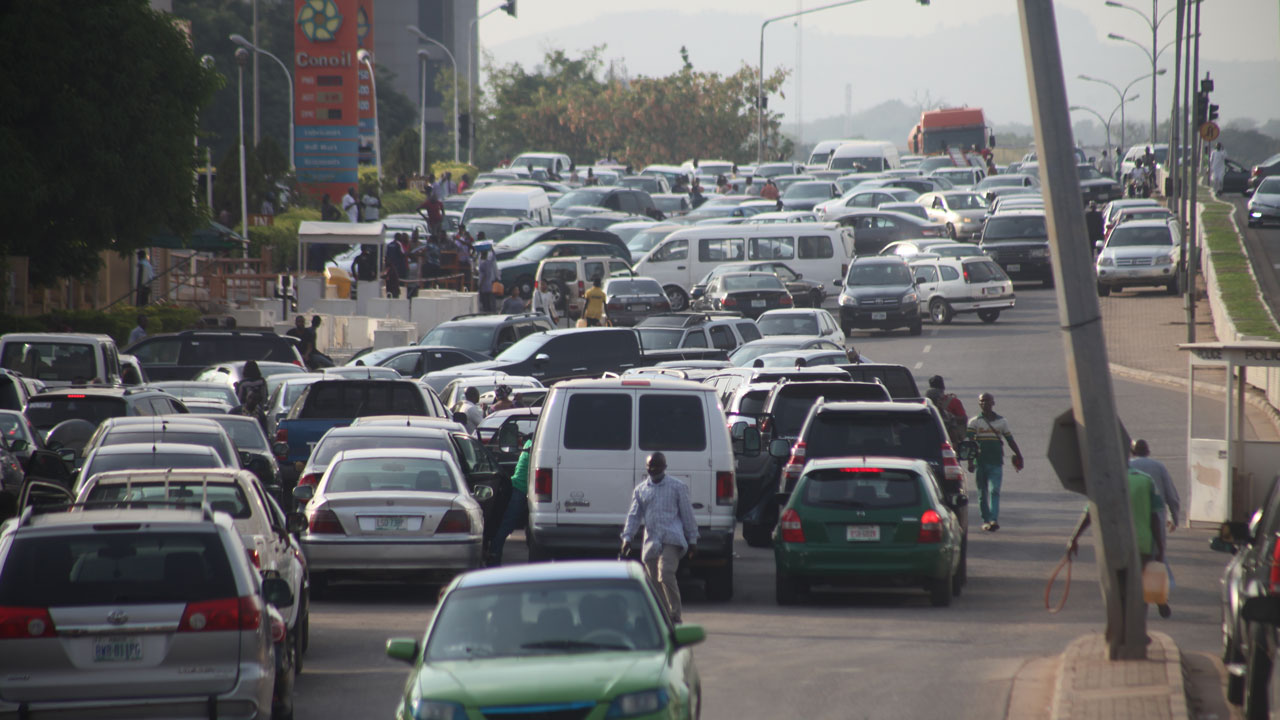
The Federal Government has revealed that the sudden return of queues at filling stations in parts of the country is caused by unresolved feud between petroleum tanker drivers and their employers, among other issues.
The queues are rampant in fuel stations in the Federal Capital Territory (FCT). There have been reports of long queues of motorists struggling to buy petrol since Saturday.

However, Group Managing Director (GMD) of Nigerian National Petroleum Corporation (NNPC), Mele Kyari, assured the nation that the queues would soon disappear.
He gave the assurance, yesterday, while fielding questions from newsmen at the Presidential Villa, Abuja after he debriefed President Muhammadu Buhari on the goings-on in the nation’s petroleum sector.
Kyari attributed the observed scarcity to suspension of operations by the tanker drivers, who are protesting with their employers over some labour issues, assuring Nigerians that the worst was over as the strike had been suspended for one week.
The GMD said the tanker drivers, as at yesterday, had resumed lifting fuel from depots across the country.

“These queues will go away. It is because there was an industrial action by petroleum tanker drivers against their employers, the National Association of Road Transport Owners, around their compensation package. Those issues were not resolved up till yesterday (Monday) until we intervened to ensure that there’s an amicable settlement between the parties so that they will have peace and then normal loading operations will commence from the depots.
“As I speak to you, loading has commenced in all depots in the country, dispatching of trucks is ongoing in all the depots. They have called off the strike for a period of one week to enable us intervene and find a solution. So there’s really nothing fundamental that is happening now.”
The NNPC boss added that the agreement arrived at with the aggrieved drivers would enable the authorities to concretise a more lasting solution to the issues.
On the plan to end the petrol subsidy regime, Kyari said government was still in the process of coming up with the best way out of the debacle for the best interest of Nigeria.
“Subsidy is a policy matter. I’m sure you’re aware of this, there are engagements going on within government to get the best framework for having a fully deregulated PMS market.
“As this is going on, we are engaging all parties and all stakeholders as government and to make sure that at the end of the day, there’s an exit that is beneficial to the ordinary man.”


The Ogun East senator’s camp says his 115,147-vote victory reflected grassroots support, while Abiodun insists his intervention helped secure the APC ticket
The President says ageing facilities must become profitable assets as his administration pushes reforms across the petroleum sector

Joseph Hayab says religious leaders should moderate their language as debate over Nigeria’s 2027 presidential ticket intensifies
-
Politics2 years ago
13 Ondo Assembly Members Disown Endorsement of Aiyedatiwa
-
Politics2 years ago
APC Group, Ondo Govt, Quarrel Over Money for Endorsement
-

 Trending News5 years ago
Stop unsavoury, inciting statements – DSS warns
-

 Others5 years ago
Adron Homes Celebrates 10 Years Of Housing Excellence
-

 Humanity5 years ago
President Buhari Commiserates With Ambassador Maureen Tamuno Over The Loss Of Her Father
-

 Others7 years ago
EX- CUSTOMS BOSS, IBRAHIM MERA’S DWINDLING FAME
-

 Business2 years ago
Bigi Carbonated Soft Drinks Treats 40 Consumers to an Epic Easter Movie Hangout
-

 Business2 years ago
Wema Bank Shines at Global SME Finance Forum Conference Awards 2024 …Awarded: • SME Financier of the Year (Africa) • Platinum Award for Best Financier for Women Entrepreneurs (Africa)