
Politics
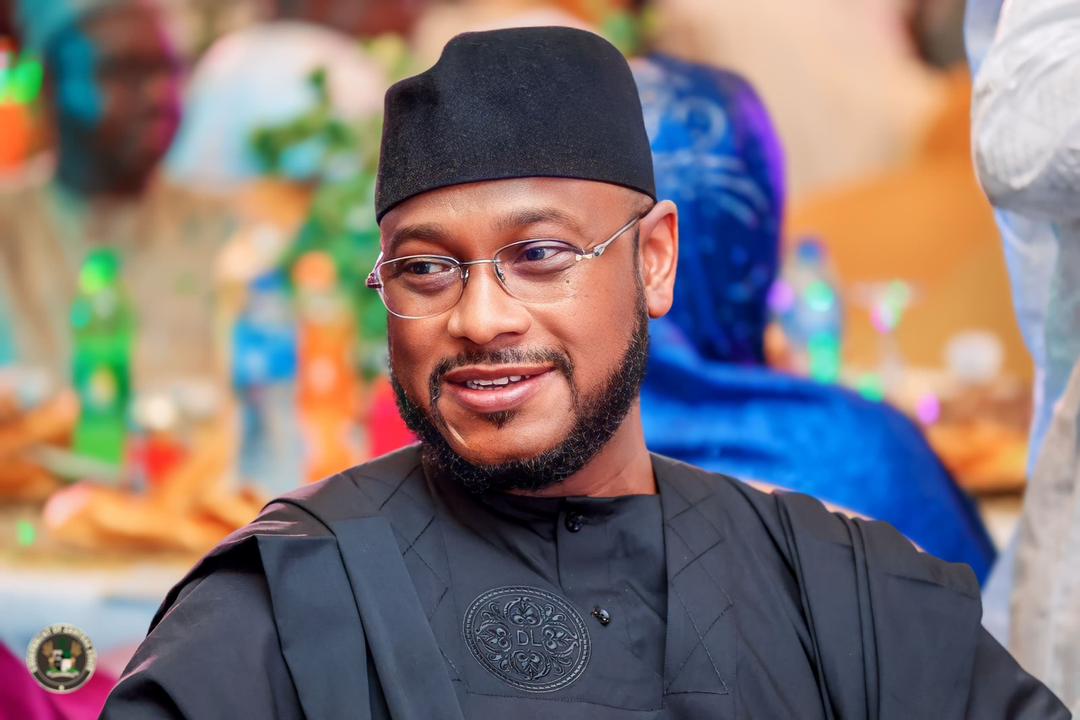
Rescue Mission 2.0: Why Zamfara Must Return Governor Dauda Lawal in 2027

Oladapo Sofowora

The scorching sun rises over Gusau, Zamfara State, casting golden rays of light on a city that once knew only bleak shadows. Construction cranes, heavy-duty lifting machines adorn the skyline like mechanical giraffes, their arms dangling gracefully as they lift heavy steel and pour concrete into place. The rhythmic sound of hammers, rammers, and drilling machines, and the steady hum of generators fill the air; the unmistakable symphony of a state being reborn becomes all too visible. This is the vivid picture of the Zamfara of today made possible by the Chief Rescuer; Governor Dauda Lawal. As Machiavelli said; “Whoever wishes to foresee the future must consult the past; for human events ever resemble those of preceding times.” But to understand where it is going, one must first understand where it has been.
Just over three years ago, Zamfara State was bleeding dry from every deep cut one can ever imagine. Schools were roofless shells where children sat on bare floors, their dreams of education slowly suffocating under the weight of total neglect. Hospitals were little more than abandoned buildings, their empty beds and peeling paint serving as grim monuments to a government that had abandoned its people. Bandits roamed freely across the state, burning villages, kidnapping children and killing with sheer impunity. Civil servants hadn’t been paid in months and retirees from as far back as 2011 were still waiting for their hard-earned gratuities. Clean portable water became a luxury. There was no ray of hope in the distance. Zamfara had become a byword for failure, poor, a cautionary tale whispered across Nigeria about what happens when governance collapses. Like the true messiah, God’s gift to the state Governor Dauda Lawal came into the picture to rewrite the story of the state.
When he took office on May 29, 2023, Governor Lawal inherited a state in ruins, people in despair and a system that had ceased to function. But rather than tiptoe around the crisis by offering empty promises, he knew he couldn’t keep, he did something unprecedented. He declared states of emergency on all aspects of the nonfunctional state. On November 14, 2023, he declared a State of Emergency in Education. On January 30, 2024, he declared a State of Emergency in Health. Some called it drastic. He called it the necessary action.

Across the length and breadth of Zamfara State, a revolution began. In the dusty villages of Bukkuyum, in the crowded neighbourhoods of Gusau, in the remote hamlets of Maru and Anka, the governor’s rescue mission began to take shape. Over eight hundred schools have been rebuilt or renovated, their fresh paint and new roofs standing as defiant statements that education matters in Zamfara. The Adolescent Girls Initiative for Learning and Empowerment project alone has renovated 174 schools in its first phase, with forty more already approved for intervention. Solar-powered boreholes now provide clean water in 115 schools, liberating children from the burden of walking miles to fetch water before class. Seven hundred and fifty new toilet units have been constructed, restoring dignity to students who once had no choice but to relieve themselves in the open. Nearly ten thousand three-seater desks have been provided to children who once sat on cold, hard floors. When his administration discovered that WAEC results from 2018 to 2022 had been withheld because the government hadn’t paid examination fees, he authorised the immediate release of N1.4 billion to clear those debts. Results were released. Futures were restored. Young people who had given up on their dreams of higher education suddenly saw those dreams within reach again. NECO fees were paid for every public-school candidate. Children who had been written off by a failed system were given a second chance.
No achievement has resonated more deeply with Zamfara’s people than the governor’s handling of security. For years, bandits held the state hostage, their reign of terror so complete that entire communities were reduced to ghost towns. Villages burned. Children were abducted from their schools, farmers deserted their farmlands and traders couldn’t trade. The government seemed powerless, reduced to negotiating with terrorists and paying ransoms that only emboldened the criminals more until Governor Lawal took a different approach stating boldly that his administration would never enter into peace deals with terrorists. “We will never negotiate with bandits. We will hunt them down. We will dismantle their networks and we will restore peace to Zamfara.” He said in one of his briefings. Reiterating his commitment to securing the lives and properties of his people as the Chief Security Officer of the State.
In a series of coordinated operations that demonstrated both strategic brilliance and unwavering resolve, security forces neutralised some of the most notorious bandit kingpins in the state and by extension the region. Habibu Sububu, the kingpin who terrorised the entire North West, was eliminated. Kachalla Ali Kawaje, who abducted students from Federal University Gusau, met his Waterloo. Kachalla Jafaru, Kachalla Barume, Yellow Sirajo, Isyaka Gwarnon Daji among others had their reign of terror ended by Governor Lawal’s administration. The governor also invested heavily in security infrastructure, handing over 140 operational vehicles to security agencies and establishing the Community Protection Guards, a volunteer force of local hunters and vigilantes who were trained, equipped and integrated into the security architecture. Weekly Security Council meetings ensured that intelligence was shared, strategies were coordinated and action was swift. For the first time in years, Zamfara’s farmers are returning to their farmland, markets are reopening and children are walking to school without fear of being attacked.
The health sector has undergone an unprecedented transformation. In Maradun, a once-neglected town where the general hospital had become a death trap with its leaky roofs, broken equipment and complete absence of medicines, the facility now stands as a modern healthcare centre where mothers give birth safely and children receive treatment for diseases that once killed them. Maradun is not an isolated case. Hospitals in Maru, Kaura Namoda, Gusau and Anka have all been renovated and upgraded with state-of-the-art equipment. Their pharmacies have been restocked as health workers are being recruited and trained to meet the teeming demands of the state. Medications are now available to the dispensed while lives are being saved daily. Governor Lawal’s vision extends beyond bricks and mortar. The Huriyya Dauda Lawal Sexual Assault Referral Centre, an initiative by the First Lady of Zamfara State; the first of its kind in Zamfara, now provides medical care, counseling and support to victims of gender-based violence. Through partnerships with UNFPA, eighty women have been trained in vocational skills, gaining economic independence and dignity.
Gusau itself is almost unrecognisable from what it was three years ago. New roads cut through the city like arteries of progress. Streetlights brighten neighbourhoods that were once dark and dangerous, where residents lived in constant fear of nighttime attacks. The JB Yakubu State Secretariat gleams with fresh paint and thorough renovations. The Sardauna Memorial Stadium has been restored to its former glory, a source of pride for a state that had forgotten what pride felt like. Clean, potable water flows from taps in communities that had been forced to drink from rivers, their children suffering from waterborne diseases that should have been eradicated decades ago. The Broadcasting Organisations of Nigeria recognised Governor Lawal as Infrastructure Governor of the Year for this transformative work, but for the governor, the award is secondary to the impact on people’s lives.
The governor also tackled the water crisis head-on, building solar-powered boreholes in five communities and constructing earth dams for irrigation. The government invested in mechanised farming and agro-processing, creating jobs and improving food security in a state where hunger had become a weapon of mass destruction. But perhaps most importantly, Governor Lawal demonstrated that governance could be efficient and accountable. He inherited a bloated bureaucracy that was draining the state’s resources without delivering services and he acted decisively, reducing ministries from twenty-eight to sixteen and permanent secretaries from forty-eight to twenty-three. The savings were redirected to the people. Four months of salary arrears were cleared for state and local government workers. Thirteen billion naira in outstanding gratuities was paid to retirees who had been waiting since 2011. Civil servants received a leave grant of ten per cent of their annual salary during Ramadan 2024, a first in Zamfara’s history.
Governor Lawal’s vision is not limited to his current term. He has unveiled a comprehensive ten-year development plan, a roadmap for Zamfara’s transformation built on six pillars: economy, infrastructure, social welfare, human capital, governance and environmental sustainability. The plan has attracted international attention and support, with representatives from the African Development Bank expressing confidence that Zamfara is poised to become a benchmark for transformative economic growth in Nigeria and across Africa. The state is harnessing its potential in agriculture and natural resources leveraging mechanised farming, agro-processing and its value chains to create more jobs, improve food security and reduce poverty-driven insecurity to ensure generational transformation.
In May 2026, APC stakeholders in Zamfara endorsed Governor Dauda Lawal as their consensus candidate for the 2027 governorship election. The endorsement was not a rubber stamp nor a political calculation, but a recognition of the governor’s unprecedented performance and the urgent need for unhindered continuity.
The rescue mission is underway, but it is far from complete. The foundations have been laid, the seeds have been planted, the first fruits have been harvested, but the harvest is not yet fully gathered. Zamfara needs time to consolidate the gains, to build on the progress, to ensure that the transformation is irreversible. Governor Lawal himself makes no apologies for seeking a second term. He has started a rescue mission where he has rebuilt over eight hundred schools, renovated hospitals, restored water, neutralised bandit kingpins, paid salaries and restored dignity. But the job is not done yet, the foundation has been laid, it’s time to build the house. The seeds have been planted, harvest needs time. The race has started, but the finish line is yet to be crossed.
The people of Zamfara have seen what is possible. They have witnessed a governor who keeps his promises, who works tirelessly, who governs with integrity and vision. They have experienced the difference between a leader who serves and a leader who rules. When they go to the polls in 2027, they will not be voting for a man. They will be voting for a shared future, continuity, progress and for Zamfara. Governor Dauda Lawal has already proven himself worthy of their trust. Now it is time for them to allow him to complete the good work he has started. The rescue mission continues; with Governor Dauda Lawal at the helm, Zamfara will continue to rise.


Politics
Governor Dauda Lawal commits to more infrastructure development as APC Campaign Storm Shinkafi LGA
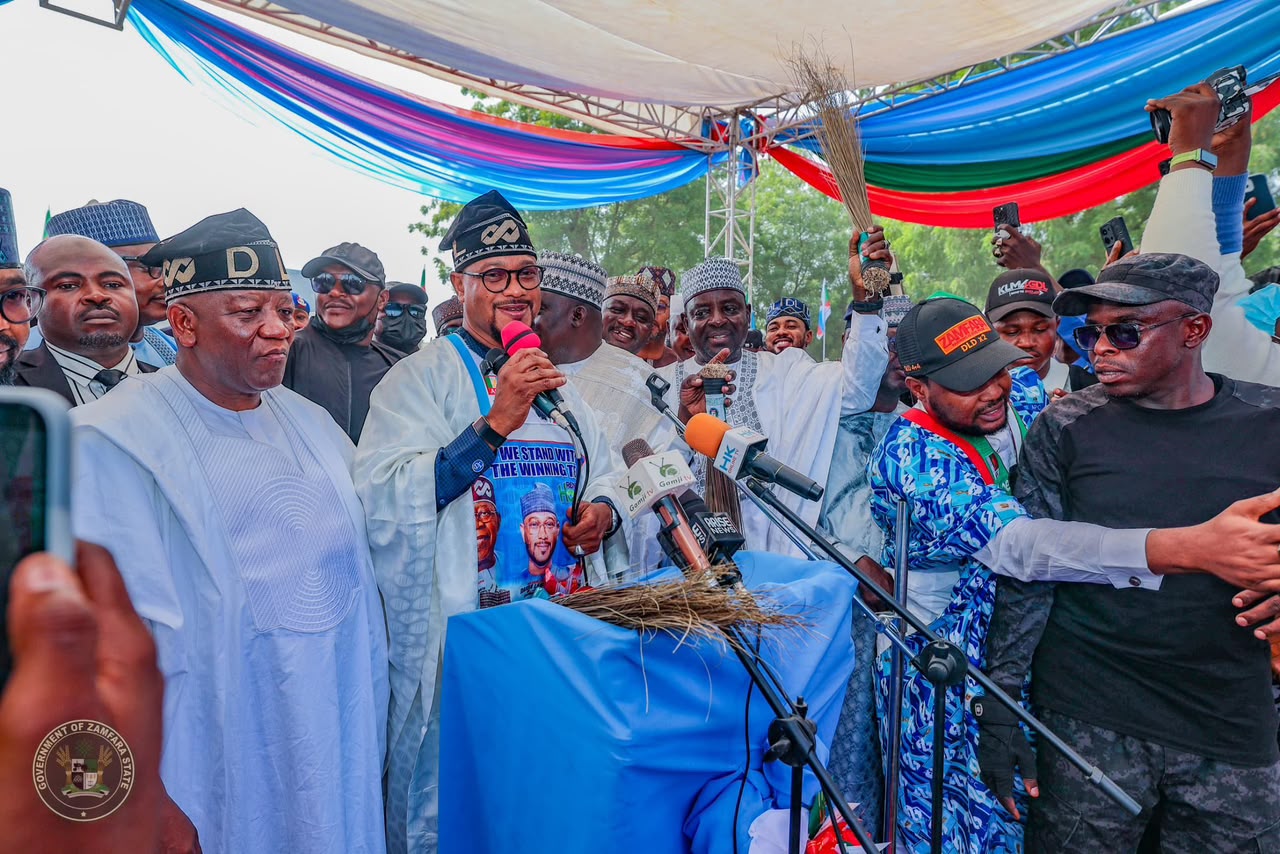
Zamfara State Governor Dauda Lawal has pledged to deliver more projects in Shinkafi Local Government Area.
The governor made the promise on Friday during the APC Zamfara North campaign flag-off rally, held at the Eid ground in Shinkafi.
The rally brought together key party stakeholders, including the Director General of the Tinubu/Shettima Presidential Campaign Council and former governor Abdul’aziz Yari; former governor Mahmuda Aliyu Shinkafi; Zamfara State APC Chairman Kabiru Moyi; and other party leaders.
Tens of thousands of supporters welcomed the entourage at the city gate, chanting slogans in support of the party.
In his speech, Governor Lawal thanked the people of Shinkafi for their solidarity and warm reception.
He noted that the referral hospital project being undertaken by his administration would mark a turning point for healthcare in Zamfara and across the North West.
He said, “I am delighted by the reception we received today in Shinkafi. It is encouraging and shows that the people are pleased with the work we are doing.
“We have achieved a lot in education, healthcare, infrastructure and the economy, among other areas.
“My administration has rehabilitated six primary healthcare centres, including those in Badarawa, Birnin Yero, Galadi, Jangeru and Kurya.
“The referral hospital project in Shinkafi is a legacy project that is very important to my government.
“Over the past three and a half years, my administration has completed 22 of 31 projects. The remaining nine are ongoing and more than 80 per cent complete.
“I am here once again to seek your votes. Vote for President Bola Ahmed Tinubu, vote for me, and vote for the APC from top to bottom in the upcoming 2027 general election.”

Sule Lamido defends his son’s Jigawa governorship bid, urging critics to assess Mustafa’s qualifications and leadership ability independently
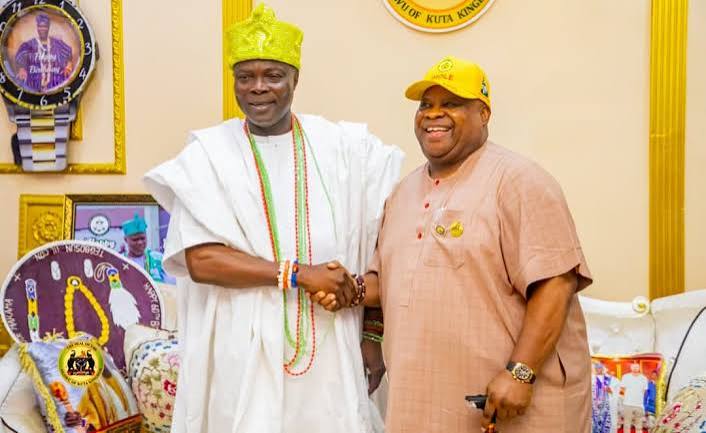
Olowu Kuta urges peace as he congratulates Adeleke’s reappointed officials and warns Osun political actors against bitterness ahead of 2027
-
Politics3 years ago
13 Ondo Assembly Members Disown Endorsement of Aiyedatiwa
-
Politics3 years ago
APC Group, Ondo Govt, Quarrel Over Money for Endorsement
-

 Trending News6 years ago
Stop unsavoury, inciting statements – DSS warns
-

 Others5 years ago
Adron Homes Celebrates 10 Years Of Housing Excellence
-

 Humanity5 years ago
President Buhari Commiserates With Ambassador Maureen Tamuno Over The Loss Of Her Father
-

 Others7 years ago
EX- CUSTOMS BOSS, IBRAHIM MERA’S DWINDLING FAME
-

 Business3 years ago
Bigi Carbonated Soft Drinks Treats 40 Consumers to an Epic Easter Movie Hangout
-

 Business2 years ago
Wema Bank Shines at Global SME Finance Forum Conference Awards 2024 …Awarded: • SME Financier of the Year (Africa) • Platinum Award for Best Financier for Women Entrepreneurs (Africa)