
Politics
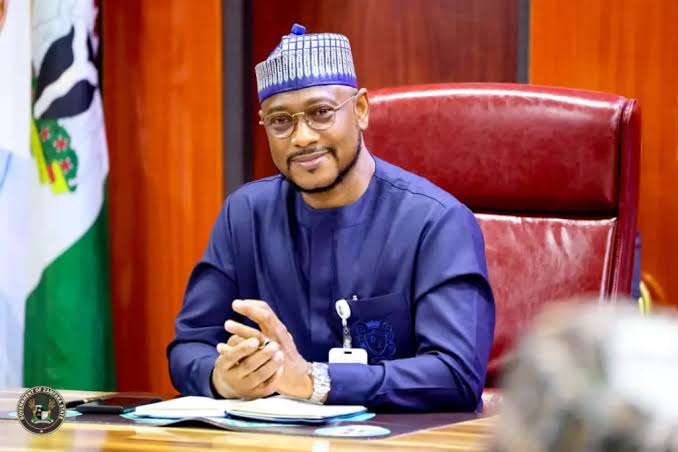
Otunba Gbenga Daniel redefines representation in Ogun East Senate
First-term Senator Otunba Gbenga Daniel sets new standards in Ogun East, sponsoring numerous impactful bills and delivering unprecedented constituent empowerment.


First-term Senator Otunba Gbenga Daniel sets new standards in Ogun East, sponsoring numerous impactful bills and delivering unprecedented constituent empowerment

Ogun East, known for producing renowned personalities from all sphere of life ranging from business to politics, at this time have a distinguished personality who came from the business world to redefine politics in Ogun State…
Also read: Otunba Gbenga Daniel named protocol officer for Pa Ayo Adebanjo’s funeral committee
H.E, Otunba Gbenga Daniel, a first timer at the upper chamber who have created a nich for himself and showcase the true features of how a Senator, the representative of the people should be.
OGD as a Legislator
As a Legislator, a Senator of the Federal Republic of Nigeria, a promoter, defenders of the Constitution and the laws of Nigeria, OGD has not failed in his statutory responsibilities discharging his duties with high standards of personal integrity and conduct.
As a first timer, beating previous Senators from Ogun East, he sponsored live changing Bills as follows :
1. South West Development Commission Bill: Aimed at establishing a commission to drive infrastructural and economic development across the South-West region.
2. Federal College of Aviation Technology, Ilara Remo Bill: Proposes the creation of a federal institution in Ilara Remo, Ogun State, to train aviation professionals.
3. Terminal Illness Trust Fund Bill: Seeks to provide financial support for citizens diagnosed with terminal illnesses, ensuring access to quality medical care.
4. Media Practitioners Registration Council of Nigeria Bill: Aims to professionalize the media industry by establishing a regulatory council to uphold ethical standards.
5. Border Communities Development Agency (Amendment) Bill: Intends to strengthen the agency responsible for improving living conditions in Nigeria’s border areas.
6. National Agency for Science and Engineering Infrastructure Act (Amendment) Bill: Aims to enhance Nigeria’s scientific and technological capacity by empowering NASENI.
7. Hospices (Establishment) Bill: Proposes the establishment of hospices across Nigeria to provide specialized care for individuals with life-limiting conditions.
8. Constitution of the Federal Republic of Nigeria (Birth-Right Citizenship) Bill: Seeks to grant Nigerian citizenship to individuals born in the country, irrespective of their parents’ nationality.
9. Constitution of the Federal Republic of Nigeria (Sovereign Investment Authority and Sovereign Wealth Fund) Bill: Aims to protect Nigeria’s Sovereign Wealth Fund and ensure its transparent management for long-term economic development.
10. FCT, Destruction of Mosquitoes and Other Disease-Bearing Insects Bill: Focuses on eradicating mosquitoes and other disease-bearing insects in the Federal Capital Territory to reduce the prevalence of diseases like malaria.
11. Rural Electrification Fund Bill: Seeks to provide funding for rural electrification projects, ensuring underserved rural communities have access to reliable electricity.
12. Youth Empowerment and Development Bill: Proposes the creation of a framework for empowering young Nigerians through education, skills development, and job creation initiatives.
13. National Health Insurance Bill: Aims to expand Nigeria’s national health insurance scheme, making healthcare services more affordable and accessible to all citizens.
14. Ijebu State bill: A bill for the creation of Ijebu State, which passed its first reading in November 2024. The proposed state would comprise nine local government areas carved out from Ogun State, with Ijebu Ode designated as the state capital.
As a first timer, beating previous Senators from Ogun East, he sponsored life changing Bills… and empowered more people than previous Senators from Ogun East put together.
Apart from his feat as a first timer with the highest numbers of sponsored Bills, OGD also stands out as the most effective and accessible Senator ever produced by Ogun East.
A good listener who is readily available for his people and feeling their people pulse by engaging his constituents as often as he can, using such medium to receiving/giving feedback from his constituents,
Commitment to Human Development and Empowerment
The basic responsibility of the lawmaker is to make laws and perform oversight functions but that is not the only function Otunba Gbenga Daniel, a lover of the Youth, a Visionary leader with penchant for human development and Empowerment has empowered more people than previous Senators from Ogun East put together…
This feat is as a result of his political will,dogged commitment and relentless resilience to keep serving the food people of Ogun East and making their lives better.
OGD’s interpersonal skills and rapport with all strata from his constituents and across board stands out coupled with his high level of empathy the indigent.
This bring about the number of lives of individuals and families he had touched using various forms of scheme, training and empowerment which has attached him to the people thereby showing how effectively he is attending to their issues and needs.
H.E, The Senate , Otunba Gbenga Daniel has this far initiated several empowerment programs to support his constituents in Ogun East Senatorial District. Some of these include:
– Agricultural Empowerment Program: This program aims to support small-scale farmers in Ogun East by providing them with resources such as fertilizers to enhance agricultural productivity.
– Interest-Free Microcredit Scheme: This initiative provides financial assistance to petty traders, artisans, and small-scale farmers, helping them grow their businesses and contribute to the local economy ².
– Vocational Training Program: Senator Daniel has unveiled a comprehensive vocational training program in partnership with the National Horticultural Research Institute (NIHORT) Ibadan.
– Manpower Training Programs: He has also initiated record-breaking numbers of manpower training programs in Ogun state, providing thousands of residents with skills and training to secure good-paying jobs.
– Annual Choir Festival: Additionally, Senator Daniel sponsors an annual choir festival, which aims to promote music and arts, and provide a platform for young talents to showcase their skills. They do not just exhibit talent, they go home empowered financially.
– Free Eyes Surgical Treatment and Glasses This has become a practice virtually every 3 Months since the Senator got into office. Thousands of people which includes young and age who had issues with their sight are now out of such challenges owing to the support and sponsorship by the Senator
His penchant for development has been brought to the front burner considering the types of infrastural projects initiated by the Senator.
– Renovation of Schools: He renovated the Otunba Gbenga Daniel Model School in Sagamu and Omu Ajose Comprehensive School.
– Establishment of Federal College of Aviation Technology: Senator Daniel initiated the establishment of the Federal College of Aviation Technology.
– Naval Base Project: He also initiated the Naval Base project, which aims to improve maritime security in the region.
– Road Rehabilitation : Numbers of linked roads initiated by the Senator has been on going while some are near completion.
All in the bit to make life bearable for road users and other motorists in Ogun East One notable example is the Rehabilitation of Otunba Gbenga Daniel Road in Omu, Ogun East Senatorial District, with a project code of ERGP20246008.
In just two years in office, the Senator has been able to achieved so much and can do much more if given the opportunity to return as a second timer and likely become a principal officer which in turn will be of positive impact to the Senatorial district in times of more benefit and government patronage.
For consistency continuity and effective representation, the ideal thing is for the APC to consider giving the party ticket for Ogun East Senatorial district to H.E, The Senator, Otunba Gbenga Daniel who have proved himself worthy and deserving of a Second term for no Coach in an ideal situation will change his “winning team”.


-
Politics3 years ago
13 Ondo Assembly Members Disown Endorsement of Aiyedatiwa
-
Politics3 years ago
APC Group, Ondo Govt, Quarrel Over Money for Endorsement
-

 Trending News5 years ago
Stop unsavoury, inciting statements – DSS warns
-

 Others5 years ago
Adron Homes Celebrates 10 Years Of Housing Excellence
-

 Humanity5 years ago
President Buhari Commiserates With Ambassador Maureen Tamuno Over The Loss Of Her Father
-

 Others7 years ago
EX- CUSTOMS BOSS, IBRAHIM MERA’S DWINDLING FAME
-

 Business2 years ago
Bigi Carbonated Soft Drinks Treats 40 Consumers to an Epic Easter Movie Hangout
-

 Business2 years ago
Wema Bank Shines at Global SME Finance Forum Conference Awards 2024 …Awarded: • SME Financier of the Year (Africa) • Platinum Award for Best Financier for Women Entrepreneurs (Africa)