
Opinion
Power, Memory and Ambition: Inside Abiodun’s Senate Gamble

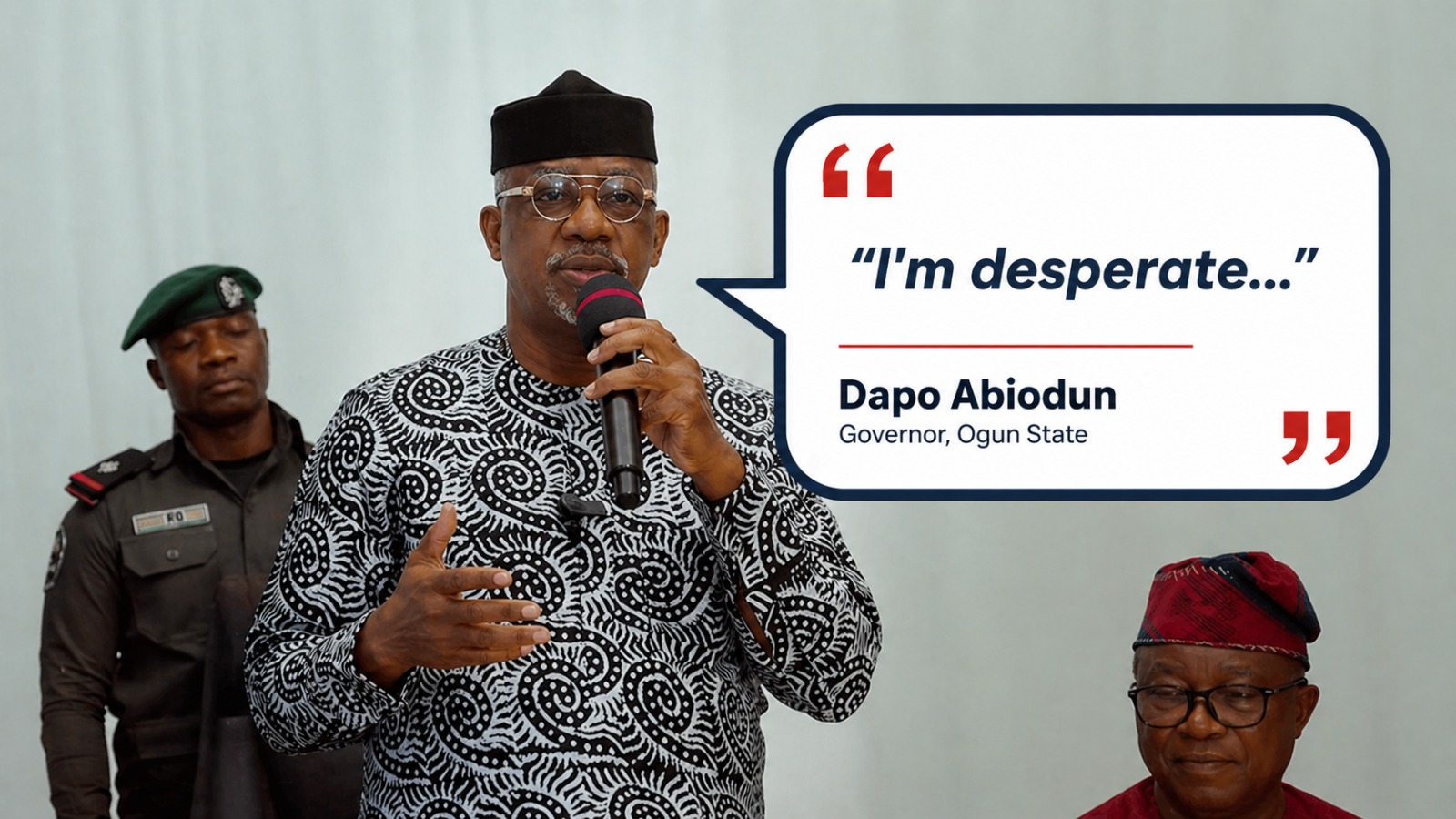
A political dispute emerges in Ogun East over competing accounts of the 2023 Senate election and rising tensions ahead of 2027
By Victor Ojelabi

In Ogun politics, memory is often short and ambition is rarely patient. That is why the recent video of Dapo Abiodun, making an emotional case for his Senate ambition, has stirred more than just sympathy. It has reopened old arguments, revived buried tensions, and forced a closer look at the truth behind the 2023 Ogun East senatorial contest.
Also read: Lagos Lawmakers Back Tinubu Second Term, Appoint Clerk
The governor, nearing the end of his tenure, appears eager to transition smoothly into the National Assembly. In the now-circulating clip, he presents himself as a key architect of the emergence of Gbenga Daniel as senator in 2023. It is a claim that, on the surface, suggests loyalty rewarded and political generosity extended.
But politics in Ogun East is rarely that simple.
For many observers, the tone of the governor’s appeal raises eyebrows. This is a man long perceived as firm, even forceful in the exercise of power.
Seeing him adopt a softer, almost pleading posture has struck some as a sharp contrast to the image he cultivated while in office.
It is this contrast that has fuelled questions about whether the narrative being pushed is one of convenience rather than fact.
At the centre of the debate is a straightforward question: did Dapo Abiodun truly play a decisive role in Gbenga Daniel’s path to the Senate?
The historical record suggests otherwise.
The journey that brought Gbenga Daniel back into frontline politics was neither accidental nor dependent on gubernatorial backing.
After serving two terms as governor between 2003 and 2011, Daniel had stepped back from partisan contests.
His return was gradual, strategic, and anchored on structures he had built over years. By the time he formally joined the All Progressives Congress in 2021, he was not a political novice seeking endorsement but a seasoned actor reactivating an existing network.
Across Ogun East, his influence remained intact. From Remo to Ijebu divisions, his grassroots connections and loyalty base placed him ahead of most aspirants even before the primaries began.
What followed in 2022 was less a coronation and more a contest of influence.
Within the APC, factions had already taken shape. On one side were loyalists of the sitting governor. On the other were remnants of the camp aligned with Ibikunle Amosun.
Daniel, though newly integrated into the party, operated largely outside these traditional blocs, relying instead on his independent political machinery.
Accounts from that period showed that Governor Abiodun was not in support of Daniel’s Senate ambition.
Party structures under his influence were reportedly directed to withhold backing. There were also administrative pressure on individuals seen to be aligning with Daniel’s campaign.
Yet, despite these headwinds, Daniel’s campaign gathered momentum.
The primary election, held in Ijebu Ode, was already tilting in his favour as delegates cast their votes. Early indications showed a clear lead. It was at this critical juncture that a different kind of power entered the equation.
Oba Sikiru Adetona, one of the most influential traditional rulers in the region, stepped in.
His intervention reshaped the outcome in a way that political manoeuvring alone could not have achieved. Through his mediation, the then incumbent senator, Olalekan Mustapha, agreed to step down.
With that decision, the field effectively cleared.
The numbers that followed reflected what had already become evident. Daniel secured an overwhelming majority of delegate votes, leaving little doubt about his dominance in the race.
What could have been a prolonged intra-party struggle was resolved swiftly, not through executive backing, but through a combination of grassroots strength and traditional influence.
By the time the general election arrived in 2023, the momentum was firmly on his side. Victory at the polls only confirmed what the primaries had already demonstrated.
This sequence of events complicates the narrative now being advanced.
If anything, it highlights the limits of gubernatorial control in a political environment where history, loyalty, and cultural institutions still carry weight.
It also underscores the enduring relevance of traditional authorities in the South West, particularly in places like Ijebuland, where their word can recalibrate political equations overnight.
None of this diminishes the reality that alliances in politics are fluid.
Otunba Daniel himself had, at an earlier point, supported Abiodun’s governorship bid, contributing to a narrow electoral victory.
But support in one cycle does not automatically translate into control in another.
Today, as the contest for Ogun East ahead of 2027 begins to take shape, the lines are once again being drawn.
The relationship between the two men has clearly evolved from cooperation to competition.
What the current moment reveals is not just a clash of ambitions, but a contest over narrative. One side seeks to frame history as an extension of its influence.
The other stands on a record built through independent mobilisation and timely alliances.
For voters in Ogun East, the question may ultimately come down to credibility.
Beyond campaign rhetoric and emotional appeals lies a more enduring consideration: who truly understands the dynamics of representation, and whose track record aligns with the expectations of the people?
Is it someone who left Oke Mosan and came back after 12years with overwhelming supports to win the senate seat or someone who is yet to exit Oke Mosan, yet has more than half of Ogun people wishing he was never a governor?
Also read: Lagos Lawmakers Back Tinubu Second Term, Appoint Clerk
In the end, politics may allow for reinvention, but it rarely permits a complete rewriting of events.
So Dapo, stop lying.


By Bola BOLAWOLE,
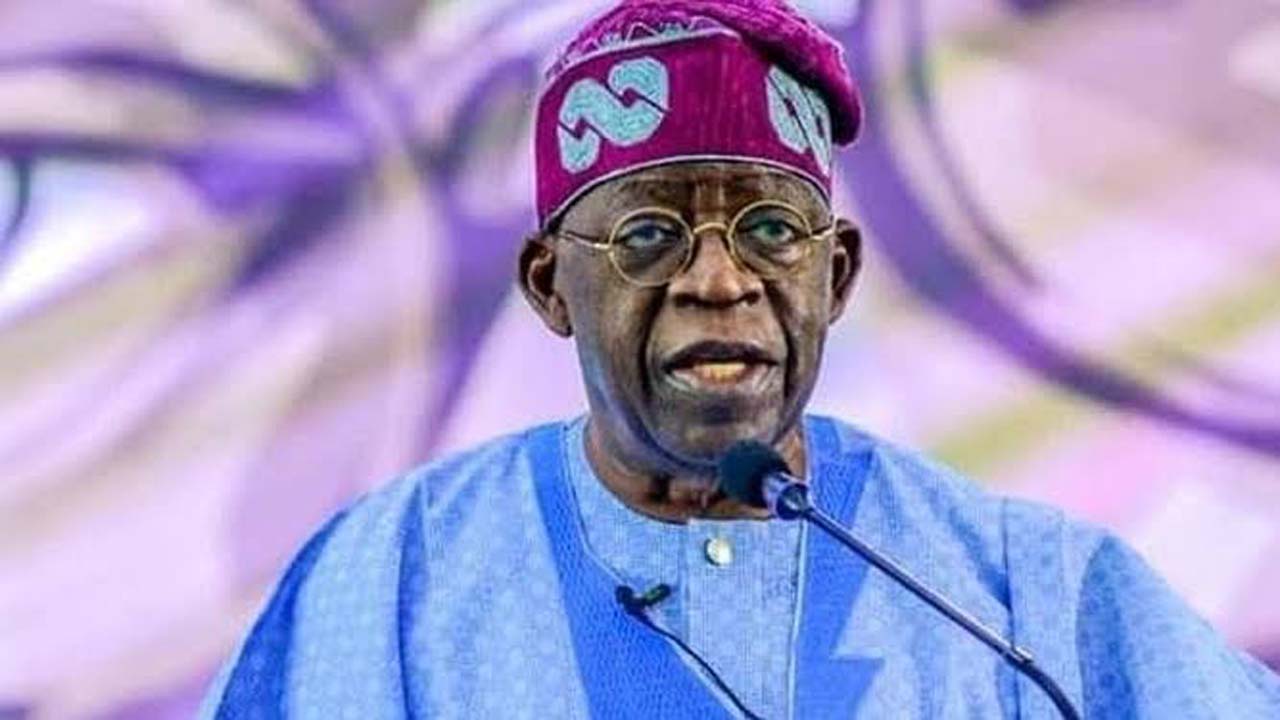
You must have heard it said that President Bola Ahmed Tinubu has the Nigerian media in his pockets. You may want to wonder how “deep” Tinubu’s pockets are that he can swallow all Nigerian media organizations! In some sense, that idiomatic expression can be true: Tinubu belongs to the tribe of a few Nigerians with “deep” pockets; meaning that they have near-limitless financial resources and clout with which they can buy or influence anything and anyone. Don’t forget that even the Scriptures say “money answereth all things” (Ecclesiastes 10: 19 KJV).
Also read: Governor Dauda Lawal And The New Zamfara State
You will also remember that a similar thing was said of the late MKO Abiola, winner of the annulled June 12, 1993 presidential election, the freest and fairest in Nigeria’s chequered history, but which was annulled for inexplicable reasons by military dictator, Gen. Ibrahim Babangida.
But is media ownership not too diffused in Nigeria to allow an individual to put the entire Nigeria media in his or her pockets – including even social media? Are proprietary interests not too conflicting and competing for that to happen? Are today’s Nigerian journalists not too educated, too enlightened, too sophisticated, too urbane, and too professional for a single individual to pocket all of them? What of ideological differences, with many journalists fiercely rejecting pecuniary, “brown envelop” and yellow journalism even at the point of the bayonet?
Many of today’s journalists are proud species and professionals to the core who are committed to their watchdog role of holding the government accountable to the people, regardless of whose ox is gored and without exercising any fear or favor. Yes, there are “white legs” in every profession but Professor Richard A. Joseph’s “prebendalism”, where sentiments such as religion, ethnicity, race, personal relations, and such other sense of entitlements trump merit will hardly allow for a single individual to pocket the media in its entirety.
I got thinking along these lines after reading two of my highly respected columns last Sunday. One was Sonala Olumhense’s “Sonala Olumhense Syndicated” titled “The 2027 election is a survey on stupidity” published on the back page of the Sunday PUNCH newspaper of August 30, 2026.
It was in a very, very bad taste. Sonala, as the Editorial Page editor of The GUARDIAN newspaper, had invited me to the Editorial Board of the then self-proclaimed (and justifiably so!) ‘Flagship” of the Nigerian media. In fact, my first-ever publications in any newspaper were in The GUARDIAN under Sonala’s editorship. They were titled “If I should die unemployed” and “How not to plead for prisoners of conscience.”
Sonala’s line of argument in his piece referenced above hurts, but not the choices he made because he is entitled to them – although, in the same breath, he had denied other Nigerians the right to make their own choices! That faux pas did nothing to diminish Sonala in my estimation, but I felt sorry he went overboard in his desperation to pull Tinubu down but, in the end, promoted vacuity when he said “When there is the kind of menace that APC represents, CREDIBLE OPPOSITION IS ANYONE ELSE (my emphasis) on the ballot.” No sir!
The second of my “Sunday tonic” that got me thinking was Idowu Akinlotan’s “PALLADIUM” on the back page of THE NATION newspaper of Sunday, August 30, 2026 titled “Osun, 2027: APC contends with hostile media.” Reviewing the Ekiti and Osun off-season governorship elections, the one won by APC and the other lost by it, Akinlotan concluded that the Nigerian media was (has become) anti-APC/Tinubu. Can that be true? When and where did it start? Was the media at any point pro-APC/Tinubu? What went wrong? First, snippets from Akinlotan’s piece before we draw our own conclusions:
“Hard as they tried, leaders of the All Progressives Congress (APC) failed to penetrate the reinforced armour of media establishments opposed to their electoral successes since 2023. The ruling party’s fortunes have not changed. Most loathe the ruling party. That the APC won in 2023 without their help and despite their opposition has left the said media enraged. As the party prepares for the 2027 campaigns, and given the unyielding posture of the said media houses, it must by now have made up its mind to go it alone. The party is unable to win new media friends, and has perhaps given up.
“To make a headway (in the) next polls, it must first reflect on the deeply contrasting Ekiti and Osun governorship elections. On June 20 and August 15, the two elections were conducted, barely two months apart, with few intervening variables, and in the same Yoruba region. If it hopes to win next year, it should review newspaper publications of the period June 21 and 22; and August 16 and 17, all representing before and after the poll reports. The media reports were both revealing and troubling.
“Before the Ekiti poll, the papers displayed a sense of resignation, warning darkly about the consequences of rigging the poll or denying the electorate the right to elect a governor of their choice. But the poll went seamlessly, the outcome predictable weeks before, as former governors of the state queued behind the incumbent, Biodun Oyebanji. For media houses which had repeatedly rhapsodised democracy and freedom of choice unfettered by electoral shenanigans, it was expected they would capture the popular mood and abjure the projection of their beliefs and prejudices on the electorate. From casting doubt on the integrity of the polls in their June 20 reports, the media went on, a day after the poll on June 21, to feign objectivity that Mr. Oyebanji was Ieading in the vote count amid vote-buying allegations, unconvincing turnout, and other insinuated malfeasances. There always had to be a but!”
Mr. Akinlotan was right to a great extent. I had written off the Ekiti election, ever before it was conducted, as a coronation of sorts because the opposition, embroiled at the national and local levels by court cases, INEC deregistration threats, internal squabbles and inability to form a united front, did not stand a chance in the election.
The media grudge that Akinlotan spoke about here was actually visible.
But when it came to Osun where opposition Gov. Ademola Adeleke was giving APC a hell of trouble, the opposition media, if I may call it that, came alive, and when Adeleke was coasting home to victory, they celebrated it the way they never celebrated Oyebanji in Ekiti; same when Adeleke was eventually announced as the winner of the election.
Let me start by saying that Akinlotan’s advice that Tinubu should ignore the “opposition” media and go it alone will not serve the president any good.
A better option is to find out what went wrong with a man who courted and cultivated the media, and who was loved and supported by it, and why the reverse is now the case – if we are to take Akinlotan’s narrative as the gospel truth.
Besides, enough evidence has emerged that elections are not won here on social media or by newspaper endorsements.
One: Tinubu started on a wrong footing with the first appointment of a spokesperson. The guy was clearly a misfit for the office. Two: The initial in-fighting within Tinubu’s media team seriously harmed and hampered their performance and dented their image. Three: The truculence of some of Tinubu’s presidential aides, instead of being accommodating and conciliatory, offended and isolated many of their professional colleagues. Four: Some names on Tinubu’s media team embarrass true professionals. Five: Has Tinubu’s media team been proactive enough? How often, how persistently, do they reach out to their professional colleagues with vital information? They should constantly court and cultivate their professional colleagues and not expect it to be the other way round.
Historically, the media is adversarial. It started by fighting the Colonial government for the country’s Independence. I do not think the media has totally purged that advocacy from its bloodline.
It is an aberration when we describe the government and the media as “partners in progress.” The media’s duty is to hold the government accountable to the people by constantly holding government’s feet to the fire – but it should also give kudos when it is richly deserved, just like Babafemi Ojudu did recently on the Lagos-Calabar expressway signature project of the Tinubu administration.
Traditionally, the media supports the underdog. In Osun, Gov. Adeleke was the perceived underdog whereas in Ekiti, the disparate opposition parties were the underdog.
Professionally, the media is sensational. Bad news makes better news. Hence we were taught that when a dog bites a man, it is not news but when a man bites a dog, bedlam! Sensational news sells newspapers better and faster. Ask readers themselves! They determine what they would like to read!
Respectfully, I do not think Akinlotan’s scare-mongering is the right way to go.
Tinubu should instead re-invent his media team to become more conciliatory and accessible to their professional colleagues – be they so-called opposition or friendly media. Engage with them more frequently.
If people are made to see the other side of any issue, many of them will become more supportive and compassionate.
When people are shut out, deliberately or inadvertently, you lose the right to complain that they are hostile.
Besides, dissenting voices oil the wheel of democracy. Effective media relations takes no one as an enemy but as inescapable partners in the same Nigerian project, even if we see things from different or conflicting prisms or perspectives.
Office-holders should always have it at the back of their mind that there is a terminal date to every appointment.
Also read: Governor Dauda Lawal And The New Zamfara State
If in doubt, ask yourself where are the men and women who occupied the office and sat on the same seat that you occupy today? You, too, will become history!
(Published in the TREASURES column on the back page of the NEW TELEGRAPH newspaper of Wednesday, 2 September, 2026).
By Bayo Adeoye,
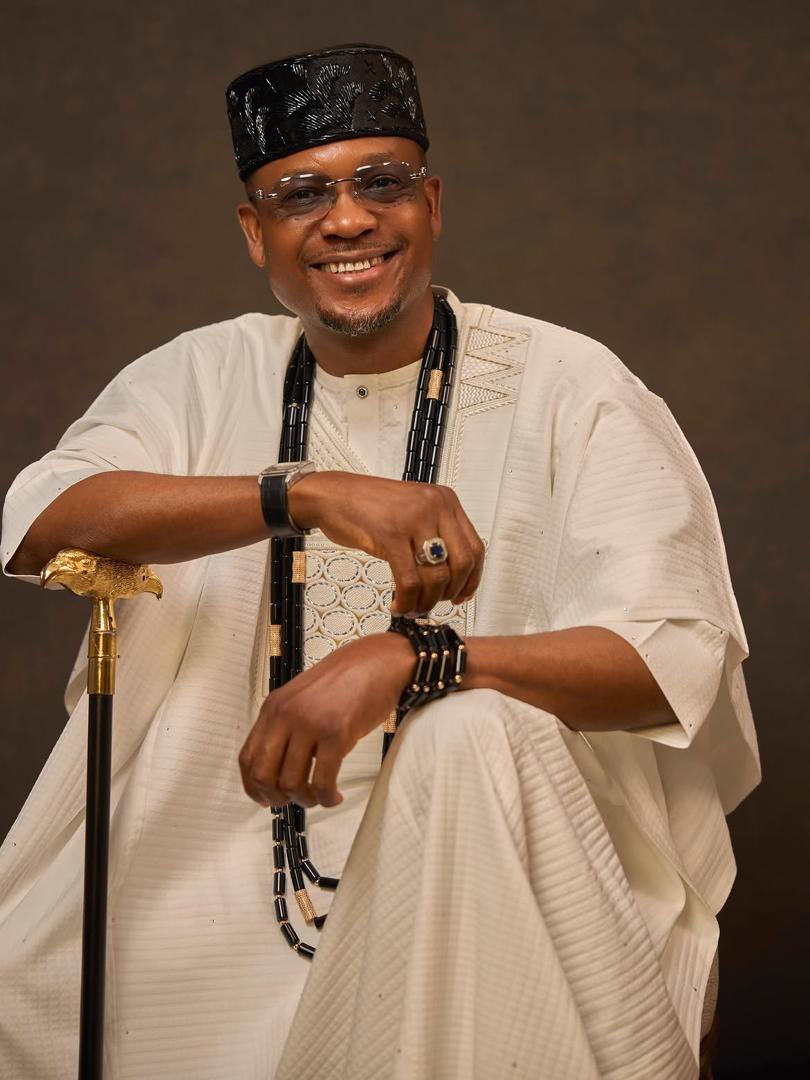
Taking on a sitting government is never an easy task, and according to Hon. Shina Peller, one of the reasons is that many challengers underestimate what they are up against.
Also read: Governor Dauda Lawal And The New Zamfara State
Hon. Shina Peller makes this point in Seun Oloketuyi’s forthcoming book, How to Win an Election in Nigeria, where he reflects on the realities of challenging an incumbent and what it takes to stand a real chance of winning.
He said opposition candidates sometimes mistake the anger people express towards a government or the excitement generated on social media for actual electoral strength.
But, as Hon. Shina Peller explained, there is a big difference between people being unhappy with a government and having a well-organised structure capable of defeating it at the polls.
According to Hon. Shina Peller, incumbents already have established networks and resources working in their favour, giving them an advantage that challengers cannot afford to ignore.
For anyone hoping to unseat a sitting government, Hon. Shina Peller said the work has to begin well before election season.
A challenger cannot simply appear during the campaign period and expect public frustration to do the rest. “Rage against an incumbent is not a strategy; structure is,” he said.
His comments offer a look at one of the biggest realities of Nigerian elections which is, defeating an incumbent requires more than being the alternative. It requires building enough strength to actually compete with the machinery already in place.
Also read: Governor Dauda Lawal And The New Zamfara State
Hon. Shina Peller’s thoughts on incumbency, opposition politics and what it takes to challenge those already in power are featured in Seun Oloketuyi’s How to Win an Election in Nigeria, scheduled for release on September 6.
By Sam Akpe
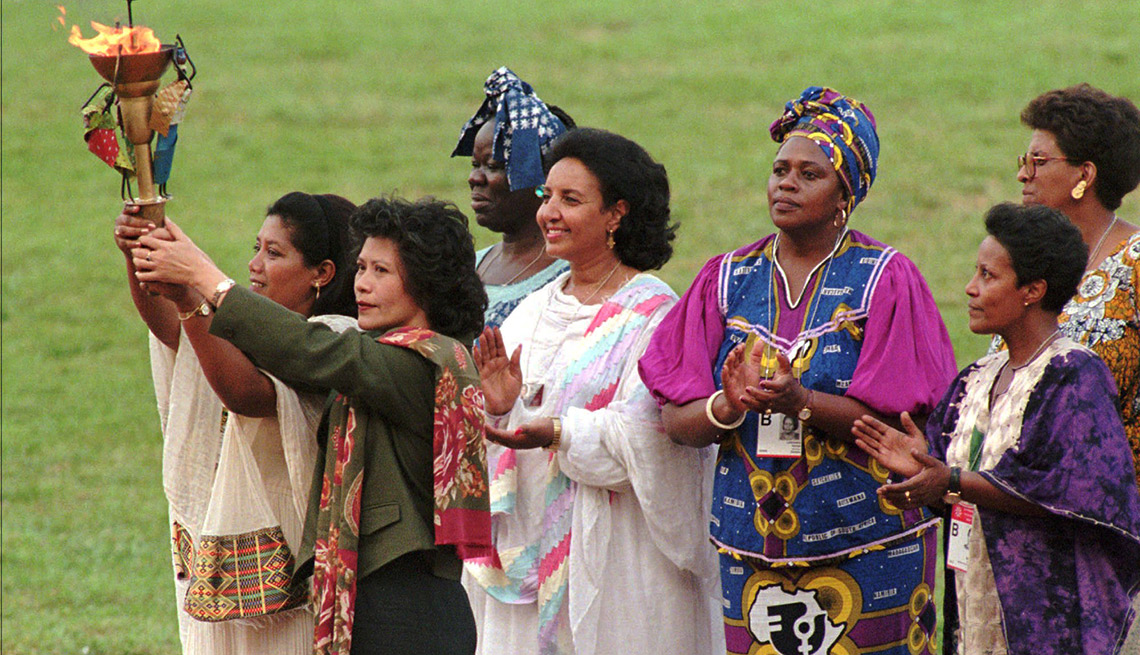
Cast your mind back to 31 years ago—1995 to be exact. Women across the world had assembled in China’s glimmering city called Beijing.
Also read: Tinubu – Time To Resign Or Be Impeached
They gathered to deliberate on global issues which affected femininity. They talked. Chanted. Discussed. Declared. Then dispersed into silence.
The stillness that followed the mind-blowing declarations in Beijing was purely because certain corporate bodies and governments that signed those assertions did so with their hands and not with their hearts—they simply followed the multitudes without individual convictions.
However, the silence could not eclipse the thundering statement by the then First Lady of the United States, Hillary Clinton that: “It is no longer acceptable to discuss women’s rights as different from human rights.”
She did not end there. Just before she concluded her less-than-three-minutes-speech, she left the delegates with a talking point: “If there is one message that echoes forth from this Conference, let it be that human rights are women’s rights and women’s rights are human rights, once and for all.”
That statement must have inspired the Abuja Summit of August 21, 2026. The Summit stood out as an idea whose time had actually come.
Though I was not invited, let me briefly play back what happened, the importance it carried, and the weight of decisions arrived at.
No doubt, the Summit—which lasted over six hours—consumed months of meticulous planning.
It was a pool of people that matter in decision-making in Nigeria. Labelled: Inclusion and National Security Summit, it had as its theme: Advancing Women’s Leadership for Inclusive Governance and Security.
From the array of persuasive voices, it did not look like an event whose resolutions would gather dust in government files.
It had ministers, lawmakers, top security agents, judiciary officers, traditional and religious leaders, development partners, civil society groups, women bodies, persons with disabilities, the media, and some diplomatic personnel, in attendance.
The faith I had, as I listened to successive cogent arguments was: If all these people here and those represented, are speaking in favour of the subject matter, then who will delay the implementation of the resolutions when this is over!
I still have that conviction, that issues examined and agreed upon would not be allowed to rot in files. Someone somewhere will somehow look beyond the usual dismissive politics of they have come again, and take action.
Convened by a non-governmental group: I Teach Africa, the Summit sermonised that women’s meaningful participation in governance, peacebuilding, public policy and national security remains essential to building a peaceful, stable, inclusive and resilient Nigeria.
Every speaker agreed that women should not only be viewed as beneficiaries of development and security interventions, but also as active participants, decision-makers, leaders and contributors to national peace and security.
The chief convener, Mrs. Ebimoboere Elezieanya, was emphatic that “a nation is stronger when every voice has a seat at the table.” Here, she was unambiguously referring to the table of decision-making. It was also meant to connote the assembly of those who matter in the society.
Elezieanya, probably a refreshing emerging voice in national dialogue, highlighted important roles women have historically played in peacebuilding, community development, governance, and national security.
With a forceful tone and a convincing spirit, she called for greater opportunities for women—not as a gift, but as a right—to participate, lead and influence decisions that would shape the country.
If it were only women that spoke at the event, it would have been construed as another search for feminine chauvinist endorsement.
Ironically, men—yes, men comprising technocrat, security agents, lawmakers, policy chiefs, and even traditional rulers—were louder in their opinion of what women could do if allowed a space at the metaphoric table.
What no one actually said was whether women need to wait for an invitation or should simply barge in and take a seat at the table. It actually goes without saying that elbowing their way into recognition could be counter-productive.
It would however be recalled that the historic Aba Women Riot of 1929 was not purely about undue taxation imposed by the colonial government.
It also had a lot to do with negligence of the woman gender at the table when ‘dinner’ was served. The women could not wait any longer.
Participants at the Summit collectively recognised that inclusive governance strengthens democratic institutions, promotes peace, enhances social cohesion and contributes significantly to national security.
They emphsised the indispensable role of women as leaders, peacebuilders, innovators and drivers of sustainable development.
It was their view that women’s meaningful participation in these roles not only remain essential to building a peaceful, stable, secure and prosperous Nigeria, but that their economic exclusion, non-access to education, leadership opportunities, and digital technologies have limited their full participation in national development.
Through individual lecture presentations and panel discussions, participants at the Summit which held on August 21 at the Rotunda of the Ministry of Foreign Affairs, observed that Nigerian women are under-represented in governance, political leadership and security decision-making processes.
This in a way has placed a question mark on the execution or the lack of it, of the popular 1995 Beijing Conference which discussed and agreed on certain attentions that must be accorded women by governments and organisations of the participating countries.
They underscored the importance of inclusive governance and women’s meaningful participation in leadership, because national security challenges affect women disproportionately, particularly in communities affected by conflict, violence, displacement and insecurity.
Beyond political ostracism, the Summit noted that economic relegation, poverty and unemployment among women have increased vulnerability and also undermine peace, security and community resilience.
Conversely, education, mentorship and leadership development prepare the female gender for inclusion in governance, public policy and decision-making.
While acknowledging existing policies and legal frameworks on the various issues raised, it was agreed that they require stronger implementation, monitoring and accountability so as to achieve measurable progress in women’s inclusion and representation in governance.
In its simple resolutions, the summit wants government to promote inclusive, transparent, accountable and responsive governance at all levels, and strengthen women’s meaningful participation and representation in political leadership, public administration, governance and decision-making processes.
It also wants government to practically mandate political groups, government agencies and relevant stakeholders to eliminate hurdles and create realistic pathways for augmented women’s participation in leadership—even through mentorship and capacity building
Security agencies were required to strengthen participation by women in peace-building, conflict prevention, security decision-making and community safety initiatives, while emphasizing community-based approaches to early warnings, conflict preventions, and dialogue.
The demand for economic empowerment of women through entrepreneurship development, vocational training, sustainable livelihood opportunities, access to financial literacy, credit facilities, partnerships that create employment, mentorship, innovation and economic opportunities was also made.
Participants observed that in the 21st century Nigeria, certain traditions, communities and families still prevent female children from pursuing education and leadership opportunities. Such a barrier, they observed should be statutorily demolished.
However, most of the demands made by the summit do not seem to require government intervention to function.
For instance, access to digital technologies, digital literacy and digital opportunities for women and strengthening of digital skills are not hindered by any law or social barricades.
The case of online harassment, cyberbullying, and digital violence which could affect or discourage women from participating fully in public and civic spaces are already taken care of by existing laws.
There is no question about the fact that Nigeria has often ignored the implementation of regional and international agreements relating to gender equality, women’s rights, particularly, effective implementation of the principles of United Nations Security Council Resolution 1325 on Women, Peace and Security.
The Summit unequivocally demanded a support policy and legislative reforms that would advance women’s meaningful representation and participation in governance and decision-making, and the need to strengthen the monitoring, evaluation and accountability mechanisms to ensure that policies and commitments produce measurable outcomes.
Strengthening strategic partnerships among government institutions, security agencies, civil society organizations, traditional and religious institutions, the academia, the private sector, development partners and the media also received attention at the summit.
Those who expected that when women gathered to discuss, it would be all noise with little or no direction were disappointed as the conference took off.
This is because the major objectives of the Summit were clearly outlined to guide every speaker and discussant.
From the agenda and direction of discourse, the Summit was called to promote women’s meaningful participation in governance and leadership, examine relationship between women’s inclusion and national security, and promote their participation in peacebuilding and conflict prevention.
Discussions centred on strengthening dialogue between government, civil society, security institutions and communities where conflict always erupt, identify barriers limiting women’s participation in leadership, and foster leadership development opportunities for women.
Therefore, each panel and speaker analysed and suggested ways to strengthen community participation in national security, discuss justice, accountability and public trust, suggest ways of encouraging strategic partnerships for sustainable governance, and propose practical recommendations for strengthening women’s leadership and inclusion.
Whether at the level of individual speakers or panel discussions, a major focus of the Summit was examination of the relationship between women and national security, how insecurity affects women, and why women should have greater opportunities to participate in governance, inclusion and security decision-making.
Every session emphasized the need to recognize women as active contributors to issues of national security rather than viewing them only as helpless victims of insecurity.
As earlier observed, Abuja Summit seemed to have been a re-enactment of the issues, discussions and declarations made in 1995 in Beijing.
That conference which attracted 17, 000 participants comprising groups and individuals, assembled from September 4-15, to talk about women and their negligence by the society.
The Abuja Summit was simply another way of drawing the attention of development and security stakeholders in Nigeria to the fact that issues that dominated the historic Beijing Conference and the declarations made are still pending on the table with little or no attention being given to them.
For avoidance of doubt, the 1995 Conference had centred on the negligence of women and the girl child, the non-involvement of women in education, mentorship, and decision-making on issues of armed conflict, poverty, economic development and human rights.
Also read: Tinubu – Time To Resign Or Be Impeached
I can only hope—against hope—that resolutions and declarations made at the I Teach Africa, as captured above, will not go the way of Beijing Conference. Nigerian women deserve attention, not because they are asking for it, but because it is their rights as human beings.
-
Politics2 years ago
13 Ondo Assembly Members Disown Endorsement of Aiyedatiwa
-
Politics2 years ago
APC Group, Ondo Govt, Quarrel Over Money for Endorsement
-

 Trending News5 years ago
Stop unsavoury, inciting statements – DSS warns
-

 Others5 years ago
Adron Homes Celebrates 10 Years Of Housing Excellence
-

 Humanity5 years ago
President Buhari Commiserates With Ambassador Maureen Tamuno Over The Loss Of Her Father
-

 Others7 years ago
EX- CUSTOMS BOSS, IBRAHIM MERA’S DWINDLING FAME
-

 Business2 years ago
Bigi Carbonated Soft Drinks Treats 40 Consumers to an Epic Easter Movie Hangout
-

 Business2 years ago
Wema Bank Shines at Global SME Finance Forum Conference Awards 2024 …Awarded: • SME Financier of the Year (Africa) • Platinum Award for Best Financier for Women Entrepreneurs (Africa)