
Opinion
Gainers and losers of Trump’s invasion threat…


Bola BOLAWOLE
Nigeria-US diplomacy intensifies as political and military tensions rise, threatening stability in West Africa and the wider international order

“A 17th century English author, diplomat, and politician, Sir Henry Wotton (1568 – 1639), was quoted as describing, in 1604, an ambassador or diplomat as ‘an honest gentleman sent to lie abroad for the good of his country’”
Also read: Empowering Justice for All: Governor Aiyedatiwa’s Role as Ambassador of the Rule of Law
“How can an honest gentleman also tell lies?”
“That is the irony of it – but the statement is factual. It is exactly what diplomats do. Sir Henry spoke from the two angles of theory and practice”
“That was many centuries ago! I am sure events, especially civilization, must have overtaken such crudity”
“On the contrary! Sir Henry’s classical statement still holds true today. If a diplomat speaks and you immediately know what he means and where he is heading, then, he is a novice in the art”
“Really? We are admonished to call a spade a spade…!”
“Not in the world of diplomacy! And not as it pertains to relations between countries in the international political system. Are you aware that diplomats also spy for their country and even organize assassinations for its good?”
“L’o-ba-tan! And you call that ‘good’?”
“The world of diplomacy is trickish, delicate and deadly; strewn with all manner of dangerous ups-and-downs. Are you aware that Sir Henry paid dearly for his witty and satirical statement?“
“How?“
“The hegemon of his time, King James the First, heard of it and was sorely displeased. He caused Sir Henry to be disgraced!”
“That is serious, for such an innocuous statement?“
“He was even lucky! Some get killed for gaffes more trifling than that…”
“Then the world of diplomacy is a dangerous one”
“It is! When you are close to the corridors of power, you must be very careful with every statement and action of yours. Here in Nigeria, one top brass recently failed to, and he paid dearly for it, dragging some other unlucky folks along with him…”
“And who can that be?”
“Were you not in this country when there was a rumoured coup or no coup…”
“Oh! Yes, yes, yes…”
“Oh-ooo! Where is the person who made the confirmation? Tell me, is he still sitting pretty in his office?
“I seeee! But he tried to manage the situation very well…”
“Not well enough to the pleasure of the hegemon. They must have reasoned that he was not diplomatic enough…”
“You mean he did not lie enough?
“Exactly! Diplomats are masters of doublespeak, deceit, and subterfuge…”
“All for the good of their country…”
“You are a fast learner! Don’t you see how America has thrown the whole of Nigeria into confusion? A statement of a few words has kept Nigerians guessing, with Nigerian leaders running from pillar to post…”
“Even me, I am worried! We are not talking here about Liberia or Sierra Leone! The USA is the military hegemony of the world. I understand even the terrorists have started fleeing Nigeria!”
“Who dash monkey banana! But I, for one, am not worried. Those who are worried are those who took the words of President Donald Trump at their face value…”
“But he couldn’t have been more emphatic: Stop the genocide of Nigerian Christians or else…”
”You mean you don’t want the genocide to stop?“
“What of the dire consequences of foreign invasion? We have seen what the USA did everywhere they invaded. I think we should be left alone to tackle the problem ourselves”
“I am sorry, you will not! You cannot be trusted to do the needful. Since 1999, you have been left alone, but what have you done? Besides, stopping genocide is the least of the reasons why the USA will want to invade Nigeria, if it must. “
“Now you are getting my point! The USA can stop genocide in Nigeria simply by sneezing, just like they have done. They need not invade…”
“Donald Trump has become France’s Napoleon Bonaparte of our time? In his own days, it is written that when Napoleon sneezes, the whole of Europe catches cold!“
“So, you can see that they have a hidden agenda and ulterior motives if they still invade. Have you heard that the Yankees are after our resources? “
“I have heard, but that is not the reason…”
“They are angry at some of our policies and utterances…”
“I know, but that is not the reason…”
“Our membership of BRICS ails them…”
”Maybe, but that still is not the reason…”
”We spoke in support of Hamas, Iran..”
“Diplomats and world leaders schooled in the art of diplomacy sell dummies. You never get to know where they are coming from until they get to where they are going…”
“I am lost! Can it be Peter Obi that went to the US to engineer Trump against Nigeria?“
“ That one na small fry! America can use him, but he can never use America. Don’t compare sleep with death…”
“I really cannot understand why a superpower will flex muscles with a poor country like Nigeria; ordinary AK-47, we cannot produce locally…”
”But don’t you call yourself the ‘Giant of Africa’? Giant with clay feet! And don’t you say you are oil-rich? Wahala knocks on your door and you have started singing like a canary!”
“Shakara oloje, as Fela called it, is different from a real situation of trepidation that faces us now.”
“Whether you like it or not, America is coming; except they find a better way of serving their core national interest…”
“And what is that? “
“You think it was for fun that the hegemon here got really angry that a top military brass publicly and officially confirmed that there were rumblings in the military?”
“He said there was minor misdemeanor over failed exams, lack of promotion, and stagnant career…”
“And what fuels discontentment and grumblings in the military more than those?’
“I see! I never thought of it that way…”
”Assuming the masterminds were not caught before they could strike, think of the configuration… “
“Mostly Northern military officers, mostly Moslems as well! And against a sitting Yoruba president. That would be ‘June 12’ Part Two”
“Now add that to the Sahel states of Niger, Mali and Burkina Faso where the military are in power via coup and have switched allegiance from the Western orbit to the ideological camp of Russia and China…”
“I am getting the point, but…”
“Wait! A northern, Muslim military president in Nigeria, joining forces with the military leaders of Niger, Mali and Burkina Faso; configure it! Nigeria is the ‘Giant of Africa’; one of its largest economies, and the undisputed hegemon of the West African sub-region…”
“Whaaoh! The picture is getting clearer! America will never allow that…”
“But it nearly happened! That some Nigerian military officers could even conjecture it is alarming…”
“Which is the more reason Trump should deliver massive help to Nigeria…”
“The one America delivered in the past, what happened to it? Corruption, compromise, conflict of interest, and incompetence ensured that everything went down the drains. What is more, the USA and the entire West now face existential threat to their economic and political interests in West Africa. I am sure you know coup can be contagious?
“Yes, which was why ECOWAS sanctioned the coupists, but instead of retracing their footsteps, those ones escalated the matter by quitting…”
“What message did that send to the US and the West? That Nigeria and ECOWAS are toothless bulldogs! It would have been better if ECOWAS had not barked at all. In the good old days of Liberia and Sierra Leone, what do you think ‘smoking gun’ Nigeria would have done?“
“Oh my! We would have wasted no time to force-feed them with Pax Nigeriana!”
“And you think the US and the West will sit idly by and watch the theatrics of the military leaders of the Sahel states, especially Ibrahim Traoro of Burkina Faso?”
“As sovereign states the Sahel states have a right to the leadership they desire…”
”On paper, yes; but in the realpolitik of the international political system as we have it today, strong nations have their way while weak nations suffer their fate”
“There is a new dimension to the matter. With China and Russia backing the Sahel states, the West African sub-region may soon become the theatre of war between the superpowers…”
“In that event, the US needs a military base close to the theatre of war…”
“Will Nigeria offer one? “
“If Nigeria does not, splinter-nations from Nigeria will…”
‘”You mean it can get that serious? “
“Oh! So you think it is a laughing matter? The US predicted that NIgeria would disintegrate 10 years ago. The likelihood is that they have been on the drawing board since then, biding their time…“
“And you think the time is ripe for them to strike now? “
“Something like it! Biafrans want to go; Yoruba want to exit; the Middle Belt is tired of Arewa; even the Hausa want to overthrow Fulani suzerainty…”
“So what you are saying is that it is no longer a question of whether but when…”
”And also of how: Czechoslovakia or Yugoslavia? America’s core interests are two-fold: To prevent the contagion of military coups spreading to Nigeria; and to grab a launch pad to reverse what it sees as the madness of the Sahel states. Other reasons are mere addendums”
Also read: Empowering Justice for All: Governor Aiyedatiwa’s Role as Ambassador of the Rule of Law
“Complex; so complex! Looked at closely, isn’t it Buhari’s CPC (Congress of Progressive Change) that has brought Trump’s CPC (Country of Particular Concern) upon us in this country?”


By Sola Fajobi,
The governorship contest for Ogun State in 2027 has officially begun.
INEC has blown the whistle, full campaigns have started, and anyone who lives, does business, or has family in Ogun State knows the political space is fully activated.
Also read: Nigeria’s Press Freedom Under Pressure as Civic Violations Rise
The billboards are up, the consultations are nightly, and the debates in beer parlours, market stalls and WhatsApp groups are getting intense.
I write from Lagos, but with business and family interests across Abeokuta, Ijebu-Ode, and Ota, Ogun politics is not abstract to me. It affects my daily reality.
At the centre of this unfolding drama are two leading contenders whose names dominate every conversation.
The Two Leading Contenders
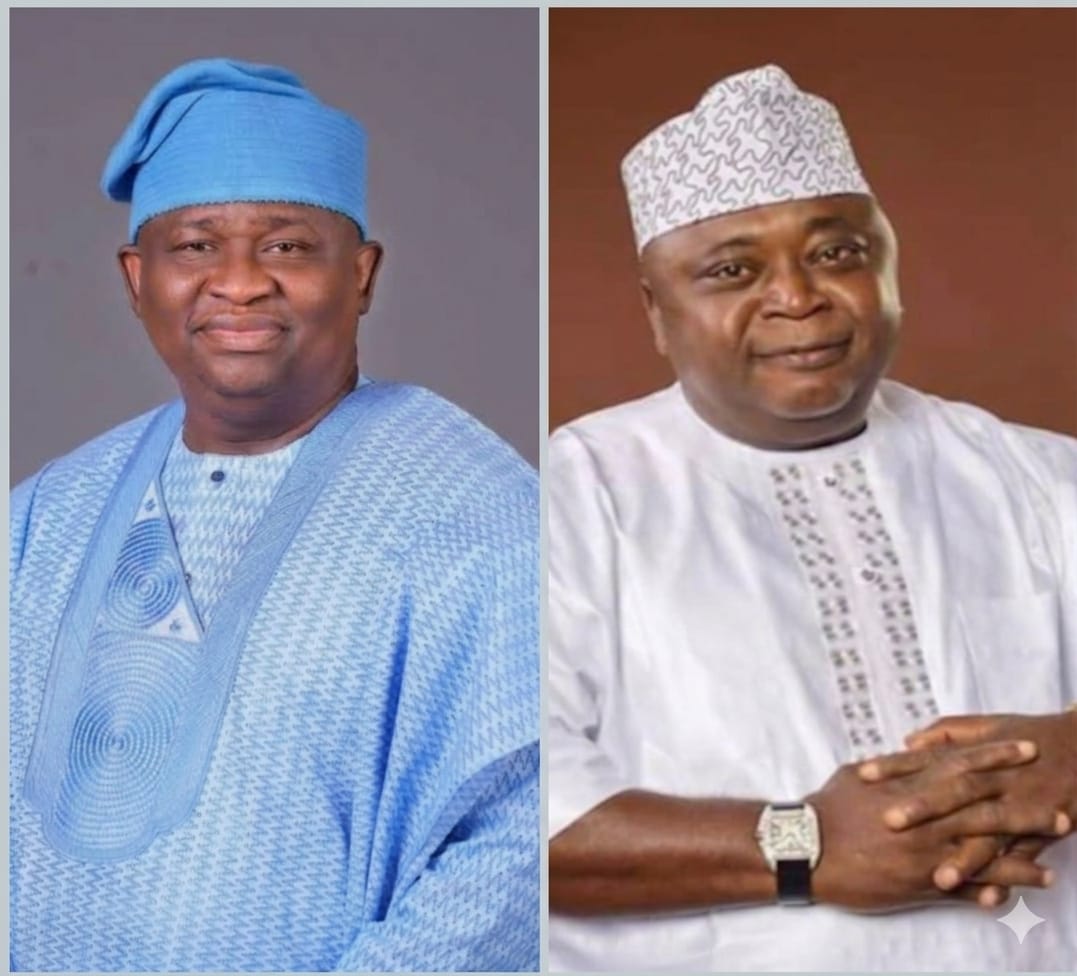
First is Senator Solomon Olamilekan Adeola, popularly known as Yayi. A three-term federal lawmaker, from Lagos West to Ogun West, and currently Chairman of the Senate Appropriation Committee.
Yayi is known for a very unusual brand of senatorial representation – heavily focused on facilitation of projects and mass empowerment programmes across all wards of Ogun West. He has built a reputation as a highly networked politician with a formidable structure across the state.
Second is Hon. Oladipupo Adebutu, widely known as Lado. A thoroughbred Ogun politician. Member of the House of Representatives in the early 90s, governorship candidate of the PDP in 2019 and 2023, and a grassroots mobilizer with deep roots in Remo.
He is from Iperu-Remo, the same town as the incumbent Governor, Prince Dapo Abiodun. As the son of Sir Kessington Adebukunola Adebutu, a man whose philanthropic footprint is legendary across Nigeria, Lado brings both political experience and enormous goodwill.
Both men are experienced, both are prepared, and by all indications, both have the financial capacity to run a full-scale governorship campaign across 236 wards. This is not going to be a contest for the faint-hearted.
The Noise Around Nativity
One narrative that has unfortunately dominated the last few weeks is the question of nativity.
Whispers about where a candidate’s father was buried, where he originally hails from, and whether he is truly from Ogun State.
I think this is a disservice to Ogun people. Ogun State, the cradle of the educated elite in Nigeria, has always voted based on capacity and promise, not narrow identity politics.
During a visit to Abeokuta recently, I overheard a conversation among some young graduates that summarized the mood of many.
Their point was simple: they have seen tangible empowerment programmes executed by Senator Yayi as a serving Senator in Ogun West, and they are more interested in who can scale that to the entire state than in debates about origin.
Whether one supports Yayi or Lado, we must agree that Ogun people deserve an issues-based campaign.
The two leading candidates have a responsibility to tell their supporters to focus on manifestos, not personal attacks. That is the Ogun way.
The Deeper Conversation: Equity and Zoning
If we move past the noise, Ogun faces a deeper, more structural conversation – equity.
Let us look at history:
– 1979-1983: Chief Olabisi Onabanjo – Ogun East (Ijebu)
– 1992-1993: Chief Olusegun Osoba – Ogun Central (Egba)
– 1999-2003: Chief Olusegun Osoba again – Ogun Central
– 2003-2011: Otunba Gbenga Daniel – Ogun East (Ijebu)
– 2011-2019: Senator Ibikunle Amosun – Ogun Central (Egba)
– 2019-Date: Prince Dapo Abiodun – Ogun East (Remo/Iperu)
Ogun State was created in February 1976. About 50 years after its creation, Ogun West – the Yewa-Awori zone comprising 5 local governments with huge industrial potential in Ota/Agbara and massive agricultural land in Imeko, Ipokia and Yewa North – has never produced a Governor.
This is not a small statistic. It is a historical imbalance.
This is where the Iperu question becomes unavoidable. If Governor Abiodun, who is from Iperu-Remo in Ogun East, completes his term in 2027, how do we justify another Governor from the same town, Iperu, immediately succeeding him? Even within Ogun East, there are Ijebu, Remo North, Shagamu, and other areas who would also feel shortchanged.
Can one town produce two Governors back-to-back in a diverse state of four divisions? That question bothers many neutral stakeholders I have spoken to.
Philanthropy, Structure and Performance
Hon. Adebutu has undeniable strengths. He is a grassroots politician who understands Ogun East politics deeply. He has been consistent since 1992, and he has shown resilience.
He also carries the enormous goodwill of the Adebutu family name – a family that has given so much to education, sports and employment in Ogun State. For many, supporting Lado is a way of appreciating Sir Kessington Adebutu’s decades of philanthropy.
Senator Adeola on the other hand brings a different strength – a record of what he did with the legislative power he had.
His model in Ogun West has been to turn a senatorial district office into a quasi-development agency – facilitating schools, ICT centres, market support schemes, bursaries, and training programmes. For many outside Ogun West, the question is: can this model be scaled to the whole state?
Interestingly, both offer different answers to the same question Ogun people are asking: Who can create jobs for our graduates, fix our rural roads in Ogun East, address insecurity on our farmlands in Yewa, bring order to our industrial hubs in Ogun Central, and truly empower our market women?
*My Final Take*
I have friends in both campaigns and I respect both candidates. Both have paid their dues and both are eminently qualified to aspire to lead Ogun State.
But Ogun State at this junction must make a choice that goes beyond individual ambition. It must make a choice about inclusion, about fairness, and about performance.
For about 50 years, Ogun West has waited. The agitation for Ogun West to produce the next Governor is not just about Yayi, it is about giving every part of Ogun a sense of belonging in the Gateway State project.
At the same time, Ogun needs a Governor who has shown empathy, who has shown he can use public office to touch ordinary people even before becoming Governor, and who can work tirelessly across all zones.
Also read: Nigeria’s Press Freedom Under Pressure as Civic Violations Rise
I leave Ogun people to judge who best fits that description.
Let Ogun choose wisely.
By Bola BOLAWOLE,
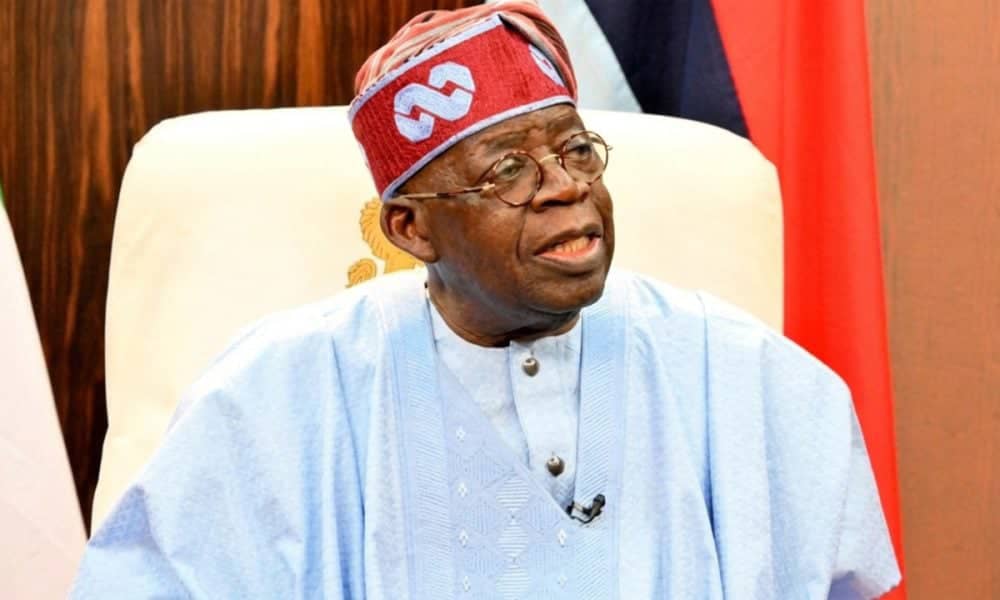
President Bola Ahmed Tinubu’s decision to skip the ongoing 81st session of the United Nations General Assembly, the third such abstention in a row, has raised eyebrows and sparked speculations.
Also read: Governor Dauda Lawal Approves 95% Salary Increase for Health Workers
Expectedly, opposition politicians have wasted no time in feasting on the official announcement that the vice-president, Kashim Shettima, will, once again, stand in for the president.
This trumps an earlier announcement by Jimoh Ibrahim, the country’s Ambassador to the United States/Permanent Representative to the United Nations, that not only would the president attend the annual meeting of world leaders at the UN headquarters in New York, USA, but that a vantage position had been secured for him to sit very close to the maverick United States’ president, Donald Trump!
Since he assumed the country’s leadership in 2023, Tinubu has yet to attend a single UNGA meeting; so also has he yet to pay either official or private visit to the United States despite that he has reportedly embarked, so far, on 52 foreign trips. He has visited at least 30 different countries across Europe, Asia, Africa, and the Americas, spending approximately 261 days.
As we speak, the president is out of the country on holidays, first to the UK after which he is expected in France. So, is there anything that aileth Tinubu about the United States? That is where the speculation begins; however, it does not end there!
Is President Tinubu deliberately avoiding the United States? Has it got anything to do with the unending controversy and legal battles over the FBI files and Tinubu’s past activities in the United States? He schooled there; he also worked there before returning to Nigeria decades back.
During the giddy days of the Sani Abacha military dictatorship, the US provided succour and a safe haven for Tinubu and many other pro-democracy activists. What has since changed is the question to ask if the suspicion is that the president is deliberately avoiding the United States.
Or has it got anything to do with the unpredictability of President Trump and the activities of anti-Tinubu politicians here at home and the paid groups doing their bidding in the US? Who dare put anything beyond a president that organized the storming, arrest, and rendition of a sitting foreign leader, hauling him and his wife to the US for trial on drug-related charges, with the country of the leader concerned and the international community as a whole helpless to do anything about it! “What if” then becomes the question should Tinubu set foot on US soil! Is it not better, then, to err on the side of caution?
Another school of thought is that Tinubu’s health might need attention. Unlike in much of the Western world, the secrecy that surrounds the health conditions of Nigerian, nay, African leaders makes it difficult to speak authoritatively on their health conditions.
And this is not new. Babangida, Abacha, Abdulsalami, Yar’Adua all had rumours swirling around their health conditions while in office. Abacha and Yar’Adua died in office. Buhari spent close to one-third of his tenure shuttling between the country and his doctors in the UK. It has been said, this time around, that Tinubu’s doctors are in France.
With part of his holiday reportedly scheduled to be spent in Charles de Gaulle’s country, could this holiday be another disguised medical tourism? Health is wealth, as they say, and prioritizing one’s health and wellbeing over and above a meeting, no matter how important, can be justified, especially when we have been told that the president can be (adequately?) represented at the UNGA.
Then I asked Google: Is it compulsory that the president lead his country’s delegation to the UNGA? The answer is: No, it is not compulsory for a president or prime minister to lead their country’s delegation to the UNGA.
Alternatively, the president or prime minister can be represented by the vice president or deputy prime minister, the foreign affairs minister or the country’s permanent representative at the UN who can speak, vote and act on behalf of the country or member-state concerned.
History records that many world leaders have frequently failed to personally attend UNGA due to divergent reasons, such as pressing domestic issues, disasters or local crises needing their personal attention or for health reasons.
Super-power rivalry and politics, and the need to remain non-committal or stay neutral from taking sides on volatile issues have also been known to compel foreign leaders to skip personally attending UNGA.
When a country’s leader attends the United Nations General Assembly (UNGA) in person, it provides several distinct strategic, diplomatic, and political advantages that cannot be replicated through virtual participation or lower-level delegation.
Some of these advantages are: High-level bilateral diplomacy (the “Margin” meetings); spontaneous networking whereby leaders hold informal, face-to-face meetings on the sidelines (the “margins”) of the assembly, allowing them to resolve disputes or advance treaties quickly.
It also affords the opportunity of building rapport. Personal presence helps build trust and personal relationships between heads of state, which can be critical during international crises.
Other advantages include enhanced global visibility and influence as UNGA gives leaders a global or world stage to operate from.
A speech delivered in person by a head of state commands significantly more international media attention and diplomatic weight than a pre-recorded video or speech read by a representative.
Some world leaders have been noted for setting agendas on issues of national, regional or international importance at UNGA. Leaders can directly pitch their nation’s foreign policy priorities, economic opportunities, or security concerns to a global audience.
Personal attendance at UNGA also helps to facilitate efficient multilateral engagement or what is called “mini-Summits” among leaders.
Leaders can participate in localized, high-level side events or regional summits (such as G7, BRICS, or regional blocs like the EU and the African Union) that have been known to convene in New York during the UNGA week. When leaders attend UNGA in person, direct access to decision-makers is made possible.
Smaller or developing nations also can seize the opportunity to have direct, unmediated access to leaders of superpower nations as well as heads of major international organizations like the UN itself, the World Bank and IMF. We can go on and on!
At the level of individual nations, attending UNGA is said to project an image of strength, global respect, and statesmanship to citizens back at home.
Newly-elected leaders especially use UNGA to announce themselves to the international community to garner support and recognition, to state their goals and set agendas as well as make profound statements on their administration’s foreign policy direction.
UNGA also serves as a formal introduction to the international community and signals the leader’s commitment to global cooperation.
From the above, it is, without doubt, a disadvantage when leaders absent themselves from UNGA. No matter how “powerful” a substitute representation is, it cannot be the same as when the president or prime minister of a country leads it.
There is what is called “bragging rights” among leaders. Presidents prefer to deal with presidents; vice presidents or foreign ministers will be shuffled down the ladder to discuss with their equivalents or counterparts.
The reverse is the case, however, where presidents of less powerful countries queue or consider it a privilege to have an audience with the foreign affairs minister or envoy of powerful countries such as the US, China, Russia, etc.
One narrative for Tinubu’s recurring absence at UNGA being spinned by his detractors is the fear of the unknown over the FBI files and Tinubu’s alleged past encounter with the US judicial system.
But a man, once tried and acquitted of criminal charges, cannot be tried again on the same offence except fresh evidence pops up that possesses the likelihood of affecting the outcome of the trial in the opposite direction.
Furthermore, can any harm come the way of a visiting president attending UNGA? Or, put more directly and blatantly, can a foreign leader attending UNGA in New York, USA be arrested for any reason whatsoever by the US authorities? The answer is, no; leaders attending UNGA cannot be arrested, charged or tried in the US because they enjoy immunity.
Under the UN Headquarters Agreement, the United States has an international obligation to allow accredited representatives entry and transit to the UN as well as respect their diplomatic inviolability.
In like manner, no US state, city, local government or county official possesses the legal power to arrest a protected visiting foreign leader.
From the above, it is most unlikely that President Tinubu stands the risk of being arrested in the US if he chooses to personally attend UNGA.
What may happen is that demonstrators may mass at the UN headquarters venue of UNGA, organize protests and heckle him and his delegation.
That will be embarrassing enough. For sure, it will portray the country in bad light and dent its image – which all Nigerians, including the president’s adversaries, will suffer from.
Also read: Governor Dauda Lawal Approves 95% Salary Increase for Health Workers
To avoid such an embarrassment and the deleterious effects it may have on the country’s image appears as the most germane reason why Tinubu has kept away – and may continue to keep sway – from UNGA until, maybe, a more predictable president mounts the saddle in the United States. And the losers? – Nigeria and Nigerians!
(Published in the TREASURES column on the back page of the NEW TELEGRAPH newspaper edition of Wednesday, 23 September, 2026).
Opinion
Agege APC Stakeholders Write to State Party Leaders to take action on defected members, their supporters

By Daniel Oluwatobiloba Popoola,
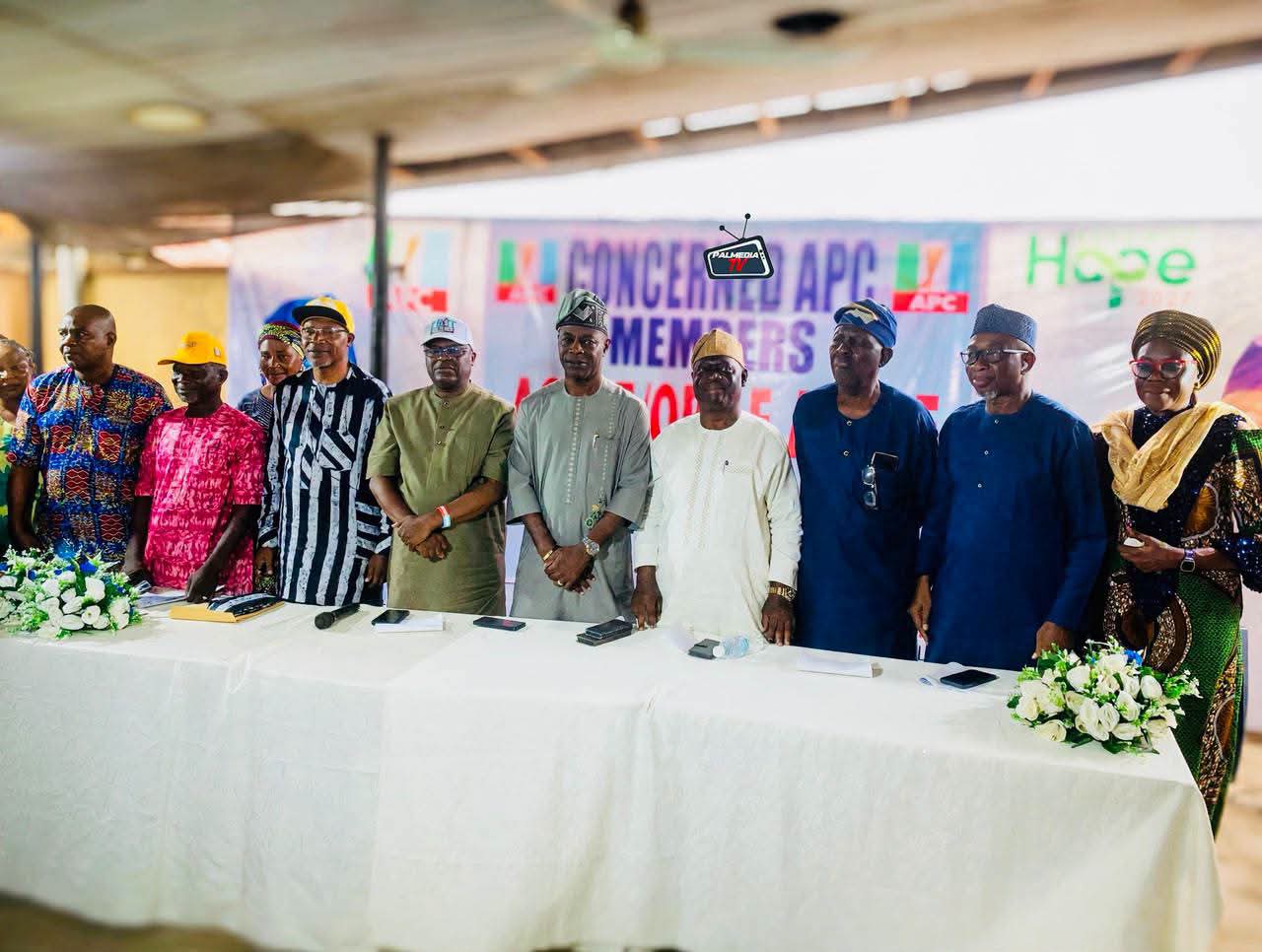
Concerned leaders and members of the All Progressives Congress (APC) in Agege Federal Constituency have petitioned the Lagos State Chairman of the party over the defection of two former House of Assembly aspirants to the Allied Peoples Movement (APM).
Also read: FG Threatens Lagos Coastal Highway Shutdown Over Safety Breaches
The petition dated Sunday, 20 September, 2026, was addressed to the state chairman at the APC secretariat in Lagos by stakeholders operating from 103 Orile Road, Orile Agege.
In the letter, the concerned leaders reported that Hon. Ganiyu Kola Egunjobi and Mr. Azeez Yusuf, who contested the last primaries for Agege State Constituencies 01 and 02, have defected to the APM and emerged as candidates of the party.
The group said the development has implications for stability, unity and electoral planning ahead of the 2027 general elections if urgent action is not taken.
According to the petition, the movement may extend beyond the two defectors to include elements of APC structures linked to them, including executives and stakeholders at local government and ward levels.
The stakeholders recalled three previous correspondences on the matter, including a letter dated February 19, 2026, by concerned APC Agege stakeholders, another dated May 18, 2026, on alleged marginalisation of Justice Forum members and disregard for party-approved appointments in Agege and Orile-Agege, and a petition on alleged disregard of party directives in the screening and swearing-in of nominated supervisors.
Furthermore, the letter expressed worry over reports that some serving councillors, supervisors, Secretaries to Local Government, Local Government Chairmen and other political appointees at state level are involved in activities associated with the APM structure.
The petitioners warned that the situation could create divided loyalty and confusion, with APC structures controlled by persons now contesting under another platform, thereby weakening coordination and mobilisation.
The group also alleged possible diversion and misuse of party and local government resources to support candidates of another party, noting that structures at ward and LGA levels were being deployed except for resistance from loyal members.
The stakeholders cited the recent controversy over appointment and screening of supervisors in Agege and Orile-Agege as evidence of the need to uphold party directives and constituted authority.
The letter further recalled a petition dated July 31, 2026, by Concerned Agege Leaders, alleging that some members duly appointed by the governor and party leaders as supervisors were denied their positions while others were sworn in by the chairmen of Agege LG and Orile-Agege LCDA.
The forum argued that retaining unresolved party structures whose principal actors have shifted loyalty to the APM could hamper grassroots mobilisation, communication and election coordination.
The petition added that the development could discourage loyal members and weaken discipline, thereby encouraging further fragmentation beyond Agege Federal Constituency.
Consequently, the concerned leaders urged the state leadership and appropriate organs of the party to conduct an urgent, impartial and comprehensive review of affected structures across Agege with a view to taking disciplinary action.
The group also called for corrective measures in the interest of the party, its State Assembly candidates, loyal members and supporters.
The stakeholders appealed to the leadership to treat the matter with urgency, stressing that the objective is not to create division or target individuals, but to protect unity, discipline, integrity and electoral organisation.
Also read: FG Threatens Lagos Coastal Highway Shutdown Over Safety Breaches
The petition noted that early action and reconstitution of unresolved structures would prevent internal confusion, restore confidence among loyal members and ensure the APC approaches the 2027 elections with committed and accountable grassroots structures.
-
Politics3 years ago
13 Ondo Assembly Members Disown Endorsement of Aiyedatiwa
-
Politics3 years ago
APC Group, Ondo Govt, Quarrel Over Money for Endorsement
-

 Trending News5 years ago
Stop unsavoury, inciting statements – DSS warns
-

 Others5 years ago
Adron Homes Celebrates 10 Years Of Housing Excellence
-

 Humanity5 years ago
President Buhari Commiserates With Ambassador Maureen Tamuno Over The Loss Of Her Father
-

 Others7 years ago
EX- CUSTOMS BOSS, IBRAHIM MERA’S DWINDLING FAME
-

 Business2 years ago
Bigi Carbonated Soft Drinks Treats 40 Consumers to an Epic Easter Movie Hangout
-

 Business2 years ago
Wema Bank Shines at Global SME Finance Forum Conference Awards 2024 …Awarded: • SME Financier of the Year (Africa) • Platinum Award for Best Financier for Women Entrepreneurs (Africa)