
Business
Nigeria’s Reforms Set to Deliver Economic Gains in 2026


Nigeria reform dividend 2026 expected to boost investment, credit access, and household welfare as macroeconomic stabilisation gives way to growth

Nigeria’s ongoing reform cycle is expected to yield tangible benefits for households and businesses in 2026, with the economy poised to shift from macroeconomic stabilisation to acceleration, according to analysts at Norrenberger.
Also read: NACC Gathers Power Brokers for 2026 Economic Forecast, Honours Odugbemi
In its report titled From Stabilisation to Acceleration: The Reform Dividend in 2026, the firm projected that structural adjustments implemented over the past year will allow policymakers to move from economic adjustment to optimisation, leveraging productivity gains, private capital mobilisation, and sectoral expansion to drive stronger and more sustainable growth.
“2026 presents a critical window to transition from macroeconomic stabilisation to economic acceleration. With many of the structural distortions addressed, the reform dividend is likely to materialise through improved investment confidence, deeper credit intermediation, increased domestic production, and enhanced competitiveness across key sectors of the economy,” the report stated.
Norrenberger emphasised that the benefits of reform would not be limited to financial markets. Households and small businesses are expected to experience micro-level improvements, including better access to credit, enhanced infrastructure delivery, job creation, and a more predictable policy environment, all of which are anticipated to support consumption, enterprise expansion, and overall welfare.
The report also offered an optimistic outlook for exchange rate stability, noting that the current macro-foreign exchange framework marks a departure from the volatility typical of Nigeria’s pre-election years.
“Historically, penultimate election years were characterised by heightened exchange rate pressures, speculative FX demand, and episodic hoarding. The current transition toward a more market-reflective exchange rate system, tighter monetary conditions, and improving external buffers provides a more credible foundation for exchange rate stability than in previous pre-election periods,” the analysts said.
They cautioned, however, that while the macroeconomic framework is stronger, episodic volatility remains a possibility.
Also read: Sanwo-Olu Reassures Investors as Lagos Drives Inclusive Economic Growth
Sustained reform momentum and fiscal discipline, they added, will be critical to ensuring that 2026 delivers meaningful and visible gains for Nigerian households and businesses.


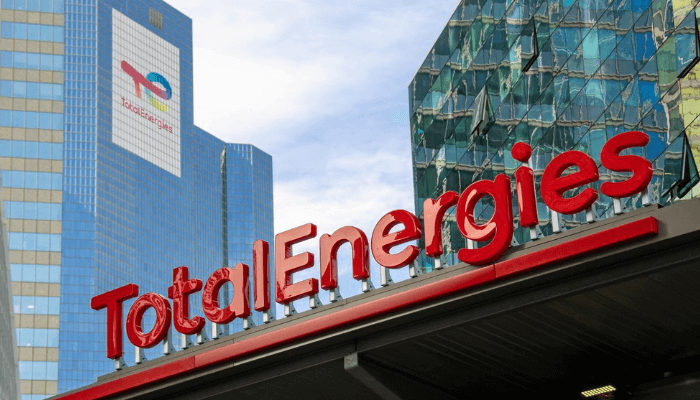
TotalEnergies and Nigerian independent energy company AMNI International have taken the Final Investment Decision on the $800 million Ima Gas Project, more than five decades after the gas field was discovered.
The Ima Gas Project, located in shallow waters across Oil Mining Leases 112 and 117 near Bonny Island, Rivers State, is expected to begin production in 2028 and reach a plateau of 350 million cubic feet of gas per day.
The development is expected to play a major role in supplying feed gas to Nigeria LNG, with the Ima field projected to provide about one-third of the additional gas required for the ongoing Train 7 expansion.
Train 7 is expected to increase Nigeria LNG’s liquefaction capacity from 22 million tonnes per annum to 30 million tonnes per annum, strengthening Nigeria’s capacity to process and export liquefied natural gas.
The Ima field was discovered in 1973 but remained undeveloped for more than 50 years. The Final Investment Decision provides the commercial and financial basis for finally developing the long-dormant resource.
Under the development plan, TotalEnergies will operate the project with a 40 per cent interest, while AMNI will hold the remaining 60 per cent.
The field will be developed using a single offshore platform connected to Nigeria LNG’s facility on Bonny Island through a 22-kilometre pipeline.
TotalEnergies said its investment in the project is more than $600 million, while the Federal Government described the overall Final Investment Decision as an $800 million investment.
At the FID signing ceremony in Abuja, TotalEnergies Exploration and Production Nigeria Managing Director, Mathieu Bouyer, described the decision as the culmination of a development process that had stretched across several decades.
He said the project reflected increased confidence in Nigeria’s investment environment and highlighted reforms targeting the non-associated gas sector as part of the factors that helped make the development commercially viable.
President Bola Tinubu welcomed the investment, saying the project demonstrated the potential of reforms introduced to reduce the cost and time required to develop oil and gas projects.
The President said the government had introduced incentives aimed specifically at unlocking onshore and shallow-water gas projects that had remained undeveloped for years.
He said the Ima development would create opportunities for Nigerian businesses, engineers, technicians and contractors, while generating jobs, economic activity in host communities and additional export earnings.
The project is also expected to have a strong Nigerian content component. TotalEnergies said all key contractors for the development would be Nigerian companies, while about 60 per cent of the workforce during the development phase is expected to come from host communities.
The development will incorporate measures aimed at reducing emissions. TotalEnergies said the platform would receive electricity from shore, operate without routine flaring and use permanent methane detection and monitoring systems.
The Federal Government said the project is part of efforts to turn Nigeria’s large natural gas reserves into productive assets capable of supporting industrialisation, energy supply, jobs and export earnings.
Special Adviser to the President on Energy, Olu Verheijen, said the Ima development illustrated the importance of creating commercial and investment conditions that allow previously stranded resources to be developed.
The government also noted that Nigerian financial institutions arranged 77 per cent of the project’s financing, further highlighting the participation of domestic financial institutions in the development.
For Nigeria LNG, the project comes as the company continues work on the Train 7 expansion, which is designed to increase the Bonny Island plant’s liquefaction capacity and strengthen the country’s position in the global LNG market.



The Dangote Group is pursuing a $45bn investment programme across its businesses as it targets annual revenue of $100bn by 2030, with Dangote Cement expected to play a major role in funding the conglomerate’s next phase of expansion.
The group’s expansion strategy covers cement, refining, fertiliser, gas, infrastructure and other industrial businesses as it seeks to increase production capacity and strengthen its presence across African markets.
Dangote Cement, described as the group’s largest cash-generating business, is targeting an increase in annual production capacity from its current 55 million tonnes to more than 80 million tonnes as part of the growth programme.
The cement company said its expansion strategy would rely substantially on internally generated cash, reflecting the strength of its existing operations and cash-generating capacity.
In the 12 months to June 2026, Dangote Cement recorded revenue of $3.1bn, representing a 22 per cent year-on-year increase. Its cash conversion stood at 89 per cent, while return on capital employed reached 68 per cent during the period.
The company’s financial performance has also remained strong in naira terms. For the first half of 2026, Dangote Cement reported profit before tax of N981.39bn, up 34.43 per cent from N730.03bn recorded in the corresponding period of 2025. Profit after tax rose 22.69 per cent to N638.53bn.
The group’s wider investment plan is expected to include further expansion of the Dangote Refinery, with its capacity targeted to rise towards 1.4 million barrels per day. The company is also pursuing gas and LNG projects and additional industrial investments across Africa.
Dangote Cement’s expansion includes projects such as the proposed six-million-tonne-per-year plant at Itori in Ogun State, which is expected to strengthen the company’s production base as demand for cement and construction materials grows across the continent.
The group is also increasingly positioning its businesses around export earnings and geographically diversified operations. Management expects a larger share of revenue to be generated in foreign currency as its African expansion gathers pace.
The scale of the investment programme is underpinned by the group’s broader Vision 2030 strategy, which includes a target of more than $30bn in adjusted earnings before interest, taxes, depreciation and amortisation by 2030 alongside the $100bn revenue objective.
For Dangote Cement, the strategy represents a combination of capacity expansion and financial discipline, with strong operating cash flows expected to support investment while maintaining the company’s balance-sheet strength.
The wider Dangote Group is therefore positioning its 2030 strategy around expanding industrial capacity, increasing exports and using the cash generated by established businesses to finance further growth across Africa.
-
Politics3 years ago
13 Ondo Assembly Members Disown Endorsement of Aiyedatiwa
-
Politics3 years ago
APC Group, Ondo Govt, Quarrel Over Money for Endorsement
-

 Trending News5 years ago
Stop unsavoury, inciting statements – DSS warns
-

 Others5 years ago
Adron Homes Celebrates 10 Years Of Housing Excellence
-

 Humanity5 years ago
President Buhari Commiserates With Ambassador Maureen Tamuno Over The Loss Of Her Father
-

 Others7 years ago
EX- CUSTOMS BOSS, IBRAHIM MERA’S DWINDLING FAME
-

 Business2 years ago
Bigi Carbonated Soft Drinks Treats 40 Consumers to an Epic Easter Movie Hangout
-

 Business2 years ago
Wema Bank Shines at Global SME Finance Forum Conference Awards 2024 …Awarded: • SME Financier of the Year (Africa) • Platinum Award for Best Financier for Women Entrepreneurs (Africa)