
Business
Nigeria’s Debt, Salaries Exceed Revenue Amid Capital Cuts


Nigeria’s 2025 budget shows debt and personnel costs surpass revenue, forcing major cuts to capital projects and highlighting fiscal vulnerability

Debt service and personnel costs have exceeded the Federal Government’s total revenue for the first seven months of 2025, the Budget Office of the Federation revealed on Wednesday, underscoring the strain on the nation’s finances.
Also read: Four Lawmakers Defect to APC Amid Party Crisis
The 2026–2028 Medium-Term Expenditure Framework and Fiscal Strategy Paper showed that between January and July, the government earned N13.67tn against a pro rata target of N23.85tn, leaving a shortfall of N10.19tn, or roughly 43 per cent.
The shortfall was largely due to a sharp drop in oil receipts, which fell 62.2 per cent below target, while dividends from state-linked entities also underperformed.
Despite modest gains from company income tax and Value Added Tax, the fiscal gap forced the government to overspend on debt service, which rose to N9.81tn, consuming 71.8 per cent of total revenue.
Combined with personnel costs of N4.51tn, recurrent spending alone accounted for roughly 105 per cent of revenue, leaving little room for capital investments.
Capital expenditure bore the brunt of the squeeze. Aggregate spending on projects from January to July was N3.60tn, only 26.3 per cent of the prorated N13.67tn budget.
Ministries, departments, and agencies received less than 10 per cent of their planned allocations, while donor-funded and project-tied loans fared relatively better.
The Budget Office linked the weak capital performance partly to the extended implementation of the 2024 budget, which is still financing ongoing projects.
The government has now directed that 70 per cent of the 2025 capital budget be carried over into 2026 to prioritise the completion of existing projects and manage spending pressures amid weak revenue inflows.
Economists expressed mixed views. Professor Sheriffdeen Tella of Olabisi Onabanjo University criticised the preparation of the 2026 budget when the 2025 budget had barely begun implementation, calling it premature.
Conversely, Dr Muda Yusuf of the Centre for the Promotion of Private Enterprise supported the rollover, saying it restores credibility and prevents continuous overlapping of budgets.
The MTEF document also revealed that non-debt recurrent expenditure fell 26 per cent below target, pensions were underfunded by half, and overheads for ministries were sharply reduced, while debt service overshot projections by 17.5 per cent.
The analysis highlights Nigeria’s fiscal vulnerability, particularly the economy’s reliance on oil revenue, even as non-oil revenues gradually increase their contribution to the Federation Account.
Also read: Four Lawmakers Defect to APC Amid Party Crisis
The report warns that without structural fiscal reforms, capital projects critical to health, education, infrastructure, and social safety nets will continue to face deep constraints.


Banking
Theparkpay Technologies Limited Strengthens Global Payments Infrastructure with UK FCA Licence




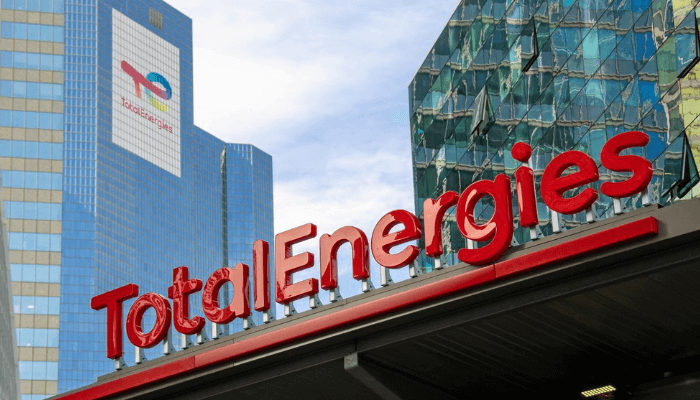
TotalEnergies and Nigerian independent energy company AMNI International have taken the Final Investment Decision on the $800 million Ima Gas Project, more than five decades after the gas field was discovered.
The Ima Gas Project, located in shallow waters across Oil Mining Leases 112 and 117 near Bonny Island, Rivers State, is expected to begin production in 2028 and reach a plateau of 350 million cubic feet of gas per day.
The development is expected to play a major role in supplying feed gas to Nigeria LNG, with the Ima field projected to provide about one-third of the additional gas required for the ongoing Train 7 expansion.
Train 7 is expected to increase Nigeria LNG’s liquefaction capacity from 22 million tonnes per annum to 30 million tonnes per annum, strengthening Nigeria’s capacity to process and export liquefied natural gas.
The Ima field was discovered in 1973 but remained undeveloped for more than 50 years. The Final Investment Decision provides the commercial and financial basis for finally developing the long-dormant resource.
Under the development plan, TotalEnergies will operate the project with a 40 per cent interest, while AMNI will hold the remaining 60 per cent.
The field will be developed using a single offshore platform connected to Nigeria LNG’s facility on Bonny Island through a 22-kilometre pipeline.
TotalEnergies said its investment in the project is more than $600 million, while the Federal Government described the overall Final Investment Decision as an $800 million investment.
At the FID signing ceremony in Abuja, TotalEnergies Exploration and Production Nigeria Managing Director, Mathieu Bouyer, described the decision as the culmination of a development process that had stretched across several decades.
He said the project reflected increased confidence in Nigeria’s investment environment and highlighted reforms targeting the non-associated gas sector as part of the factors that helped make the development commercially viable.
President Bola Tinubu welcomed the investment, saying the project demonstrated the potential of reforms introduced to reduce the cost and time required to develop oil and gas projects.
The President said the government had introduced incentives aimed specifically at unlocking onshore and shallow-water gas projects that had remained undeveloped for years.
He said the Ima development would create opportunities for Nigerian businesses, engineers, technicians and contractors, while generating jobs, economic activity in host communities and additional export earnings.
The project is also expected to have a strong Nigerian content component. TotalEnergies said all key contractors for the development would be Nigerian companies, while about 60 per cent of the workforce during the development phase is expected to come from host communities.
The development will incorporate measures aimed at reducing emissions. TotalEnergies said the platform would receive electricity from shore, operate without routine flaring and use permanent methane detection and monitoring systems.
The Federal Government said the project is part of efforts to turn Nigeria’s large natural gas reserves into productive assets capable of supporting industrialisation, energy supply, jobs and export earnings.
Special Adviser to the President on Energy, Olu Verheijen, said the Ima development illustrated the importance of creating commercial and investment conditions that allow previously stranded resources to be developed.
The government also noted that Nigerian financial institutions arranged 77 per cent of the project’s financing, further highlighting the participation of domestic financial institutions in the development.
For Nigeria LNG, the project comes as the company continues work on the Train 7 expansion, which is designed to increase the Bonny Island plant’s liquefaction capacity and strengthen the country’s position in the global LNG market.
-
Politics3 years ago
13 Ondo Assembly Members Disown Endorsement of Aiyedatiwa
-
Politics3 years ago
APC Group, Ondo Govt, Quarrel Over Money for Endorsement
-

 Trending News5 years ago
Stop unsavoury, inciting statements – DSS warns
-

 Others5 years ago
Adron Homes Celebrates 10 Years Of Housing Excellence
-

 Humanity5 years ago
President Buhari Commiserates With Ambassador Maureen Tamuno Over The Loss Of Her Father
-

 Others7 years ago
EX- CUSTOMS BOSS, IBRAHIM MERA’S DWINDLING FAME
-

 Business2 years ago
Bigi Carbonated Soft Drinks Treats 40 Consumers to an Epic Easter Movie Hangout
-

 Business2 years ago
Wema Bank Shines at Global SME Finance Forum Conference Awards 2024 …Awarded: • SME Financier of the Year (Africa) • Platinum Award for Best Financier for Women Entrepreneurs (Africa)