
Opinion
Between Fela and Whizkid…. 2


By Bola BOLAWOLE
Michael Jackson has now arrived in Jamaica for a meeting with Bob Marley. Read on!

“Kingston, Jamaica, October 23rd, 1978. 8:30 p.m: The exclusive Pegasus Hotel’s penthouse suite was buzzing with quiet conversation when Michael Jackson walked through the heavy wooden doors… Michael had an agenda beyond social pleasantries.
Also read: PDP Criticises Kwara Governor Over Deadly Bandit Attack
He wanted to propose something that would reshape both (his and Bob Marley’s) careers forever.
The contrast between the two men was immediately striking. Michael wore an expensive silk shirt, perfectly tailored pants, and his signature sequin glove, representing everything successful about the American music industry.
Bob, in contrast, wore simple jeans and a cotton shirt, his dreadlocks flowing naturally, embodying the authentic spiritual energy that had made him reggae’s most respected voice…
Bob looked up as Michael approached, setting down his guitar with the measured calm that characterized everything he did. “Michael Jackson,” Bob said with a slight smile, gesturing to the empty chair across from him. “The prince of pop music. Bless up, brethren.”
Michael slid into the chair, immediately struck by the difference between this intimate setting and their brief backstage encounter three years earlier.
Here, face-to-face, he could see the profound intelligence in Bob’s eyes—the spiritual weight he carried, the way he seemed to be listening to something beyond their conversation.
“Bob, it’s an honor to finally sit with you properly”, Michael said, his nervous energy evident despite his attempt to appear confident. “I’ve been hoping for this opportunity for years.
Bob’s expression remained warm but curious. “What brings the King of Pop to Jamaica, Michael? What’s on your heart?”
Michael leaned forward across the small table between them, his excitement building as he outlined his vision. “Bob, I want to propose something that could change music history. A full collaboration—an album, a world tour, maybe even a concert film. We could combine your consciousness with my reach, your message with my platform.”
Bob studied Michael’s face carefully, reading not just his words, but his intentions… “Tell me more about this vision,” Bob said, folding his hands on the table.
Michael’s excitement grew as he painted his picture, gesticulating with typical enthusiasm. “Picture this: your spiritual lyrics with my melodies and production values. Your authentic message
reaching mainstream audiences who have never heard conscious music. We could reach 100 million people with messages about unity, love, and social justice.” Michael outlined the scope of his vision with genuine passion.
Record executives had estimated the project could generate over $50 million in revenue.
The tour would hit every major American city, introducing reggae to audiences who had never heard conscious music before.
Bob listened intently, occasionally nodding, but his eyes never left Michael’s face.
Across the table, he could sense Michael’s genuine enthusiasm—but also the fundamental misunderstanding that lay beneath the proposal.
“And how would this collaboration work practically?” Bob asked quietly. “Would my message change to fit your audience or would your audience change to receive my message?”
The question hung in the air between them like smoke from sacred fire.
Michael hadn’t expected such a direct philosophical challenge, and Bob’s steady gaze made it impossible to avoid the deeper implications of what he was proposing.
“We could find a middle ground, hopefully” Michael suggested. “Keep your message but make it more accessible to mainstream audiences who might not be ready for the full intensity of Rastapharian philosophy.”
Bob leaned back slightly, creating physical space that somehow made his next question more powerful. “What does more accessible mean, Michael?”
Sitting across from Bob in the intimate setting of the suite, Michael felt the weight of having to articulate something he’d never fully examined.
“Maybe less political content, more universal themes like love and unity that don’t make people uncomfortable—songs that can play on mainstream radio without causing controversy.”
Bob’s response was gentle but penetrating, his voice cutting through Michael’s commercial enthusiasm like truth through illusion.
“Universal love that avoids uncomfortable truths isn’t universal love, Michael. It’s comfortable love. And comfortable love never changed anything.”
The face-to-face setting made every word feel more significant, more personal.
Michael could see the compassion in Bob’s eyes, but also the unwavering commitment to principles that couldn’t be compromised for any amount of success.
Bob continued with an insight that would haunt Michael for years. “When you perform, Michael, what are you trying to accomplish? What do you want people to carry with them when they leave your concert?
Michael straightened in his chair, suddenly feeling like a student being examined by a master teacher. “I want to entertain people, make them happy, give them an escape from their problems, and I want to wake people up.”
Bob replied, his voice carrying the same authority that made his music so powerful. (In contrast, explaining what he seeks to accomplish when performing, Bob said): “To help them understand their problems and find the strength to solve them. Both callings have value, but they cannot be the same thing.” Bob’s voice took on the teaching quality that made his conversations as influential as his songs.
“Michael, you have tremendous talent, tremendous gifts from Jah. Your ability to move people through music is extraordinary. But this collaboration you are proposing—it would require one of us to compromise our essential nature.”
The conversation continued for over an hour with Bob patiently explaining his philosophy while Michael tried desperately to find ways to make the collaboration work.
But sitting face-to-face, seeing Bob’s unwavering spiritual commitment up close, Michael began to understand that this wasn’t about business strategy or creative compromise.
It was about two fundamentally different approaches to the purpose of music.
Bob continued with profound gentleness. “When Marcus Garvey spoke about black pride, white people were uncomfortable. When Martin Luther King spoke about justice, white people were uncomfortable. When Jesus spoke about loving your enemies, everyone was uncomfortable. Discomfort is often the first sign that consciousness is awakening.”
Bob paused, allowing his words to settle. “When you perform, you give people what they want—happiness, excitement, escape. When I perform, I give people what they need—truth, consciousness, spiritual awakening. Both serve Jah’s purpose, but they cannot be the same thing.”
“But think about the impact we could have together”, Michael said desperately, leaning forward across the table. “The number of people we could reach with positive messages.”
Bob’s response became legendary among those who witnessed the meeting. “Michael, reaching many people with a diluted message is less powerful than reaching fewer people with a pure message. Quality of consciousness matters more than quantity of audience. Better to awaken one person completely than to entertain a million people temporarily.”
Michael felt the collaboration slipping away, but he made one last attempt. “What if we could do it your way? What if I adapted my style to your message instead of asking you to adapt your message to my style?”
Bob appreciated Michael’s willingness to consider this approach, but his answer revealed the deeper issue.
“Michael, you are already perfect at what Jah called you to do. Your gift for bringing joy to people is precious and necessary. Don’t diminish that gift by trying to become something you are not. And don’t ask me to diminish mine by becoming something I am not.”
As their meeting neared its end, Bob said: “You are a star, and stars are meant to shine bright and bring joy to people. I respect that calling deeply. But I am not a star. I am a messenger. And messengers must deliver the message exactly as Jah gave it to them.”
Bob stood slowly, extending his hand across the table. “We both serve the same creator through different expressions. Your path is perfect for you. Mine is perfect for me. To change either would diminish both.”
When they shook hands, Michael felt both disappointed and enlightened. Bob had rejected the biggest collaboration offer in music history…The proposed Michael Jackson–Bob Marley collaboration never happened. But both artists went on to achieve their destinies authentically.
Michael became the undisputed king of pop, using entertainment to bring joy to billions worldwide. Bob remained reggae’s spiritual messenger until his death in 1981.
Years later, Michael would credit that face-to-face meeting with teaching him about artistic integrity. “Bob taught me”, Michael said, “that every artist has to choose between being famous and being important.”
Bob chose importance over fame every time…When Bob died in 1981, Michael was among the artistes who publicly honored his memory…The face-to-face meeting that could have created music history’s greatest collaboration instead created something more valuable—mutual understanding between two masters who recognized that their separate paths served the same goal of uplifting humanity through music.
The Michael Jackson–Bob Marley collaboration that never was reminds us that sometimes the most important artistic decisions are the ones that prioritize authenticity over opportunity, message over money, and spiritual integrity over commercial success.”
We can pigeon-hole Fela and Bob Marley together and Michael Jackson and Whizkid likewise.
Everyone is blessed with talents; everyone is used by God for different purposes; everyone is a star in his own right; everyone, like Frantz Fanon posits, discovers their mission, to fulfil or betray it, taking different routes.
There is no basis, therefore, for comparison. We cannot compare apples with oranges.
Also read: PDP Criticises Kwara Governor Over Deadly Bandit Attack
Financial success and audience followership are poor yardsticks of measurement because conscious music (Bob Marley/Fela) is not the same as entertainment music (Michael Jackson/Whizkid).


Opinion
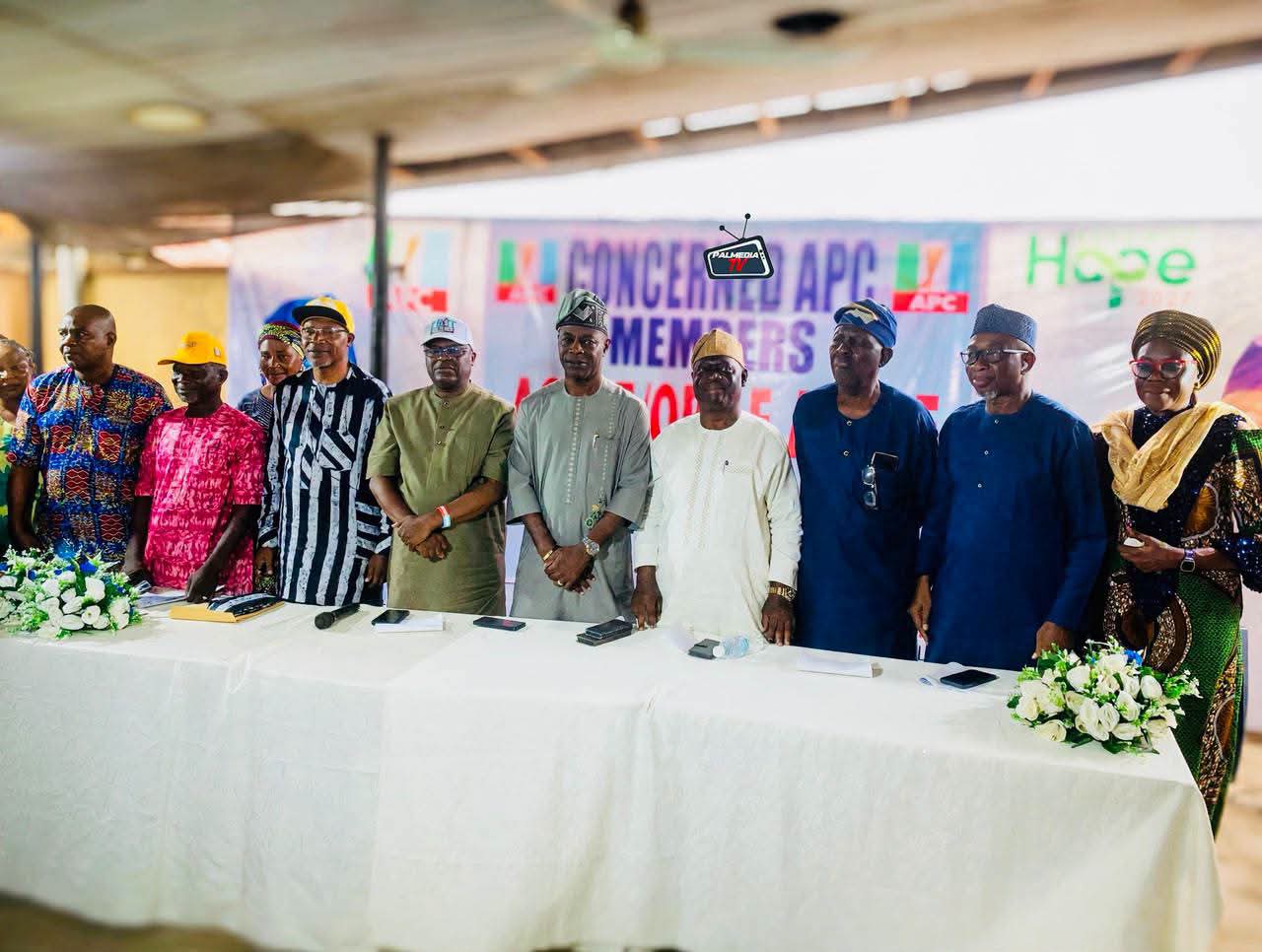
Agege APC Stakeholders Write to State Party Leaders to take action on defected members, their supporters

By Daniel Oluwatobiloba Popoola,
Concerned leaders and members of the All Progressives Congress (APC) in Agege Federal Constituency have petitioned the Lagos State Chairman of the party over the defection of two former House of Assembly aspirants to the Allied Peoples Movement (APM).
Also read: FG Threatens Lagos Coastal Highway Shutdown Over Safety Breaches
The petition dated Sunday, 20 September, 2026, was addressed to the state chairman at the APC secretariat in Lagos by stakeholders operating from 103 Orile Road, Orile Agege.
In the letter, the concerned leaders reported that Hon. Ganiyu Kola Egunjobi and Mr. Azeez Yusuf, who contested the last primaries for Agege State Constituencies 01 and 02, have defected to the APM and emerged as candidates of the party.
The group said the development has implications for stability, unity and electoral planning ahead of the 2027 general elections if urgent action is not taken.
According to the petition, the movement may extend beyond the two defectors to include elements of APC structures linked to them, including executives and stakeholders at local government and ward levels.
The stakeholders recalled three previous correspondences on the matter, including a letter dated February 19, 2026, by concerned APC Agege stakeholders, another dated May 18, 2026, on alleged marginalisation of Justice Forum members and disregard for party-approved appointments in Agege and Orile-Agege, and a petition on alleged disregard of party directives in the screening and swearing-in of nominated supervisors.
Furthermore, the letter expressed worry over reports that some serving councillors, supervisors, Secretaries to Local Government, Local Government Chairmen and other political appointees at state level are involved in activities associated with the APM structure.
The petitioners warned that the situation could create divided loyalty and confusion, with APC structures controlled by persons now contesting under another platform, thereby weakening coordination and mobilisation.
The group also alleged possible diversion and misuse of party and local government resources to support candidates of another party, noting that structures at ward and LGA levels were being deployed except for resistance from loyal members.
The stakeholders cited the recent controversy over appointment and screening of supervisors in Agege and Orile-Agege as evidence of the need to uphold party directives and constituted authority.
The letter further recalled a petition dated July 31, 2026, by Concerned Agege Leaders, alleging that some members duly appointed by the governor and party leaders as supervisors were denied their positions while others were sworn in by the chairmen of Agege LG and Orile-Agege LCDA.
The forum argued that retaining unresolved party structures whose principal actors have shifted loyalty to the APM could hamper grassroots mobilisation, communication and election coordination.
The petition added that the development could discourage loyal members and weaken discipline, thereby encouraging further fragmentation beyond Agege Federal Constituency.
Consequently, the concerned leaders urged the state leadership and appropriate organs of the party to conduct an urgent, impartial and comprehensive review of affected structures across Agege with a view to taking disciplinary action.
The group also called for corrective measures in the interest of the party, its State Assembly candidates, loyal members and supporters.
The stakeholders appealed to the leadership to treat the matter with urgency, stressing that the objective is not to create division or target individuals, but to protect unity, discipline, integrity and electoral organisation.
Also read: FG Threatens Lagos Coastal Highway Shutdown Over Safety Breaches
The petition noted that early action and reconstitution of unresolved structures would prevent internal confusion, restore confidence among loyal members and ensure the APC approaches the 2027 elections with committed and accountable grassroots structures.


Nigeria’s growing digital workforce is opening a new channel for cross-border trade as software developers, consultants, financial professionals, educators and other service providers increasingly work from the country for clients across Africa, Europe and North America.
The development is expanding the country’s non-oil economic activity beyond the traditional export of physical goods, with high-speed telecommunications enabling professionals to deliver services internationally without moving people or physical products across borders.
Industry experts said the trend is also increasing the economic importance of sustained investment in telecommunications infrastructure, as unreliable connectivity can directly affect the ability of digital businesses and remote professionals to meet international contracts and delivery schedules.
They spoke during an economic dialogue co-hosted by financial planner Kalu Aja and chartered accountant Oluwatosin Olaseinde, founder of digital investment platform Ladda, on Sunday, September 20, 2026.
Olaseinde said telecommunications investment was creating productive capacity for the wider economy by enabling Nigerians to participate in increasingly decentralised forms of work.
“On a retail level, it’s not just them investing in capital expenditure—it’s actually creating economic capacity, productive capacity for the Nigerian economy,” she said.
She pointed to the growing number of Nigerians working remotely for clients and organisations outside their immediate locations.
“Remote workers can actually work. People are sitting in Lagos with clients in Nairobi, New York, London. Online tutoring—somebody sitting in Lagos tutoring children in Kaduna, in Nairobi, just all over,” Olaseinde said.
According to her, greater access to connectivity also exposes Nigerian professionals to international markets and standards, potentially improving the quality of services delivered from the country.
“It also raises the level of competence and service delivery in Nigeria… The excellence level goes up,” she insisted.
The expansion of cross-border digital services, however, places greater emphasis on network reliability. For professionals whose work depends on international clients, interruptions to connectivity can affect online meetings, project delivery, cloud applications, payments and other business processes.
Aja said the scale of investment required to maintain that connectivity was often underestimated because much of the infrastructure supporting the digital economy remained largely invisible to consumers.
Citing MTN Nigeria’s financial disclosures, he pointed to cumulative capital expenditure of about ₦1.62 trillion, covering network infrastructure and related investments.
“In every local government area in Nigeria there is an MTN somewhere,” Aja said, adding “You’ll either find a tower or you’re going to find someone selling recharge cards. That’s the depth and level of their contribution to Nigeria so far… If that all goes away, it’s a massive hole nobody can fill.”
The discussion highlighted the wider relationship between telecommunications investment and economic activity as businesses increasingly depend on digital platforms to reach customers, process transactions and deliver services.
Nigeria’s telecommunications sector accounted for 9.19 percent of GDP in the first quarter of 2026, according to the official figure cited during the discussion, underscoring the sector’s growing contribution to economic output.
Beyond domestic commerce, the growth of remote work and digitally delivered services provides Nigerian professionals with access to markets where contracts and payments are denominated in foreign currencies. It also allows firms to expand their client base without establishing physical operations in every market they serve.
Olaseinde also drew a distinction between foreign direct investment and foreign portfolio investment, arguing that long-term capital commitments can have a broader effect on employment and productive capacity.
“FPI is like a one-night stand. FDI is like a marriage,” she said, arguing that direct investment tends to involve longer-term commitments and can create jobs and productive capacity.
The experts also discussed the contribution of large corporates through taxes, dividends and continued investment. MTN Nigeria, for instance, paid ₦419.9 billion in dividends and ₦429 billion in taxes in 2025, according to the figures cited during the discussion.
For the expanding digital-services economy, the implications extend beyond the telecommunications industry. Developers, consultants, online educators, financial professionals, creators and other service providers increasingly depend on connectivity to participate in markets beyond Nigeria.
The development suggests that as Nigeria seeks to diversify its economy and expand non-oil sources of income, the ability to deliver services digitally could become an increasingly important component of its international economic activity.
For businesses operating in that space, reliable connectivity is therefore becoming less a convenience than a basic requirement for maintaining access to customers and markets across borders.

By Bolanle Bolawole,
Sometime this year, I was alerted to the presence of an owl perching on the PHCN line overlooking my apartment. And so what, I asked! The response I got shocked me: Don’t you know that owls are evil birds? I quickly jumped out of bed! I really never knew anything about owls. I went to my window and saw it. I began to “bind and cast.” I followed this up by picking up a stone and going after it. It flew away before I could reach it. Days later, the owl appeared again. I went after it again with prayer and action. Again, it flew away before I could reach it. Every night afterwards I checked the PHCN line before going to bed and whenever I woke up in the night. There was no sight of it. Still, I prayed.
Also read: Coalition Defends NSCDC Commandant-General, Rejects Calls for His Removal Over Minna Detainee Deaths
Not long afterwards, a classmate and friend who had suffered a stroke earlier, died. He was 69. Closely afterwards, my in-law, a mentor, died at the age of 89.
Then real tragedy struck in the same month with the death of his daughter and my niece, at 54. In July alone a chorister in my church lost her father who was 65.
My panel beater lost a 14-year-old child; a pastor friend died at a relatively young age, and then another schoolmate and professional colleague also passed on at the age of 67. More deaths of colleagues and known faces have since followed.
Are owls evil birds? Are they the harbingers or messengers of death? This is what Google has to say about this mysterious bird: “No, owls are not evil birds; they are simply wild, nocturnal animals fulfilling a natural role in the environment.”
But owls, all the same, have a really bad reputation. Their nocturnal lifestyle is one. They hunt and move around in the dark and people historically associate darkness with fear and the unknown. Owls also fly silently: Their specialized feathers let them fly completely silently, causing them to appear suddenly out of nowhere.
They also have human-like facial features, with their forward-facing eyes giving them an intense, penetrating gaze that can feel uncanny or unsettling. Owl’s eerie sounds, strange screeches, clicks, and hoots in the dead of night have also fueled ghost stories for centuries.
There are also a lot of cultural myths and superstitions pertaining to owls. Many cultures around the world historically view owls as bad omens or messengers of death.
“In general, owls are viewed as harbingers of bad luck, ill health, or death. The belief is widespread even today.” According to Wikipedia, this belief cuts across the globe. Among the Kikuyu of Kenya, it was believed that owls were harbingers of death. If one saw an owl or heard its hoot, someone was going to die.
In the Americas, the culture of the Uto-Aztec tribe, the Hopi, has “taboos surrounding owls, which are associated with sorcery and other evils. The Aztecs and Maya, along with other natives of Mesoamerica, considered the owl a symbol of death and destruction. In fact, the Aztec god of death, Mictlantecuhtli, was often depicted with owls. There is an old saying in Mexico that is still in use: ‘When the owl cries/sings, the Indian dies’.
“The Popol Vuh, a Mayan religious text, describes owls as messengers of Xibalba (the Mayan “Place of Fright”). The belief that owls are messengers and harbingers of the dark powers is also found among the Hočągara (Winnebago) of Wisconsin. When in earlier days the Hočągara committed the sin of killing enemies while they were within the sanctuary of the chief’s lodge, an owl appeared and spoke to them in the voice of a human, saying, ‘From now on the Hočągara will have no luck.’ This marked the beginning of the decline of the tribe. An owl appeared to Glory of the Morning, the only female chief of the Hočąk nation, and uttered her name. Soon afterwards she died.
“People often allude to the reputation of owls as bearers of supernatural danger when they tell misbehaving children, ‘the owls will get you.’ Also, in the Cherokee culture, as well as many other Native American cultures, owls are a very bad omen. It is said that if you are outside in broad daylight and an owl flies over your head, a family member or loved one would die within the coming week. In the Middle East, Arab mythology sees owls as bad omens.”
Some other cultures, however, see owls in a different light i.e. as a wise creature (for example, Hinduism in India.) In Japan, souvenir shops display little owl figurines that are supposed to bring good luck.
The Japanese word for owl is ‘fukurou’, and the first part of the word (‘fuku’) can be written with the same character as ‘luck’ or the whole word can literally be written as ‘no suffering/troubles’.”
So, what is it really about owls? It would appear owls signify different strokes for different people – and for different reasons as well. Superstition exists everywhere. And every superstitious belief has a logic behind it.
Most of the time, this is weaved around the fear of the unknown and the recoil from what Cicero, a Roman philosopher, called the ultimate evil.
Cicero, also noted for his oratorical gift, defined the Latin term “summum malum” as “the highest evil” and “summum bonum” as “the highest good” in his foundational ethical treatise titled “On the Ends of Good and Evil”.
He reportedly used these concepts to compare how different ancient Greek schools such as the Stoics, Epicureans, and Peripatetics defined the ultimate goal of human life (summum bonum) vis-a-vis what they sought most to avoid (summum malum). Cicero, however, merely built on the thoughts of earlier ancient Greek philosophers like Plato and Aristotle.
Thomas Hobbes, another Western philosopher and famous author of the “Leviathan” (1651) rejected the idea of a universal “summum bonum” due to conflicting human desires, but agreed that a definitive “summum malum” did exist: the fear of violent death.
What is certain, and which is known to all civilizations, is that the traffic between heaven and earth is never ending; and that this is as sure as day follows night.
As Orlando Owoh crooned, just as babies are born on a daily basis, so also do people die – owl or not owl. Were the universe to be rid of owls, people would still die! All the same because I am not Japanese, owls are not the kind of birds I love to see!
Robbing Peter to pay Paul: A lose-lose situation
Can these figures be correct? Since I came across them on the internet, I have not seen a rebuttal from any quarters. So, since silence is said to mean consent, I want to assume that the figures are factual – until the contrary is proven.
The disturbing information goes thus: “Six geo-political zones’ contribution to the VAT pool and (what each of them) received (in return) in half-year January -June 2026): 1. South-west contributed N2.16trn but received N691.56bn (31.99%). 2. South-south contributed N880.58bn but received N429.99bn (48.83%). 3. North-central contributed N302.81bn but received N350.17bn (115.64%).
4. North-west contributed N205.52bn but received N384.56bn (187.11%). 5. North-east contributed N152.82bn but received N285.70bn (186.95%). 6. The South-east contributed N79.27bn but received N230.89bn (291.28%).”
Are you not surprised that the South-east zone contributed the least but received the highest, percentage-wise? This means that a region always screaming “marginalization” is the one actually marginalizing others!
All the three zones in the North received more than they contributed; meaning that, like the South-east, they benefit from the sweat of others – in other words, they reap on a monthly basis from where they did not sow! The two burden-bearer zones are the South-south and South-west, with the latter being the greater losers.
Those riding on the back of others will never disembark unless they are forced to.
Unfortunately, free lunch offers no incentives for anyone to work harder.
And those being held down as beasts of burden will never achieve their true potential for as long as they carry the can for others. What a lose-lose situation in real or absolute terms!
FEEDBACK
RE: If state police are not to suffer a stillbirth…
Thank you so much for this piece! Brig-Gen. Jibola Togun once drew my attention to the lack of support by our governors for Amotekun after the exit of Rotimi Akeredolu from earthly life.
I have written no fewer than five times on the imperatives of the establishment of state police, drawing attention to how formal policing began at Abeokuta in 1903, but took off in 1905, followed by Ibadan in 1906 and Oyo, 1907 and from there to other divisions of Yorubaland.
If our forebears could see the imperatives of divisional and regional policing, the attitude of our governors after Akeredolu has been shocking and disappointing. The first responsibility of any government is security.
It is, in fact, the origin of government. We can see now that the establishment of state police has received a national stamp. Well done! – Lade Bonuola
Has Tinubu lost his grip on the Nigerian media?
The shortcomings you highlighted and the solutions proffered are top-notch. I am one of those who believe until tomorrow that (Dele) Alake should have been Tinubu’s spokesman (but) rumours have it that Gbaja and Alake can not co-habit at the villa! Reno Omokri is doing far better than all the government paid spokesmen, including Onanuga. Ask yourself why Dele Momodu and Femi Ojudu distanced themselves from Tinubu. Self-interest, I presume! I have read the “Adventure of Guerrilla Journalist” by Ojudu and I have heard Momodu narrate how Tinubu gave him 500 pounds while they were in exile. I have equally heard how Remi asked: “Uncle Dee, so you are not going to work for my husband?” That question is loaded. Nobody runs Tinubu down as does the duo! I don’t think the Nigerian Press is as dangerous as the TV anchor personalities. Many no longer read newspapers but depend on TV stations. Arise News, for instance, sees all government actions from negative perspectives. They know who to invite: hardly will you see their guests not towing their preferred line of thought.
More often than not, they carefully select the APC men they can easily bully. Rufyy is a pessimist par excellence, only he is honest and capable! To him, all Nigerians are corrupt and unpatriotic – except himself! Abati was my hall mate at Awo Postgraduate Hall, UI… He always loves to play smart (but) I think an average Nigerian knows that he is biased.
He is a PDP card-carrying member. Seun Okinbaloye is worse, despite the fact that the Finance Minister has said it times without number that the right question to ask is ‘where would Nigeria have been if the (Tinubu) reforms were not introduced’ and NOT ‘is your life better now than it was in 2023?’ Okinbaloye is aware of the 33 trillion paper-money printed, the huge amount owed foreign airlines, and the less than four billion dollars in the foreign reserves account.
Yet, Seun will have none of that! He is in the habit of parading statistics just to discredit the government.
The ones that favour the government are downplayed! Hardly will you see Seun ask the right follow-up questions from the opposition. Tinubu needs to strengthen his information machinery in all its ramifications. – Rev. Canon Dr. Kayode Abegunde.
Can anyone or organization in this country have the media in their pocket? I ask this question as someone who has spent almost 50 years in the media and who has done only media job all his life.
But I look at media relations in this country and ask myself: how can these guys be so dumb? All the attacks on opponents and critics will be useless after the President leaves office.
Also read: Coalition Defends NSCDC Commandant-General, Rejects Calls for His Removal Over Minna Detainee Deaths
Where is Buhari’s press value today? It is all gone! Where is Femi Adesina? And where is Garba Sheu? Government media minders are lazy; they are not deep enough; they focus on fighting political opponents and critics and once the government they serve disappears, they, too, will disappear with it! They do not bother to convince anyone; they just shout at us and think that is press relations! They should understudy Ogbuefi Nwokedi and Tunji Oseni! – Olowo Adebola.
(Published in the ON THE LORD’S DAY column in the SUNDAY TRIBUNE newspaper edition of Sunday, 20 September, 2026).
-
Politics3 years ago
13 Ondo Assembly Members Disown Endorsement of Aiyedatiwa
-
Politics3 years ago
APC Group, Ondo Govt, Quarrel Over Money for Endorsement
-

 Trending News5 years ago
Stop unsavoury, inciting statements – DSS warns
-

 Others5 years ago
Adron Homes Celebrates 10 Years Of Housing Excellence
-

 Humanity5 years ago
President Buhari Commiserates With Ambassador Maureen Tamuno Over The Loss Of Her Father
-

 Others7 years ago
EX- CUSTOMS BOSS, IBRAHIM MERA’S DWINDLING FAME
-

 Business2 years ago
Bigi Carbonated Soft Drinks Treats 40 Consumers to an Epic Easter Movie Hangout
-

 Business2 years ago
Wema Bank Shines at Global SME Finance Forum Conference Awards 2024 …Awarded: • SME Financier of the Year (Africa) • Platinum Award for Best Financier for Women Entrepreneurs (Africa)