
Nation
Marine /Blue Economy Ministry will Strengthen our Fragile Economy- H.E. Tamuno


The current Nigerian High Commissioner to Jamaica, Belize, Haiti and the
Dominican Republic, and Nigeria’s Permanent Representative to the
International Seabed Authority (ISA), H.E Dr. Maureen P. Tamuno, has
extolled President Bola Ahmed Tinubu over establishing the Marine and
Blue Economy Ministry and appointing Adegboyega Oyetola as the
minister. She noted that the creation of the Ministry would go a long way in
enhancing emerging areas of our Economy.
In a strategic move that underscores a commitment to sustainable
development goals and environmental stewardship, the recent
establishment of the Marine and Blue Economy Ministry by President
Tinubu has drawn praise from citizens and experts alike. This visionary
decision reflects a forward-thinking approach to economic growth and
showcases a dedication to preserving the invaluable marine ecosystems
that define our nation. The establishment of this ministry is a testament to
the administration’s commitment to fostering a prosperous, resilient, and
environmentally conscious country.
Ambassador Tamuno stated that the implications of this step are far-
reaching as the Marine and Blue Economy Ministry holds the potential to
drive Nigeria’s economy and innovation, create jobs, and enhance our
nation’s competitiveness on the global stage.
Equally significant is the Ministry’s role in addressing pressing
environmental challenges. Oceans, which cover more than 70% of the
Earth’s surface, are under considerable threat from pollution, over-
exploitation, and the impacts of climate change, as seen in our coastal
areas and hinterland. President Tinubu is steadfastly committed to
combatting these issues head-on by dedicating a specific ministry to the
marine and blue Economy.
Moreover, this decision resonates with global commitments such as the
United Nations Sustainable Development Goals (SDG) and the Paris

Agreement, which emphasize the importance of sustainable ocean
management. President Tinubu aligns our country’s trajectory with
international efforts to safeguard our planet’s oceans for current and future
generations by prioritizing the marine and blue Economy.
It is worth noting that Ambassador Tamuno, in October 2022, employed her
diplomatic capabilities and successfully organize a three-day summit in
collaboration with the International Seabed Authority in Abuja. The event
centered on the overarching theme of “Promotion of the sustainable
development of Africa’s deep-seabed Resources in Support of Africa’s Blue
Economy. The event was well attended by A-list personalities that included
the Secretary-General, International Seabed Authority, Michael Lodge;
Minister of State for Transportation, Prince Ademola Adegoroye; Chief of
Naval Staff, as well as Experts and Senior representatives from Nigeria,
Comoros, Eritrea, Ethiopia, Ghana, Sao Tome and Principe and Uganda.
The outcomes of the workshop have informed Nigeria to initiate
preparations for securing a contract in the deep seabed to explore minerals
on the seabed beyond national jurisdiction. Nigeria will be the inaugural
African nation to secure the contract.
Tamuno, who also Chairs the Informal Working Group on Inspection,
Compliance, and Enforcement in the ISA, stated that its time for the
government and corporate organizations to key into the enormous
economic opportunities available as over thirty Contracts have already
been awarded to other member states.
As citizens, she said we must applaud President Tinubu’s dedication to
advancing our country’s economic interests while safeguarding our natural
heritage. The establishment of the Marine and Blue Economy Ministry
stands as a testament to the President’s visionary leadership and
commitment to fostering a sustainable, prosperous, and environmentally
conscious nation.
Amb Tamuno concluded that in the grand scheme, this new chapter in our
country’s history is not just about creating a ministry—it’s about forging a
path toward a more harmonious relationship between human activity and
nature. As the initiatives of the Marine and Blue Economy Ministry unfold,
we can look forward to witnessing a transformation that leaves an indelible
mark on our nation’s legacy.


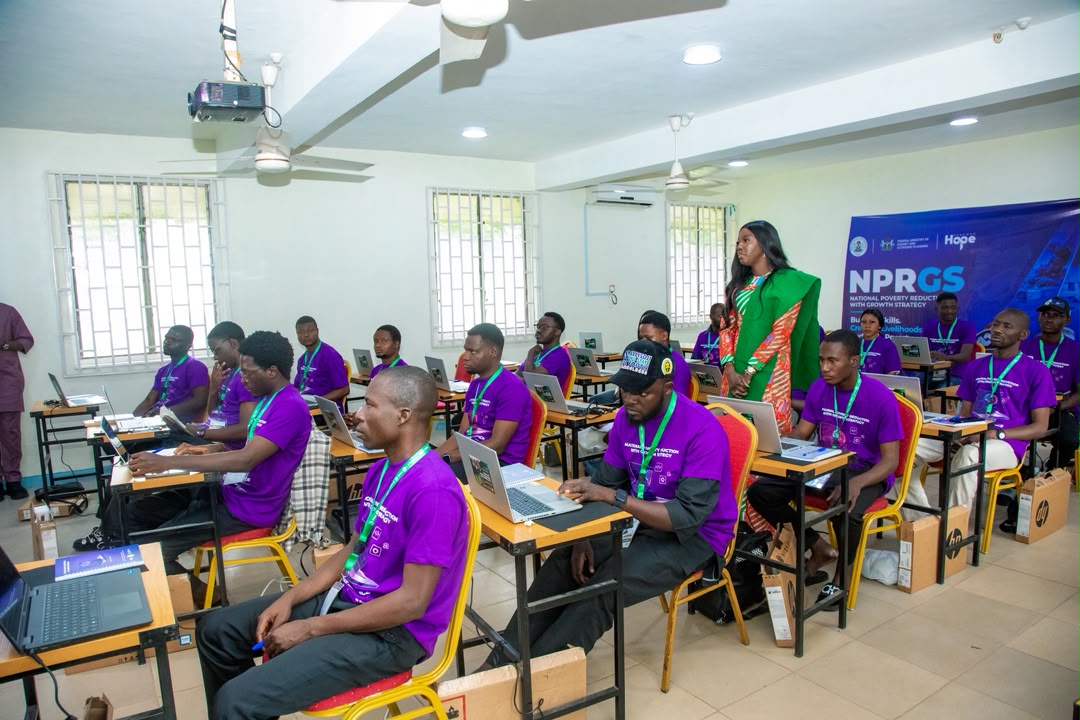
The Federal Government says it plans to lift
five million young Nigerians out of poverty through its skills acquisition and empowerment programmes aimed at promoting sustainable livelihoods.
The initiative, being implemented under the National Poverty Reduction with Growth Strategy (NPRGS), is designed to equip young Nigerians with practical, market-relevant skills to enhance their economic independence and employability.
Dr Abiola Arogundade, Senior Assistant to the President on Technical, Vocational and Entrepreneurship Education (OSSAP-TVEE), coordinator of the programme, disclosed this on Monday in Ibadan at the commencement of the programme’s Oyo State phase which will run from September 28 to October 9.
She said the training is part of President Bola Tinubu’s commitment to empowering Nigerians through technical, vocational and entrepreneurial education.
Arogundade said the programme, which commenced in the Federal Capital Territory (FCT), had moved to Oyo State and would be extended to other states and geopolitical zones across the country.
Under the Oyo State phase, 200 young Nigerians are being trained in Graphics and Artificial Intelligence (AI), makeup artistry and fashion designing.
Of the beneficiaries, 30 participants are undergoing training in Graphics/AI, while 85 each are receiving training in makeup artistry and fashion designing.
Arogundade said the initiative went beyond skills acquisition, adding that beneficiaries would be connected to organisations and business opportunities to support their transition into sustainable livelihoods.
“So with this programme, we are training 200 people. We will also be distributing 500 tablets during the grand finale of the programme as part of the Federal Government’s digital empowerment drive.
“We are directly empowering 700 people in this programme and there will be multiplier effect.
“We are not just training them for themselves but we are training them for their communities, for the population, and for all the states in Nigeria,” she said.
She urged participants to take the training seriously, maximise the opportunity and use their newly acquired skills to empower others within their communities.
“I want to just encourage them to do their best.
“I want to encourage them to know that President Bola Tinubu is thinking about all Nigerians, all young Nigerians in the country and ready to address their plights,” she said.
The presidential aide reiterated the Federal Government’s commitment to creating opportunities for young Nigerians to become economically self-reliant through practical training and entrepreneurship development.
Earlier, the keynote speaker for the Graphics/AI training, Mrs Oluronke Shonubi, said the growing adoption of artificial intelligence presented Nigeria with opportunities to accelerate development, improve employability and prepare young people for emerging jobs.
One of the beneficiaries, Idowu Olalere, a 400-level student of the Federal University Oye-Ekiti (FUOYE), expressed appreciation to the Federal Government for providing young Nigerians with opportunities to acquire emerging digital skills.
Olalere said the training would help bridge the gap between existing skills and evolving labour market requirements.
Two other beneficiaries, Mrs Iyabo Ajayi, a makeup trainee, and Fatunbi Joshua, a fashion designing trainee, also expressed gratitude to the Federal Government for the opportunity.
They expressed optimism that the initiative would contribute to reducing unemployment by equipping participants with practical skills and opportunities for self-employment.
At the conclusion of the training, participants will receive laptops, sewing machines and fully equipped makeup kits to support their entrepreneurial pursuits and facilitate the establishment of sustainable businesses.
The programme forms part of the Federal Government’s broader efforts to promote inclusive economic growth, reduce poverty and expand opportunities for young Nigerians through technical and vocational education.
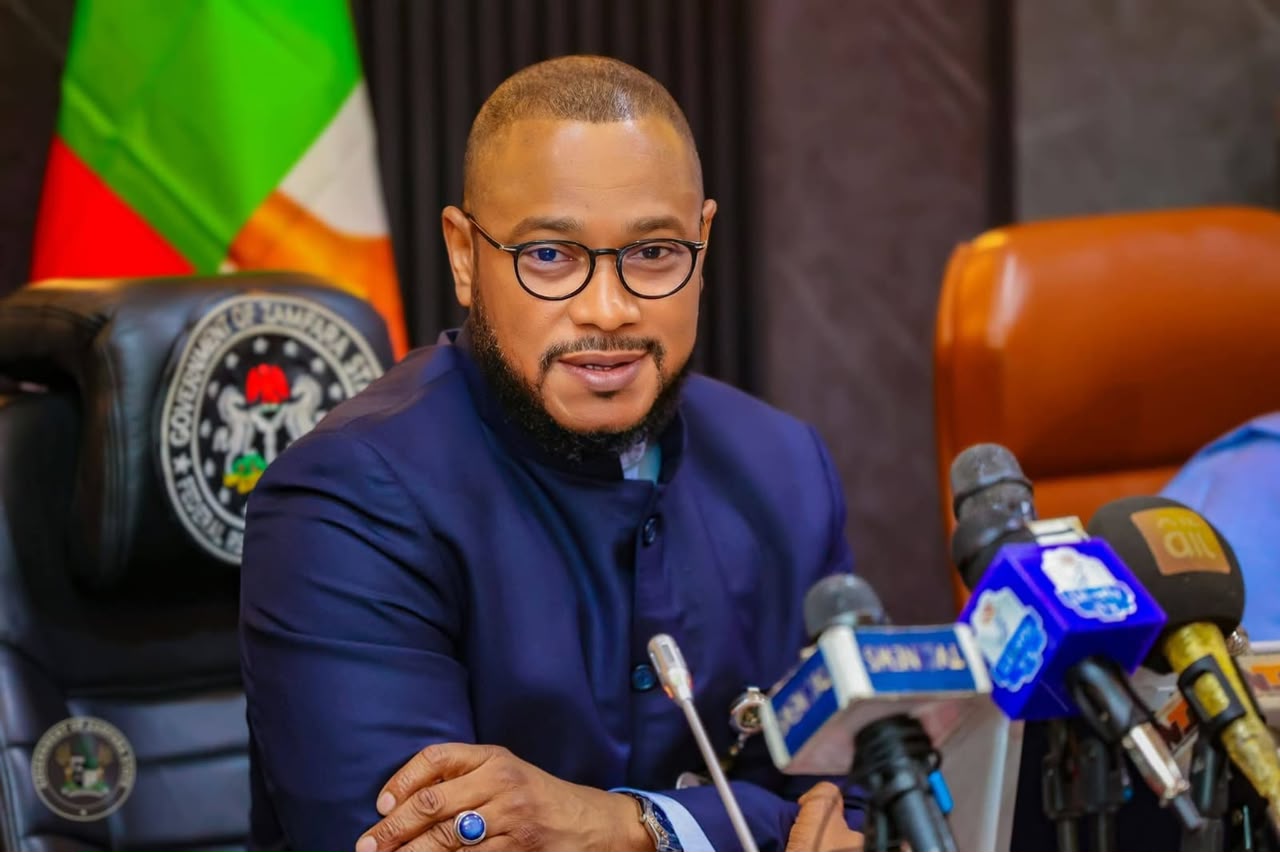
The Executive Governor of Zamfara State, His Excellency Dr Dauda Lawal, alongside other state governors and the President’s Chief of Staff, will represent Nigeria at the Canada–Africa Summit on digital rails and inclusive growth. The maiden investment summit is scheduled to take place in Toronto from August 10 to 15, 2026.
The Presidency’s invitation to Governor Lawal emphasised that his participation would strengthen Nigeria’s diplomatic and economic standing at the Nigeria Diaspora Investment Economic Conference (NDIEC). NIDEC is a leading global platform where governments, investors, multinational companies, development finance institutions, foundations and partners converge to form strategic partnerships and explore investment opportunities.
The summit is expected to support President Bola Ahmed Tinubu’s goals through the National Energy Transition Plan, positioning Nigeria as a key partner in Africa–Canada economic cooperation.
The Zamfara State Government views NIDEC as more than just a diplomatic engagement, it is a strategic economic mission aimed at attracting investment, technology transfer, development funding and technical partnerships to drive the state’s economic transformation. Governor Lawal’s involvement will help position Zamfara as Nigeria’s emerging hub for agribusiness, strategic minerals development, human capital growth and digital innovation.
Nigeria’s delegation also includes the President’s Chief of Staff, Femi Gbajabiamila; the governors Charles Soludo of Anambra State, Prof. Babagana Zulum of Borno State, Sen. Uba Sani of Kaduna State, and Caleb Muftwang of Plateau State; Minister of Foreign Affairs, Ambassador Bianca Odumegwu-Ojukwu; Minister of Industry, Trade and Investment, Dr Jumoke Oduwole; Minister of Interior, Olubunmi Tunji-Ojo, among others.
-
Politics3 years ago
13 Ondo Assembly Members Disown Endorsement of Aiyedatiwa
-
Politics3 years ago
APC Group, Ondo Govt, Quarrel Over Money for Endorsement
-

 Trending News5 years ago
Stop unsavoury, inciting statements – DSS warns
-

 Others5 years ago
Adron Homes Celebrates 10 Years Of Housing Excellence
-

 Humanity5 years ago
President Buhari Commiserates With Ambassador Maureen Tamuno Over The Loss Of Her Father
-

 Others7 years ago
EX- CUSTOMS BOSS, IBRAHIM MERA’S DWINDLING FAME
-

 Business2 years ago
Bigi Carbonated Soft Drinks Treats 40 Consumers to an Epic Easter Movie Hangout
-

 Business2 years ago
Wema Bank Shines at Global SME Finance Forum Conference Awards 2024 …Awarded: • SME Financier of the Year (Africa) • Platinum Award for Best Financier for Women Entrepreneurs (Africa)