Business
Leo Stan Ekeh: The Billionaire Who Builds Systems, Not Spectacle


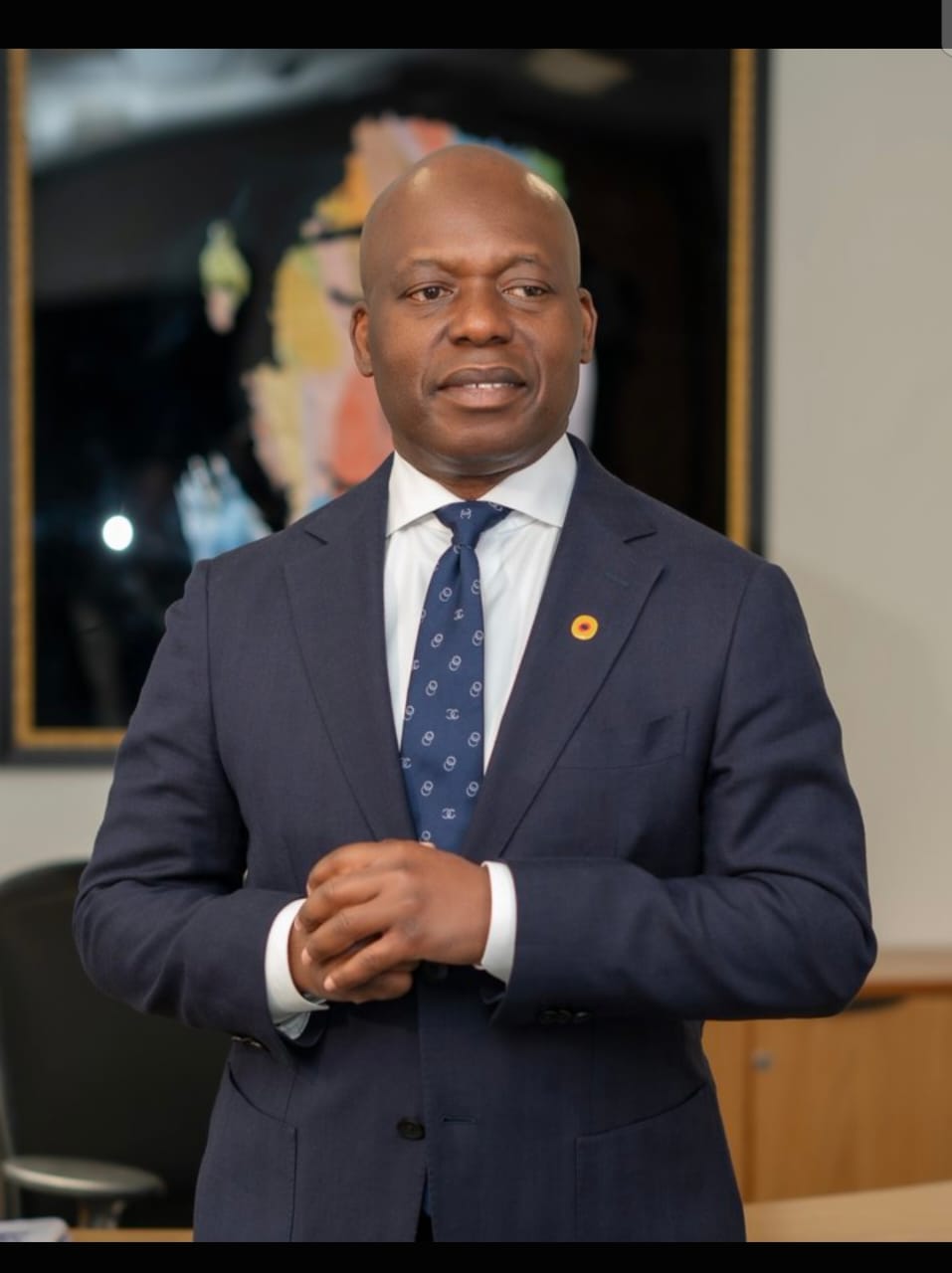
To describe Leo Stan Ekeh as an underrated billionaire is to state the obvious. In a business climate where success is often amplified by spectacle, Ekeh has chosen a different route — one defined by discipline, depth, and deliberate quietness.

He is wealthy, unquestionably so. But unlike many in his league, he has never made flamboyance a strategy. There are no loud declarations, no performative displays of affluence. Instead, there is structure. There is scale. There is substance.
The true measure of an entrepreneur is not in expansion seasons, but in moments of contraction. During the global disruption triggered by COVID-19, Ekeh reportedly absorbed a staggering financial hit tied to a robotics venture — losses said to approach $28 million. For many, such a setback would trigger retreat. For Ekeh, it’s reinforced conviction.
Innovation demands risk. Systems demand resilience. And resilience, in Ekeh’s case, has never been negotiable.
Those close to him describe a man unperturbed by turbulence — a strategist who sees beyond quarterly shocks to generational positioning. In his world, setbacks are tuition, not tragedy.
His success has translated into a presence that spans key global cities — with premium real estate interests in Dubai, London, New York, and Lagos. Yet even here, symbolism quietly intersects with history. His Lagos residence, once home to the British High Commissioner to Nigeria, reflects not just acquisition power but an appreciation for legacy and institutional significance.
But what distinguishes Ekeh is not where he lives — it is how he thinks.
Through Zinox Technologies, he challenged Nigeria’s dependence on imported computing hardware and positioned indigenous manufacturing as a viable force. The company’s eventual listing on the Nigerian Stock Exchange was not just a corporate milestone — it was a declaration that Nigerian technology enterprises could play in formal capital markets.
With TD Africa, he constructed one of Sub-Saharan Africa’s largest technology distribution ecosystems, linking global OEMs to African resellers and enterprises. Quietly, efficiently, structurally — he built the backbone that many others now build upon.
And when he stepped into the retail technology space through Konga, it was not for noise. It was for reengineering — integrating distribution, logistics, and digital commerce into a more disciplined omnichannel model.
There is a pattern in Ekeh’s journey: build institutions, absorb shocks, stay grounded, expand strategically.
He represents a different archetype of billionaire — one who invests in architecture rather than applause. His philosophy aligns more with infrastructure than influence, more with policy depth than public theatrics.
In a society where visibility often substitutes for value, Ekeh’s approach is almost countercultural. He moves without frenzy. He scales without spectacle. He accumulates without announcing.
History often celebrates the loudest pioneers.
But it is the quiet architects who alter the trajectory of nations.
And in Nigeria’s digital evolution story, Leo Stan Ekeh remains one of its most consequential — and most understated — builders.



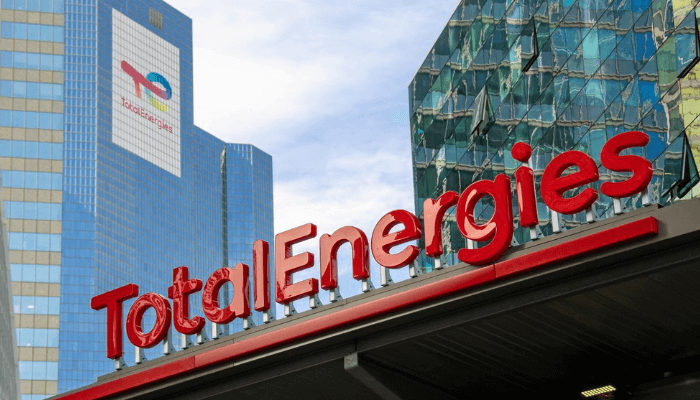
TotalEnergies and Nigerian independent energy company AMNI International have taken the Final Investment Decision on the $800 million Ima Gas Project, more than five decades after the gas field was discovered.
The Ima Gas Project, located in shallow waters across Oil Mining Leases 112 and 117 near Bonny Island, Rivers State, is expected to begin production in 2028 and reach a plateau of 350 million cubic feet of gas per day.
The development is expected to play a major role in supplying feed gas to Nigeria LNG, with the Ima field projected to provide about one-third of the additional gas required for the ongoing Train 7 expansion.
Train 7 is expected to increase Nigeria LNG’s liquefaction capacity from 22 million tonnes per annum to 30 million tonnes per annum, strengthening Nigeria’s capacity to process and export liquefied natural gas.
The Ima field was discovered in 1973 but remained undeveloped for more than 50 years. The Final Investment Decision provides the commercial and financial basis for finally developing the long-dormant resource.
Under the development plan, TotalEnergies will operate the project with a 40 per cent interest, while AMNI will hold the remaining 60 per cent.
The field will be developed using a single offshore platform connected to Nigeria LNG’s facility on Bonny Island through a 22-kilometre pipeline.
TotalEnergies said its investment in the project is more than $600 million, while the Federal Government described the overall Final Investment Decision as an $800 million investment.
At the FID signing ceremony in Abuja, TotalEnergies Exploration and Production Nigeria Managing Director, Mathieu Bouyer, described the decision as the culmination of a development process that had stretched across several decades.
He said the project reflected increased confidence in Nigeria’s investment environment and highlighted reforms targeting the non-associated gas sector as part of the factors that helped make the development commercially viable.
President Bola Tinubu welcomed the investment, saying the project demonstrated the potential of reforms introduced to reduce the cost and time required to develop oil and gas projects.
The President said the government had introduced incentives aimed specifically at unlocking onshore and shallow-water gas projects that had remained undeveloped for years.
He said the Ima development would create opportunities for Nigerian businesses, engineers, technicians and contractors, while generating jobs, economic activity in host communities and additional export earnings.
The project is also expected to have a strong Nigerian content component. TotalEnergies said all key contractors for the development would be Nigerian companies, while about 60 per cent of the workforce during the development phase is expected to come from host communities.
The development will incorporate measures aimed at reducing emissions. TotalEnergies said the platform would receive electricity from shore, operate without routine flaring and use permanent methane detection and monitoring systems.
The Federal Government said the project is part of efforts to turn Nigeria’s large natural gas reserves into productive assets capable of supporting industrialisation, energy supply, jobs and export earnings.
Special Adviser to the President on Energy, Olu Verheijen, said the Ima development illustrated the importance of creating commercial and investment conditions that allow previously stranded resources to be developed.
The government also noted that Nigerian financial institutions arranged 77 per cent of the project’s financing, further highlighting the participation of domestic financial institutions in the development.
For Nigeria LNG, the project comes as the company continues work on the Train 7 expansion, which is designed to increase the Bonny Island plant’s liquefaction capacity and strengthen the country’s position in the global LNG market.

-
Politics3 years ago
13 Ondo Assembly Members Disown Endorsement of Aiyedatiwa
-
Politics3 years ago
APC Group, Ondo Govt, Quarrel Over Money for Endorsement
-

 Trending News5 years ago
Stop unsavoury, inciting statements – DSS warns
-

 Others5 years ago
Adron Homes Celebrates 10 Years Of Housing Excellence
-

 Humanity5 years ago
President Buhari Commiserates With Ambassador Maureen Tamuno Over The Loss Of Her Father
-

 Others7 years ago
EX- CUSTOMS BOSS, IBRAHIM MERA’S DWINDLING FAME
-

 Business2 years ago
Bigi Carbonated Soft Drinks Treats 40 Consumers to an Epic Easter Movie Hangout
-

 Business2 years ago
Wema Bank Shines at Global SME Finance Forum Conference Awards 2024 …Awarded: • SME Financier of the Year (Africa) • Platinum Award for Best Financier for Women Entrepreneurs (Africa)