
Opinion
When Emotion Becomes Policy: Why Nigeria Cannot Outrage Its Way Out of Insecurity


Kayode Adebiyi insecurity emotion policy warning argues Nigeria cannot defeat insecurity through outrage alone, urging systemic reforms instead

Every time another gruesome killing, mass kidnapping, or terrorist attack occurs in Nigeria, a familiar cycle begins.
Also read: Nigerian Army Kills Terrorist, Recovers Arms in Lokoja Operation
The videos emerge.
The tears flow.
Social media erupts.
The outrage becomes volcanic.
The President is insulted, governors are abused, politicians are cursed and blame travels in every imaginable direction. Within hours, everyone becomes a security expert, a political analyst, and a judge.
Then, after days of emotional exhaustion, another tragedy occurs elsewhere and the cycle begins again.
The uncomfortable truth Nigerians often do not like to hear is this: emotional reaction is not security policy.
No nation has ever shouted its way out of insecurity.
This is not to suggest that people should become emotionless in the face of barbarity, nor is it an argument against grief, anger, or public outrage.
Human beings are emotional creatures, and any society that ceases to mourn innocent victims has already begun to lose its humanity.
We must grieve, we must condemn evil, and we must demand accountability from leaders.
However, we must also confront an inconvenient reality: outrage by itself solves nothing.
If insulting presidents were a security strategy, Nigeria should have become one of the safest countries in Africa by now.
Former President Goodluck Jonathan was criticised relentlessly during the height of insurgency.
He was mocked, ridiculed, and labelled weak, clueless, and incapable of protecting the nation.
Then came Muhammadu Buhari, a retired general whom many Nigerians believed possessed the military credentials necessary to crush insecurity decisively.
Yet when kidnappings, terrorism, and banditry continued under his administration, he too became the subject of public anger and relentless criticism. Today, that frustration has shifted toward Bola Ahmed Tinubu.
The names change, the faces change, but the insecurity remains stubbornly persistent.
The pattern never changes. One government leaves office under a cloud of outrage, another comes in under fresh hope, and eventually the same insecurity problems persist, leading citizens to once again search for a political figure to hold singularly responsible.
At what point do we stop and ask ourselves a more difficult question: what if the problem is larger than personalities? What if insecurity in Nigeria is fundamentally systemic?
This is where emotion often clouds national reasoning.
Many Nigerians appear to believe that if enough citizens scream loudly enough at the President online, somehow insecurity will disappear.
It is almost as though we subconsciously imagine that public insults will suddenly make a president omnipresent, invisible, and capable of personally confronting terrorists in forests, kidnappers on highways, or violent criminal networks spread across vast territories.
While frustration with leadership failures is understandable, this way of thinking oversimplifies an extraordinarily complex crisis.
The reality is that Nigeria’s insecurity challenge is structural. It is rooted in weak institutions, poor intelligence gathering, inadequate policing, porous borders, corruption, outdated security frameworks, insufficient technology, judicial inefficiencies, unemployment, poverty, and decades of accumulated governance failures.
These are deeply embedded problems that cannot be solved merely through emotional reactions or public condemnation. You cannot cure a structural disease with emotional medicine.
The United States offers an uncomfortable but useful comparison.
Whenever there is a school shooting in America, particularly one involving children, the country erupts emotionally.
Parents cry before television cameras, citizens protest, communities grieve, politicians are attacked verbally, and presidents are heavily criticised. Social media becomes flooded with outrage and demands for justice.
Yet despite the emotional intensity that follows every tragedy, the shootings continue. Why? Because America’s gun violence crisis extends beyond emotion into the realm of systemic dysfunction.
Many Americans argue that stricter gun laws could significantly reduce mass shootings, yet meaningful reform continues to stall because of constitutional protections, political lobbying, partisan division, and legislative resistance.
In other words, America’s problem is not a shortage of outrage. Americans are outraged after nearly every school massacre. Their problem is systemic paralysis, where institutions struggle or refuse to enact the structural reforms many believe are necessary.
Nigeria suffers from something remarkably similar. We have become experts in emotional reaction but lag behind in institutional reform.
Following every kidnapping or massacre, Nigerians understandably ask: Where was the President? Where was the Governor? These are fair questions because leadership matters, and governments deserve scrutiny.
Security failures should never become normalised, and those entrusted with power must be held accountable for protecting lives and property. Yet accountability is different from emotional scapegoating.
No governor can physically police every village in a state. No president can personally secure every forest, highway, or remote community across a country as large and complex as Nigeria.
Security succeeds when institutions function effectively. Unfortunately, Nigeria’s institutional framework remains deeply inadequate for the scale and sophistication of the threats confronting the nation.
One of the biggest elephants in the room remains the question of state policing.
Nigeria continues to operate one of the most centralised policing systems in the world despite enormous geographical, ethnic, linguistic, and cultural complexities.
A police command operating from Abuja cannot reasonably understand every local criminal network in remote communities better than people who actually live there.
Bandits understand the terrain. Kidnappers know the escape routes.
Terrorists exploit intelligence gaps and local vulnerabilities.
Yet local authorities often lack sufficient operational autonomy to respond swiftly and effectively.
This does not mean state policing should be introduced recklessly or without safeguards.
Legitimate concerns exist regarding potential abuse by governors, political intimidation, and weaponisation against opposition voices.
These concerns deserve serious constitutional safeguards. However, refusing to seriously reconsider Nigeria’s security architecture while expecting different results amounts to national self-deception.
We cannot continue doing the same thing in the same way and expect a fundamentally different outcome. That is not governance. That is wishful thinking.
The recent gruesome murder of a teacher in Ogbomoso, accompanied by disturbing footage deliberately circulated by terrorists, painfully illustrates another dangerous dimension of modern insecurity: psychology.
Terror groups understand something many ordinary citizens do not fully appreciate, namely that violence alone is not their only weapon. Emotion is.
The deliberate release of graphic videos is often strategic, intended not merely to document violence but to spread fear, provoke anger, deepen public distrust in government, and emotionally destabilise society.
Terrorism thrives not only on bloodshed but also on psychological victory.
This is why the issue is not whether Nigerians should show emotions.
Of course we should.
The murder of innocent people should hurt us.
Communities should mourn.
Parents should cry.
Citizens should demand accountability from leaders.
Anyone unmoved by such brutality risks becoming dangerously detached from human suffering.
However, what must change is our tendency to stop at emotional reaction without advancing the deeper conversation about systemic solutions.
The real question should no longer simply be: Who do we blame? A more important question is: What systems must change? How do we improve intelligence gathering?
How do we modernise surveillance and strengthen local intelligence networks? How do we reform policing to become more community based and locally responsive?
How do we secure vulnerable rural communities?
How do we reform constitutional frameworks to address modern security threats more effectively?
Unless these questions become central to national discourse, Nigeria risks remaining trapped in a painful and repetitive cycle: attack, outrage, blame, temporary outrage fatigue, and repetition.
A nation cannot emotionally react itself into security.
At some point, outrage must mature into institutional reform.
Also read: Lagos Continues to Drive Nigeria’s Economy — Obasa
Only then can insecurity begin to retreat, and only then can Nigerians begin to see meaningful progress beyond the endless cycle of grief, anger, and helplessness.


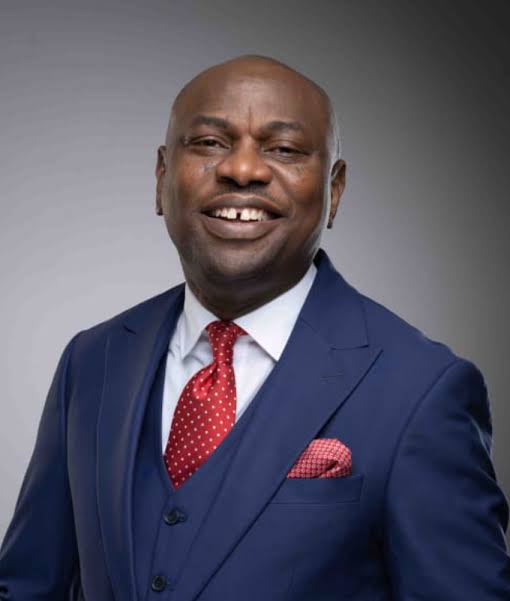
By Ehi Braimah,
I joined The Platform live on Channels Television on Thursday October 1 to listen to inspiring conversations about Nigeria. What I heard from Dr. Emmanuel Emefienim, Founder and Managing Director/CEO of Premium Trust Bank, was much more than a motivational speech.
Also read: Nigeria @66: Obasa Says Tinubu’s 2027 Re-election Will Secure Reform Gains
It was a masterclass in resilience, ambition, leadership, relationships, knowledge, faith and the power of refusing to give up.
The Platform, organised by The Covenant Place under the leadership of Senior Paster Poju Oyemade, has become an important public conversation that brings Nigerians together around ideas, experiences and possibilities.
Held on May 1 and October 1 in a town-hall setting and televised live, it has consistently provided a platform for Nigerians to share stories that can inspire particularly the younger generation to believe in themselves and in their country.
Dr. Emefienim’s story deserves to be told beyond the walls of The Platform because it is not simply the story of one successful banker; it is a Nigerian story about what can happen when adversity meets determination. After completing his NYSC, Emefienim applied for 70 jobs.
Only four organisations, according to him, responded. He eventually joined Oceanic Bank at the age of 22.
At some point, he was transferred from Lagos to Asaba. His career subsequently took him to Savannah Bank in Port Harcourt, where he became a regional manager.
Then came the shock that could have destroyed everything. I mean, everything: his plans, big dreams and bright future.
One weekend, Emefienim travelled to Warri to spend time with his family. When he returned to work on Monday, he discovered that Savannah Bank had been liquidated. There were no members of staff waiting for him.
Instead, officials of the Central Bank of Nigeria and the Nigeria Deposit Insurance Corporation were there. There had been no warning.
Suddenly, the man who had an official car and driver was without a job. He was married, in his 30s, and his wife was a civil servant. His professional world had collapsed almost overnight. What did he do? He did not give up.
His driver took him to Benin City. From there, he travelled to Lagos, using a public transport service, to see a manager at FSB, a bank that had previously offered him a job while he was still at Savannah Bank. He had declined the offer then.
Now, Emefienim needed the job, but the manager, obviously angry and wanted to have his pound of flesh back, ignored him and kept him waiting for three days.
It would have been easy to interpret the experience as humiliation and walk away. But Emefienim remained focused. Eventually, the manager saw him and offered him a job – but at a lower level.
He moved from senior manager to deputy manager and was posted to Yenagoa in Bayelsa State which he accepted as he had no choice at the time.
That decision contains a profound lesson: sometimes, starting again is not failure; it is strategy. There are moments in life when circumstances force us to take a step backwards so that we can eventually move forward.
The important thing is not the temporary position we occupy, or feelings of rejection experienced or disappointments that we face, but whether we can continue moving towards the destination.
Emefienim had a big dream. He recalled telling the Managing Director of Oceanic Bank and some colleagues that one day he would become the managing director of a bank himself. While the MD encouraged him to pursue his goal, his colleagues laughed at him.
His response is one of the most memorable lines from his presentation: when people don’t laugh at your dream, perhaps the dream is not big enough. That is a message Nigeria’s young people need to hear.
Too many young people allow their current circumstances to define their future, but the future does not necessarily resemble the present.
A young person who is struggling today may become an employer tomorrow, and someone rejected for a job may eventually build an institution that employs hundreds or thousands of people.
Emefienim’s own journey demonstrates this. He continued to rise through Equatorial Trust Bank and later Sterling Bank, following mergers and acquisitions in the Nigerian banking industry.
He rose through the ranks – AGM, DGM, GM and Executive Director – while continuing to acquire knowledge.
He attended Harvard Business School several times. But perhaps more importantly, he did not keep the knowledge to himself – he invested in people.
He personally sponsored some of his managers to also attend Harvard. When the time came for him to leave Sterling Bank and establish Premium Trust Bank, six of the seven managers he had trained agreed to join him.
That is a powerful definition of leadership. A leader is someone who reaches the top and helps others rise.
This is particularly important in Nigeria, where the quality of human capital will ultimately determine how competitive our economy becomes. Buildings, technology, capital and infrastructure matter, but people make institutions work.
Emefienim also spoke about relationships and networks as critical elements of success.
This is another lesson worth emphasising. Knowledge is important, but relationships create opportunities for knowledge to be applied.
Networks create access, partnerships and possibilities because nobody succeeds entirely alone.
His story also contains an important lesson about family resilience. After experiencing the trauma of losing his job without warning, he empowered his wife to start a business.
He wanted to ensure that his family would never again be placed in such a vulnerable position because one person’s employment had suddenly disappeared resulting in loss of income.
That was more than a financial decision – it was an act of foresight. Today, the story has come full circle. The young man who once submitted 70 applications looking for employment is now the founder and owner of a bank.
Premium Trust Bank, which commenced commercial banking operations as a regional bank in April 2022, has grown into a national banking institution with 35 branches.
Emefienim spoke proudly about its growth and profitability and its successful participation in the banking industry’s recapitalisation programme, raising N200 billion, the threshold for national banks, and achieving a historic milestone as one of Nigeria’s 10 most profitable banks.
There is something profoundly Nigerian about this story. Nigeria is often described in terms of its problems – unemployment, infrastructure deficits, insecurity, poverty, weak institutions and other challenges. These problems are real and should not be minimised.
But Nigeria is also a country of extraordinary human possibilities. Our greatest resource is not oil neither is it our large population; it is the capacity of Nigerians to create, innovate, adapt, build businesses, solve problems and compete. This is one of the central ideas behind my forthcoming book, How Naija can conquer the world.
The book is about Nigeria’s economic potential, global ambition and the strategies required to achieve greater prosperity. I argue that Nigeria’s success should not be measured simply by the size of its economy.
Instead, we should be concerned about rising incomes, productivity, exports, globally competitive companies, human capital and the ability to create value for the world.
Emefienim’s story illustrates several of these principles. He acquired knowledge, built relationships, invested in people, remained focused, executed consistently, understood his environment, adapted when circumstances changed, dreamed beyond his immediate reality, and remained anchored in faith.
His reference to what he calls “revelational knowledge” – spiritual insight and instruction he believes come from God – adds another dimension to his philosophy.
For him, formal education and professional experience are important, but they exist alongside faith and spiritual guidance.
There is another lesson here for Nigeria: we need more people who are prepared to build institutions rather than merely look for opportunities. When Nigerians build strong companies, they create jobs, and when they invest in people, they create human capital.
We have the capacity to develop globally competitive products and services for exports. Clearly, the moral of Emefienim’s story is that we should build institutions that survive beyond their founders and contribute to national prosperity.
This is how a nation moves from potential to prosperity.
Listening to Dr. Emefienim, I was reminded that Nigeria does not lack stories of courage, enterprise and achievement.
Perhaps what we lack is a sufficiently organised effort to tell these stories and convert them into a powerful national narrative.
We need to tell young Nigerians that setbacks are not destinies. An entrepreneur’s small business today can become tomorrow’s major institution.
We need to tell professionals that continuous learning matters; tell leaders that investing in people is one of the highest forms of leadership, and also tell the world that Nigeria is much more than the challenges that frequently dominate international headlines. Dr. Emmanuel Emefienim has done well.
From a young graduate searching for his first job, to a banker who survived the collapse of a major institution, got another job within four days, to a senior executive, and an entrepreneur who built his own bank, his journey is a powerful reminder of what determination can accomplish.
His story is not an invitation to ignore Nigeria’s problems, but he is simply saying we should confront them with courage.
Nigeria needs more dreamers – but also more doers. We need people who can dream big, acquire knowledge, build relationships, invest in others and execute with consistency.
That is how nations are built.
Also read: Nigeria @66: Obasa Says Tinubu’s 2027 Re-election Will Secure Reform Gains
Perhaps that is the deeper message of The Platform: Nigeria’s future will be created by Nigerians who believe that something better is possible – and then roll up their sleeves and build it.
Opinion
RE: State Creation Or Political Theatre? – Correcting the Misunderstanding of Otunba Gbenga Daniel’s Role


By Zubair, M.O,
The article by Kunle Adesanya is eloquently written but fundamentally misrepresents how state creation works in Nigeria and what H.E Senator Otunba Gbenga Daniel is actually doing.
Also read: GFF Holds Free Medical Screening Ahead of October Surgeries
It accuses H.E Senator Otunba Gbenga Justus Daniel of deception for doing exactly what the Constitution expects a sponsor of a state creation bill to do.
- The Senator Never Claimed He Can Create a State Alone
No serious person, and certainly not a two-term Governor and current Senator who is a trained Engineer, believes he can create a state by fiat.
Section 8 of the 1999 Constitution places the responsibility for state creation on multiple institutions, but someone must initiate and drive the process. That is the role of the sponsor.
H.E Senator Otunba Gbenga Justus Daniel sponsored Senate Bill 564 on 27th November 2024 for Ijebu State. He has never said the bill alone equals a state. What he has done is the legitimate legislative work:
- Building national consensus across party lines, culminating in the publicized backing of 75 Senators as of July 2026, which surpasses the two-thirds of the Senate required to advance a constitutional alteration proposal.
- Securing buy-in from the affected population through consultations with the late Awujale, the Akarigbo, and all Ijebu and Remo traditional councils.
- Harmonizing the name to Ijebu-Remo State to preserve Remo identity after the Remo Traditional Council meeting of July 3, 2025.
To call these steps “political theatre” is to misunderstand legislative advocacy. How else is a referendum supposed to succeed without prior traditional and political consensus?
- A Palace Endorsement Is Not Meant To Replace a Referendum – It Is Meant To Prepare For It
The article mocks palace meetings as if our H.E Senator Otunba Gbenga Daniel is presenting them as a substitute for a referendum. He is not!, kindly be informed, sir!.
In Nigerian state creation history, no referendum has ever been conducted without first demonstrating that the people of the affected area want the state. The way you demonstrate that desire before INEC conducts a referendum is through resolutions of traditional councils, local government councils, professional bodies, and community leaders.
The meeting at the Palace of the Awujale on September 28, 2026, where Ijebu-Ode was endorsed as proposed capital, was not presented as a constitutional finality. It was presented as what it was – stakeholder alignment. That alignment is a prerequisite for the next stages, not a replacement for them.
- The Constitutional Roadmap Has Been Made Public
Contrary to the claim that there is “political fog,” H.E Senator Otunba Gbenga Daniel has been transparent about the architecture:
- Stage 1 – Legislative Sponsorship: Done. Bill sponsored.
- Stage 2 – National Assembly Support: Substantially advanced. 75 Senators, exceeding the 73 required.
- Stage 3 – State and Local Support: Ongoing. Consultations with Ogun State House of Assembly members and Local Government Chairmen from Ogun East.
- Stage 4 – Referendum: Will be conducted by INEC when the National Assembly passes the bill to that stage.
- Stage 5 – Approval by 24 State Houses of Assembly and final passage by National Assembly and Presidential Assent.
This is the same roadmap every other state creation request is following. None of the 30+ state creation requests before the 10th National Assembly has reached referendum stage. To single out Ijebu-Remo and demand referendum documents today is to feign ignorance of where the entire national process is.
- On Capital and Name Evolution – That Is Consensus Building, Not Confusion
The article points to the evolution from Ijebu State to Ijebu-Remo State as evidence of inconsistency. It is actually evidence of leadership and listening.
Remo people, through the Remo Committee on State Creation, had valid concerns about identity and capital. Instead of imposing Ijebu State, our dear leader, H.E Senator Otunba Gbenga Daniel facilitated a compromise that produced Ijebu-Remo State with clear recognition of both identities. That is how you build the unity needed to win a two-thirds referendum.
Conclusion
The people of Ijebuland are not being deceived. They know state creation is difficult – it has not happened since 1996. What our Senator has done is what no elected representative from Ogun East has done in the last 30 years: move the demand from street agitation to the floor of the Senate, secure national legislative numbers, and force it into serious constitutional consideration.
To call that “straws dressed up as milestones” is unfair. The 75 Senators are not straws. The public hearing of July 4, 2025 is not a straw. The unified position of Ijebu and Remo Obas is not a straw.
These are constitutional footprints. The documents do speak – for anyone willing to read them beyond political cynicism.
*ZMO writes from Ijebu Ode
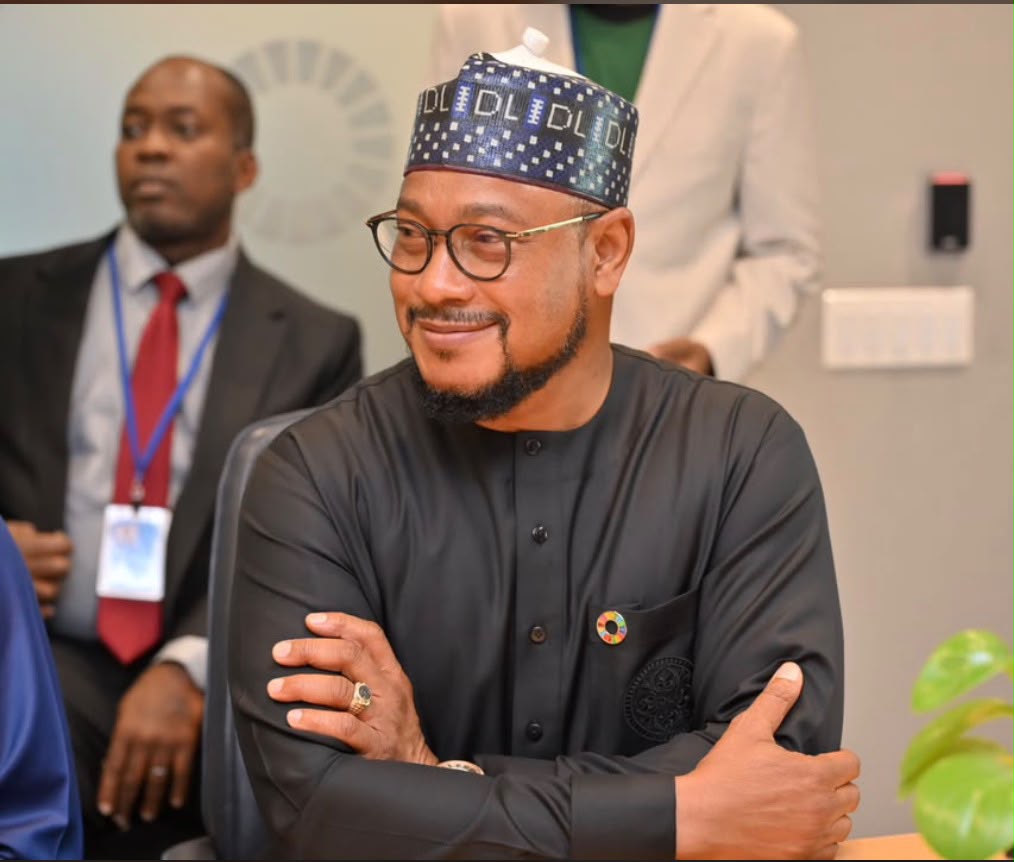
By Oladapo Sofowora,
On October 1, 1996, a profound historic journey birthed across the vast expanses of the Northwest region when Zamfara State was carved out of the old Sokoto State as a standalone state.
Also read: Nigeria @66: Obasa Says Tinubu’s 2027 Re-election Will Secure Reform Gains
Despite the state being created by the military administration of the late General Sani Abacha, the birth of the state was greeted with overflowing euphoria from many who believed its a welcoming development to ensure more stability in governance.
The founding fathers of Zamfara envisioned a self-sustaining agricultural giant, proudly flying the banner “Farming is Our Pride” as its motto but also marked with action and not mere words on paper.
With the vast arable agrarian lands and rich mineral deposits the state is blessed with, they imagined a haven of communal peace, where vibrant markets flourished, schools molded brilliant minds, basic amenities were standard and civic dignity was guaranteed to every indigene which would, in turn generate meaningfully development and place the state among the very best in the state and also the region.
Yet, for nearly three decades, that noble vision drifted into a tragic narrative of what could have been a dream come true. Sequential political administrations took the helm, but systemic governance deficits slowly starved the state of its promise also preventing it from reaching its full potential.
Instead of transforming into an economic lighthouse, Zamfara became synonymous with institutional decay, bedridden with insecurity, banditry, kidnapping and illiteracy.
Basic infrastructure withered like a flower with no water supply; state-owned schools were reduced to crumbling dilapidated structures; general hospitals and Primary health centres lacked essential diagnostic tools and basic medications and a chronic backlog of unpaid civil service gratuities spanning over a decade left retired public servants in severe hardship.
Worse still, an escalating rural security crisis took root, driving hundreds of thousands of farmers from their ancestral fields, paralysing interstate commerce and suffocating the state’s economic soul.
For millions of residents, the proud dream of 1996 had morphed into a quiet, painful struggle for survival affecting the survival of the state.
History, however, rarely remains static when decisive leadership intervenes. As Zamfara State approaches its landmark 30th anniversary, the long-standing story of stagnation is undergoing a historic shift.
The turning point arrived with the election of Governor Dauda Lawal in 2023 who defeated an incumbent against all odds; whose “Rescue Mission” agenda did not merely offer political promises but launched a systematic engineering of state affairs.
Governor Lawal took office with a clear diagnostic view of the state’s wounds, He moved away from cosmetic fixes to confront the structural defects that had held Zamfara back for twenty-seven years.
Recognizing that development cannot take root where fear reigns, the governor prioritized security of lives and property above all else. Through the operationalization of the Homegrown Community Protection Guards and strategic collaboration with federal security agencies, the state moved from defense to active deterrence.
Modern operational capabilities, ranging from advanced long-endurance surveillance drones for real-time intelligence gathering to fleets of armored personnel carriers and specialized tactical vehicles, were deployed into high-risk rural corridors.
Critical transport routes like the 108-kilometer Gusau to Dansadau road, once notorious for security risks, were awarded for total reconstruction, allowing agrarian communities to safely reconnect with major markets and reclaim their farming livelihoods.
What distinguished Governor Lawal’s programme from the capital-centric spending that has historically defined Nigerian state governance is its geographic spread.
In Bukkuyum Local Government Area, a region more often associated in national conversation with insecurity than with infrastructure investment, N4 billion has been committed to the 23-kilometre Mallamawa–Zarummai–Bukkuyum road with a spur to Zarummai Masama Road, alongside N1.5 billion for the Bukkuyum–Birnin Zuama–Gummi road.
That the government has chosen to route capital there is itself a statement of intent. In Maradun, N5 billion is allocated to the Maradun–Magami–Faru road and N1 billion to the Maradun–Makera road.
In Bungudu, N10 billion is going into the Daza–Gidan Dawa link to the Sokoto Road dual carriageway and N500 million for the 21-kilometre Tasha Babba–Lambar Kyambarawa Road in Nahuche Ward. In Birnin Magaji, N10 billion is earmarked for the 53-kilometre Gusau–Jauri–Dogon Kade–Nasarawa Mailayi–Nasarawar Godal roads.
The administration has also awarded what is now the longest road project in Zamfara’s history: a 95-kilometre stretch in Tsafe Local Government Area running from Yandoton Daji through Chediya, Doka, Yan Waren Daji, Hayin Alhaji, Bedi, Unguwar Joji, Yankuzo to Tsafe with an allocation of N10 billion.
The Governor has also set aside N5 billion for emergency roads across the three senatorial zones, ensuring that even the most remote communities are not left behind in the infrastructure drive.
Simultaneously, a massive urban and regional renewal initiative was rolled out. Gusau, long criticized for looking more like a neglected outpost than a state capital, was turned into a bustling site of civil infrastructure.
Inner-city arterial roads were expanded and dualized, comprehensive underground drainage networks were engineered to end perennial flooding and modern solar streetlighting systems illuminated major commercial avenues.
Across all fourteen local government areas, legacy projects began taking shape, most notably the Gusau International Airport and its network of connecting transport corridors, designed to position Zamfara as a future hub for regional agricultural export and interstate commerce.
In May 2026, Zamfara made history when the first-ever Hajj flight departed from Gusau International Airport, carrying 415 intending pilgrims aboard a Max Air flight directly to Saudi Arabia.
Governor Lawal described the airport’s construction, which began on June 18, 2024, as a “legacy project of great importance” to his administration, noting that pilgrims who previously had to travel to Sokoto or Kano could now fly directly from Gusau in “less than 4 hours.”
The human capital landscape has experienced an equally dramatic rebirth. In basic and secondary education, the administration addressed fundamental decay by renovating and equipping more than 500 public schools, recruiting and training thousands of new teachers and clearing multi-year backlogs of WAEC and NECO examination fees to ensure that no child’s academic progression was halted by state neglect.
In healthcare, general hospitals across local government areas underwent complete structural overhauls, bringing functional surgical theaters, diagnostic capacity, and reliable maternal care directly to rural populations.
Furthermore, by liquidating over 16 billion Naira in accumulated civil service gratuities, the administration restored basic financial dignity to thousands of senior citizens who had dedicated their working lives to the state.
Governance is ultimately judged by measurable impact, a reality underscored by the broad national recognition conferred upon the administration, including multiple “Governor of the Year” honors for exceptional project execution and public service reform.
Thirty years after its creation, Zamfara State is actively shedding the burdens of its past and rewriting its history.
Through fiscal discipline, physical development and a focus on human dignity, Governor Dauda Lawal is demonstrating that the vision of the founding fathers was never out of reach; it simply required an architect capable of turning the promise of 1996 into enduring reality.
The state tomorrow the 1st of October set to launch its commercial Bi-weekly passenger flight from Abuja to Gusau, a service to be run by XeJet which signifies a significant development that will change the commercial trajectory of the state and also increase trade activities for development.
As Zamfara saunters into its fourth decade, the anniversary committee inaugurated in September 2026, chaired by Deputy Governor Mani Mumuni, has been tasked with delivering a celebration that reflects the state’s journey from creation to resounding transformation from grass to grace.
For Governor Lawal, the message is simple: the Rescue Mission is not a slogan but a delivery framework
Also read: Nigeria at 66: Taking stock and doing the needful…
and as Zamfara marks 30 years since its creation, the concrete and asphalt spreading across the state suggest that the aspirations of 1996, development, peace, identity and prosperity, are finally being given a foundation to stand on.
-
Politics3 years ago
13 Ondo Assembly Members Disown Endorsement of Aiyedatiwa
-
Politics3 years ago
APC Group, Ondo Govt, Quarrel Over Money for Endorsement
-

 Trending News5 years ago
Stop unsavoury, inciting statements – DSS warns
-

 Others5 years ago
Adron Homes Celebrates 10 Years Of Housing Excellence
-

 Humanity5 years ago
President Buhari Commiserates With Ambassador Maureen Tamuno Over The Loss Of Her Father
-

 Others7 years ago
EX- CUSTOMS BOSS, IBRAHIM MERA’S DWINDLING FAME
-

 Business2 years ago
Bigi Carbonated Soft Drinks Treats 40 Consumers to an Epic Easter Movie Hangout
-

 Business2 years ago
Wema Bank Shines at Global SME Finance Forum Conference Awards 2024 …Awarded: • SME Financier of the Year (Africa) • Platinum Award for Best Financier for Women Entrepreneurs (Africa)