
Opinion
At 70, Otunba Gbenga Daniel and the Burden of Being an Enigma

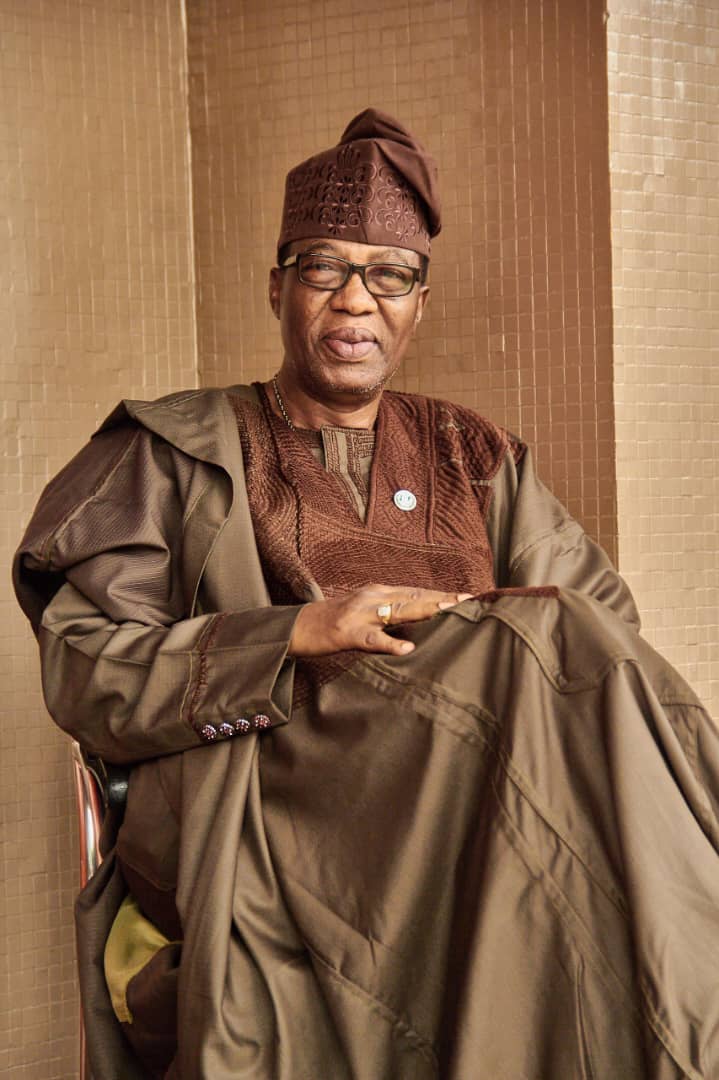
Gbenga Daniel 70th birthday tribute reflects on his legacy, governance, and expectations as an elder statesman in Nigeria
At 70, however, celebration must share space with reflection. For men of stature, do not merely age; they accumulate responsibility.
Also read: I’ve not forgiven Otunba Gbenga Daniel.

They become repositories of expectation
At 70, Otunba Gbenga Daniel and the Burden of Being an Enigma | By Segun Showunmi
There are men who pass through public life, and there are those who imprint themselves upon it.
Otunba Justus Olugbenga Daniel belongs firmly in the latter category an enduring enigma whose life invites both admiration and scrutiny in equal measure.
The evidence of this distinction is neither accidental nor recent.
It stretches back to the formative years of a brilliant student at Baptist Boys High School, Abeokuta; of an University of Lagos scholar shaped by the rigours of the Awojobi Fellowship; of a young mind drawn early into the orbit of the Obafemi Awolowo intellectual tradition.
Even then, the outlines of an unusual trajectory were already visible: a fusion of intellect, ambition, and a certain philosophical depth.
From engineering excellence to the rare honour of traditional recognition in Ile-Ife the symbolic cradle of Yoruba civilization his journey has been marked by an almost rhythmic accumulation of distinction.
His imprint across pan-Yoruba platforms, from Afenifere to the ideological stirrings that inspired the Yoruba Council of Elders, only reinforces the conclusion: this is no ordinary public figure. This is a generational actor.
Yet, perhaps the most consequential phase of his public life remains his tenure as Governor of Ogun State.
In his book, Land of My Dreams, he set forth not just a vision, but a working document a manifesto of possibility for a state rich in heritage yet yearning for modern coherence.
Historians will ultimately arbitrate how much of that vision was realized.
But even the most dispassionate observer must concede that his administration was not short on innovation.
Traffic management at the subnational level now taken for granted was once an audacious experiment.
His emphasis on human capital development, his responsiveness to citizens, and his stylized approach to political mobilization altered the grammar of governance in Ogun State.
He demonstrated an instinctive ability to assemble teams, spot talent, and integrate traditional institutions into the formal architecture of governance in ways that felt both organic and strategic.
History, one suspects, will be kind not out of sentiment, but out of evidence.
At 70, however, celebration must share space with reflection. For men of stature do not merely age they accumulate responsibility.
They become repositories of expectation.
Society projects onto them both its anxieties and its aspirations.
And so it is with Otunba Daniel: a man upon whom much has been bestowed, and from whom much is therefore expected.
Nigeria today stands at a delicate crossroads, and four issues demand the attention of minds such as his.
First, national cohesion has frayed dangerously.
The bonds that once held together our shared identity as a people have weakened, threatened by suspicion, fragmentation, and a creeping loss of common purpose.
Second, there is an observable erosion of values.
A society untethered from its moral anchors risks drifting into a condition where anything becomes permissible and nothing remains sacred.
The urgency of a national reorientation cannot be overstated.
Third, the challenge of unemployment regardless of the debates around data and metrics remains stark.
Even allowing for the nuanced optimism suggested by works like Factfulness, which cautions against overly pessimistic global narratives, Nigeria must rethink its models of economic engagement.
The question is no longer whether jobs are sufficient, but whether our systems are designed to make our people meaningfully productive.
Finally and most urgently there is insecurity. It is both a symptom and a driver of the preceding crises.
When crime becomes ethnicized and tribalized, it complicates not just enforcement, but perception, trust, and national unity itself.
Addressing insecurity, therefore, requires more than force; it requires thought deep, structural, and courageous thinking.
This is where men like Otunba Daniel must come to the fore. Nations, in moments of strain, lean heavily on their thinkers not merely their office holders.
The burden of insight, of foresight, of intellectual leadership, rests disproportionately on those who have seen, built, and endured.
Seventy, then, is not merely a milestone.
It is a summons.
A summons to remain engaged. To think. To guide. To challenge. And, where necessary, to disrupt complacency.
As you mark this significant passage, one is reminded of the enduring wisdom of Book of Proverbs: “The fear of the Lord prolongs life, but the years of the wicked will be shortened.”
It is both a prayer and a caution a reminder that longevity finds its highest meaning in purpose.
You are a good man, complicated though but all the same a good man. Enjoy your day aware of the huge responsibility of succession.
Many happy returns to the Otunba Obalofin Owelenkeri of Ijebu land. Olunla Egba.
May your light not dim, and may you, indeed, focus on the things that should occupy the mind of an elder statesman.
Also read: Otunba Gbenga Daniel and the Economics of Sporting Excellence in Ogun State
Otunba Segun Showunmi
Odofin Keesi
The Alternative.


Opinion
RE: State Creation Or Political Theatre? – Correcting the Misunderstanding of Otunba Gbenga Daniel’s Role


By Zubair, M.O,
The article by Kunle Adesanya is eloquently written but fundamentally misrepresents how state creation works in Nigeria and what H.E Senator Otunba Gbenga Daniel is actually doing.
Also read: GFF Holds Free Medical Screening Ahead of October Surgeries
It accuses H.E Senator Otunba Gbenga Justus Daniel of deception for doing exactly what the Constitution expects a sponsor of a state creation bill to do.
- The Senator Never Claimed He Can Create a State Alone
No serious person, and certainly not a two-term Governor and current Senator who is a trained Engineer, believes he can create a state by fiat.
Section 8 of the 1999 Constitution places the responsibility for state creation on multiple institutions, but someone must initiate and drive the process. That is the role of the sponsor.
H.E Senator Otunba Gbenga Justus Daniel sponsored Senate Bill 564 on 27th November 2024 for Ijebu State. He has never said the bill alone equals a state. What he has done is the legitimate legislative work:
- Building national consensus across party lines, culminating in the publicized backing of 75 Senators as of July 2026, which surpasses the two-thirds of the Senate required to advance a constitutional alteration proposal.
- Securing buy-in from the affected population through consultations with the late Awujale, the Akarigbo, and all Ijebu and Remo traditional councils.
- Harmonizing the name to Ijebu-Remo State to preserve Remo identity after the Remo Traditional Council meeting of July 3, 2025.
To call these steps “political theatre” is to misunderstand legislative advocacy. How else is a referendum supposed to succeed without prior traditional and political consensus?
- A Palace Endorsement Is Not Meant To Replace a Referendum – It Is Meant To Prepare For It
The article mocks palace meetings as if our H.E Senator Otunba Gbenga Daniel is presenting them as a substitute for a referendum. He is not!, kindly be informed, sir!.
In Nigerian state creation history, no referendum has ever been conducted without first demonstrating that the people of the affected area want the state. The way you demonstrate that desire before INEC conducts a referendum is through resolutions of traditional councils, local government councils, professional bodies, and community leaders.
The meeting at the Palace of the Awujale on September 28, 2026, where Ijebu-Ode was endorsed as proposed capital, was not presented as a constitutional finality. It was presented as what it was – stakeholder alignment. That alignment is a prerequisite for the next stages, not a replacement for them.
- The Constitutional Roadmap Has Been Made Public
Contrary to the claim that there is “political fog,” H.E Senator Otunba Gbenga Daniel has been transparent about the architecture:
- Stage 1 – Legislative Sponsorship: Done. Bill sponsored.
- Stage 2 – National Assembly Support: Substantially advanced. 75 Senators, exceeding the 73 required.
- Stage 3 – State and Local Support: Ongoing. Consultations with Ogun State House of Assembly members and Local Government Chairmen from Ogun East.
- Stage 4 – Referendum: Will be conducted by INEC when the National Assembly passes the bill to that stage.
- Stage 5 – Approval by 24 State Houses of Assembly and final passage by National Assembly and Presidential Assent.
This is the same roadmap every other state creation request is following. None of the 30+ state creation requests before the 10th National Assembly has reached referendum stage. To single out Ijebu-Remo and demand referendum documents today is to feign ignorance of where the entire national process is.
- On Capital and Name Evolution – That Is Consensus Building, Not Confusion
The article points to the evolution from Ijebu State to Ijebu-Remo State as evidence of inconsistency. It is actually evidence of leadership and listening.
Remo people, through the Remo Committee on State Creation, had valid concerns about identity and capital. Instead of imposing Ijebu State, our dear leader, H.E Senator Otunba Gbenga Daniel facilitated a compromise that produced Ijebu-Remo State with clear recognition of both identities. That is how you build the unity needed to win a two-thirds referendum.
Conclusion
The people of Ijebuland are not being deceived. They know state creation is difficult – it has not happened since 1996. What our Senator has done is what no elected representative from Ogun East has done in the last 30 years: move the demand from street agitation to the floor of the Senate, secure national legislative numbers, and force it into serious constitutional consideration.
To call that “straws dressed up as milestones” is unfair. The 75 Senators are not straws. The public hearing of July 4, 2025 is not a straw. The unified position of Ijebu and Remo Obas is not a straw.
These are constitutional footprints. The documents do speak – for anyone willing to read them beyond political cynicism.
*ZMO writes from Ijebu Ode
By Oladapo Sofowora,
On October 1, 1996, a profound historic journey birthed across the vast expanses of the Northwest region when Zamfara State was carved out of the old Sokoto State as a standalone state.
Also read: Nigeria @66: Obasa Says Tinubu’s 2027 Re-election Will Secure Reform Gains
Despite the state being created by the military administration of the late General Sani Abacha, the birth of the state was greeted with overflowing euphoria from many who believed its a welcoming development to ensure more stability in governance.
The founding fathers of Zamfara envisioned a self-sustaining agricultural giant, proudly flying the banner “Farming is Our Pride” as its motto but also marked with action and not mere words on paper.
With the vast arable agrarian lands and rich mineral deposits the state is blessed with, they imagined a haven of communal peace, where vibrant markets flourished, schools molded brilliant minds, basic amenities were standard and civic dignity was guaranteed to every indigene which would, in turn generate meaningfully development and place the state among the very best in the state and also the region.
Yet, for nearly three decades, that noble vision drifted into a tragic narrative of what could have been a dream come true. Sequential political administrations took the helm, but systemic governance deficits slowly starved the state of its promise also preventing it from reaching its full potential.
Instead of transforming into an economic lighthouse, Zamfara became synonymous with institutional decay, bedridden with insecurity, banditry, kidnapping and illiteracy.
Basic infrastructure withered like a flower with no water supply; state-owned schools were reduced to crumbling dilapidated structures; general hospitals and Primary health centres lacked essential diagnostic tools and basic medications and a chronic backlog of unpaid civil service gratuities spanning over a decade left retired public servants in severe hardship.
Worse still, an escalating rural security crisis took root, driving hundreds of thousands of farmers from their ancestral fields, paralysing interstate commerce and suffocating the state’s economic soul.
For millions of residents, the proud dream of 1996 had morphed into a quiet, painful struggle for survival affecting the survival of the state.
History, however, rarely remains static when decisive leadership intervenes. As Zamfara State approaches its landmark 30th anniversary, the long-standing story of stagnation is undergoing a historic shift.
The turning point arrived with the election of Governor Dauda Lawal in 2023 who defeated an incumbent against all odds; whose “Rescue Mission” agenda did not merely offer political promises but launched a systematic engineering of state affairs.
Governor Lawal took office with a clear diagnostic view of the state’s wounds, He moved away from cosmetic fixes to confront the structural defects that had held Zamfara back for twenty-seven years.
Recognizing that development cannot take root where fear reigns, the governor prioritized security of lives and property above all else. Through the operationalization of the Homegrown Community Protection Guards and strategic collaboration with federal security agencies, the state moved from defense to active deterrence.
Modern operational capabilities, ranging from advanced long-endurance surveillance drones for real-time intelligence gathering to fleets of armored personnel carriers and specialized tactical vehicles, were deployed into high-risk rural corridors.
Critical transport routes like the 108-kilometer Gusau to Dansadau road, once notorious for security risks, were awarded for total reconstruction, allowing agrarian communities to safely reconnect with major markets and reclaim their farming livelihoods.
What distinguished Governor Lawal’s programme from the capital-centric spending that has historically defined Nigerian state governance is its geographic spread.
In Bukkuyum Local Government Area, a region more often associated in national conversation with insecurity than with infrastructure investment, N4 billion has been committed to the 23-kilometre Mallamawa–Zarummai–Bukkuyum road with a spur to Zarummai Masama Road, alongside N1.5 billion for the Bukkuyum–Birnin Zuama–Gummi road.
That the government has chosen to route capital there is itself a statement of intent. In Maradun, N5 billion is allocated to the Maradun–Magami–Faru road and N1 billion to the Maradun–Makera road.
In Bungudu, N10 billion is going into the Daza–Gidan Dawa link to the Sokoto Road dual carriageway and N500 million for the 21-kilometre Tasha Babba–Lambar Kyambarawa Road in Nahuche Ward. In Birnin Magaji, N10 billion is earmarked for the 53-kilometre Gusau–Jauri–Dogon Kade–Nasarawa Mailayi–Nasarawar Godal roads.
The administration has also awarded what is now the longest road project in Zamfara’s history: a 95-kilometre stretch in Tsafe Local Government Area running from Yandoton Daji through Chediya, Doka, Yan Waren Daji, Hayin Alhaji, Bedi, Unguwar Joji, Yankuzo to Tsafe with an allocation of N10 billion.
The Governor has also set aside N5 billion for emergency roads across the three senatorial zones, ensuring that even the most remote communities are not left behind in the infrastructure drive.
Simultaneously, a massive urban and regional renewal initiative was rolled out. Gusau, long criticized for looking more like a neglected outpost than a state capital, was turned into a bustling site of civil infrastructure.
Inner-city arterial roads were expanded and dualized, comprehensive underground drainage networks were engineered to end perennial flooding and modern solar streetlighting systems illuminated major commercial avenues.
Across all fourteen local government areas, legacy projects began taking shape, most notably the Gusau International Airport and its network of connecting transport corridors, designed to position Zamfara as a future hub for regional agricultural export and interstate commerce.
In May 2026, Zamfara made history when the first-ever Hajj flight departed from Gusau International Airport, carrying 415 intending pilgrims aboard a Max Air flight directly to Saudi Arabia.
Governor Lawal described the airport’s construction, which began on June 18, 2024, as a “legacy project of great importance” to his administration, noting that pilgrims who previously had to travel to Sokoto or Kano could now fly directly from Gusau in “less than 4 hours.”
The human capital landscape has experienced an equally dramatic rebirth. In basic and secondary education, the administration addressed fundamental decay by renovating and equipping more than 500 public schools, recruiting and training thousands of new teachers and clearing multi-year backlogs of WAEC and NECO examination fees to ensure that no child’s academic progression was halted by state neglect.
In healthcare, general hospitals across local government areas underwent complete structural overhauls, bringing functional surgical theaters, diagnostic capacity, and reliable maternal care directly to rural populations.
Furthermore, by liquidating over 16 billion Naira in accumulated civil service gratuities, the administration restored basic financial dignity to thousands of senior citizens who had dedicated their working lives to the state.
Governance is ultimately judged by measurable impact, a reality underscored by the broad national recognition conferred upon the administration, including multiple “Governor of the Year” honors for exceptional project execution and public service reform.
Thirty years after its creation, Zamfara State is actively shedding the burdens of its past and rewriting its history.
Through fiscal discipline, physical development and a focus on human dignity, Governor Dauda Lawal is demonstrating that the vision of the founding fathers was never out of reach; it simply required an architect capable of turning the promise of 1996 into enduring reality.
The state tomorrow the 1st of October set to launch its commercial Bi-weekly passenger flight from Abuja to Gusau, a service to be run by XeJet which signifies a significant development that will change the commercial trajectory of the state and also increase trade activities for development.
As Zamfara saunters into its fourth decade, the anniversary committee inaugurated in September 2026, chaired by Deputy Governor Mani Mumuni, has been tasked with delivering a celebration that reflects the state’s journey from creation to resounding transformation from grass to grace.
For Governor Lawal, the message is simple: the Rescue Mission is not a slogan but a delivery framework
Also read: Nigeria at 66: Taking stock and doing the needful…
and as Zamfara marks 30 years since its creation, the concrete and asphalt spreading across the state suggest that the aspirations of 1996, development, peace, identity and prosperity, are finally being given a foundation to stand on.
By Bola BOLAWOLE,
Thursday, Ist October, 2026, Nigeria celebrates its 66th anniversary. Is there anything at all to celebrate? I know opinion will be sharply divided on this score.
Also read: Nigeria @ 66: ‘The Nation’s Destiny Begins in Our Communities’ — Oba Makama
There are those who will say there is nothing really to celebrate while others will say comme ci, comme ca! Neither good nor bad.
There is still cause for cheers all the same, yet some will say. It can be better, but we should be careful not to throw the baby away with the bath water.
In other words, we should appreciate whatever progress has been made while pointing the way forward. Sixty-six years may be a long period in the life of a person but it is like the very first step taken, as the Chinese would say, in a journey of 1000 years.
A better way to understand this is to note that there are countries/civilizations that have existed even before the birth of Jesus Christ!
Some of the oldest civilizations/countries in the world are said to be Iran, Egypt, Vietnam, Armenia, China, India, Georgia, Ethiopia, Greece, Japan, San Marino, France, Bulgaria, Nepal, Portugal, Mongolia, Thailand, Andorra, Switzerland, and Spain.
Note that except for Egypt, no other African civilization/country is mentioned in the list, but we shall soon return to that.
Iran’s civilisation is traced to c.3200 BCE; Egypt, c. 3100 BCE; Vietnam, c. 2879 BCE; China, c. 2070 BCE; India, c. 2000 BCE; and so on and so forth.
Does it then mean that there are no ancient civilizations in Africa that measure up to those mentioned above? How about our ancient empires and kingdoms – Mali empire, Songhai empire; Kush, Azom, and Zimbabwe, among others? A unique feature of the European, Asian and Arabic countries mentioned above is that colonialism and/or military conquest notwithstanding, they have stoutly maintained their distinct cultural identities.
Thank God for archeology: The Iho Eleru (formerly Iwo Eleru) rock shelter in Isarun near Akure, the Ondo state capital, has yielded the oldest known human fossil remains in West Africa, dating back approximately 13,000 years.
What this indicates is that there has been human life in that area for a much longer period than is recorded for some of the so-called oldest countries or civilizations of the world.
The various bronze heads of Ife and Benin, for instance, showed the superior technological development of our fore-fathers, at some point, compared to Europe and other parts of the world.
How come, then, that none of our ancient cities and civilizations are mentioned in the league of Iran, China, Japan, etc.?
The simple reason could be that colonialism erased our pre-colonial history, achievements and identities.
Any student of History at the then University of Ife (now Obafemi Awolowo University), Ile-Ife), who studied at the feet of Dr. Ishola Olomola (as he then was), whom some of us nicknamed “Tekrur” because of the way he produced the name, must have answered the question “Africa has no history: Discuss.”
To them, our history – and existence – started with the coming of the colonialists and their “discovery” of our existence! Thus, it was Mungo Park who “discovered” the River Niger, notwithstanding that he was led to the river by locals (natives) who had lived side-by-side the river for God-knows-when! On our part, we acquiesced in the erasure and have not only carried it forward but have also deepened it.
Africans were not the only people subjected to colonial rule or slavery, but while others struggled to maintain their cultural identities, we were just too glad to abandon ours and swallow what the colonizers imposed on us hook-line-and-sinker.
For those who may not know, the Indians, like us in Nigeria, were also colonized by Britain; so also what is today called Pakistan and Bangladesh. Parts of China were at some point colonized by Japan; so also the Korean peninsula (known today as North Korea and South Korea).
While those countries threw away the yoke of colonialism, maintained their cultural identities and retraced their history back to pre-colonial days, those of us in Africa have chosen to forgo our pre-colonial history and identities. Gone are our indigenous language, religion, mode of dressing, culture, ways of life, customs, traditions and beliefs. We are happy – in fact, the mark of civilization is when we ape the colonizers and distance ourselves from our roots.
But we should have asked ourselves: Why is it that foreign countries, including ex-colonies like us, teach their children in their own language while we abandon ours and learn instead in the foreign language imposed on us by our erstwhile colonial masters? Those of us who travel abroad for studies must first learn their own language.
Is it true that the original idea behind the founding of the then University of Ife by the Obafemi Awolowo government of the Western Region was to conduct learning in the Yoruba language, hence the Motto: For Learning and Culture? But the military struck in 1966 and the rest, as they say, is history! Why have we abandoned our own religion and belief systems for those of foreigners who still keep theirs? Why do we despise everything that is ours but embrace what is theirs, even when it is clear to us that it is not working, and cannot work for us?
When we say Nigeria is 66 years old, it does not mean that the various nations and people making up Nigeria are 66 years old.
The Yoruba, Hausa, Igbo, Bini, Jukun, Kanuri, etc are hundreds, if not thousands of years old. They have also created civilizations that, at their apogee, compared to, even surpassed, anyone mentioned above.
When the Lugardian Experiment of 1914, as it is derisively called by those opposed to it, is abandoned, then the various ethnic nationalities making up Nigeria will be free to retrace their history back beyond 1914 to an era that compares favourably with those mentioned above. The contraption called Nigeria is, thus, a prison of sorts and an eraser of history.
Nigeria may be 66 years old but the Yoruba, Igbo, Hausa, Bini, Jukun, Igala, Ijaw, Idoma, and many others are certainly not. They are thousands of years older than Nigeria.
And therein lies a fundamental problem: When we say 66 years are but like the twinkle of an eye in the life of a nation, which nation are we referring to? Is it the various nationalities that make up Nigeria? Ahmadu Bello reportedly referred to Nigeria as the “mistake of 1914.” In his book, Path to Nigerian Freedom (1947), Obafemi Awolowo referred to the same Nigeria as “a mere geographical expression.” One Hundred and Twelve (112) years after the amalgamation, has Nigeria stopped being a mistake or a mere geographical expression? Even those who publicly profess their love for Nigeria, are they more than Nnamdi Azikiwe who prefer to live for Nigeria rather than die for it? “Why die for Nigeria when you can live for Nigeria”, Zik was quoted as saying!
In the Olympics, World cup, UEFA and European League competitions, big and small nations compete as sovereign nations. Countries not as big as my native Ondo state compete as nations. Then I wonder why a similar thing cannot happen here.
Why shouldn’t the Yoruba have their own nation or country? Why shouldn’t the Igbo have their dream Biafra? Why shouldn’t any other nationality in today’s Nigeria that wants to break away do so and form their own country? Why must we continue to force strange bedfellows to cohabit with bad blood flowing endlessly in their veins?
In the United Kingdom as we speak, the three other components of Northern Ireland, Scotland, and Wales are itching to go their separate ways.
Scotland has twice failed (in 1979 and 2014) to meet the threshold in the referendum for independence; still, its leaders are making another move.
In Spain, Catalonia’s independence movement has not relented. In 2017, it caused a constitutional crisis that nearly forced Spain on its knees.
The Soviet Union behemoth broke into 15 independent countries in December 1991. That break has not prevented Russia, the largest rump of the erstwhile USSR, from retaining its status as a superpower-nation.
Comrade-President Jozip Broz Tito’s much-beloved Yugoslavia fought a decade-long and bitter civil war (1991 – 2000) before splitting into six or seven independent countries. In contrast, Czechoslovakia’s “velvet divorce” led to the Czechs and Slovakians peacefully going their separate ways on January 1, 1993.
The “divorce” that separated Singapore and Malaysia was not as pleasant.
Malaysia considered Singapore a drag on its economic and political development and expelled it from the federation on August 9, 1965; similar to what Major Gideon Orkar and his fellow coupists wanted to do to some states in the North of the country with their failed coup of April 22, 1990. Singaporean leaders wept after their expulsion.
Many thought the end had come for the small, arid and resource-less island. But Singapore’s leaders, led by the iconic Lee Kuan Yew, pulled themselves up by their bootstraps and, today, Singapore is one of the most prosperous countries in the world, with its GPD surpassing even that of Malaysia. Singapore’s GDP is $659.57 billion while that of Malaysia is $516.4 billion
Let those advocating for the restructuring of Nigeria on the account that the North of this country which, today, is considered a drag on the country, will suffer, take note of this.
I advocate for restructuring because I believe it can prove the elusive solution to Nigeria’s problem as it will compel everyone to buckle up and work, putting an end to the present system of monkey dey work, baboon dey chop.
With both monkey and baboon rolling up their sleeves and sweating it out – as was the case with Malaysia and Singapore – what a win-win solution that will be!
The alternative to a peaceful resolution of the Nigerian quagmire could be another civil war – God forbid! The experience of the civil war of 1967 – 1970 is there to warn us.
If that is not fresh enough, we have seen Liberia, Sierra Leone, Rwanda, Sudan, Ethiopia/Eritrea and, of course, Kosovo.
Many of the independent countries mentioned above are not half as big or richly-endowed as the nationalities fighting for their own independent status here in Nigeria – such as Biafra and Oodua.
Seperation has helped India and Pakistan to both become nuclear-power nations.
The experience of other countries that parted ways in Europe also points to the fact that separation may not necessarily be a bad idea afterall.
It can even prove the catalyst that we need for the rapid socio-economic development that has eluded us for 66 years.
Also read: Nigeria @ 66: ‘The Nation’s Destiny Begins in Our Communities’ — Oba Makama
While wishing Nigerians happy celebrations, let us also serve a note of warning that a stitch in time saves nine!
-
Politics3 years ago
13 Ondo Assembly Members Disown Endorsement of Aiyedatiwa
-
Politics3 years ago
APC Group, Ondo Govt, Quarrel Over Money for Endorsement
-

 Trending News5 years ago
Stop unsavoury, inciting statements – DSS warns
-

 Others5 years ago
Adron Homes Celebrates 10 Years Of Housing Excellence
-

 Humanity5 years ago
President Buhari Commiserates With Ambassador Maureen Tamuno Over The Loss Of Her Father
-

 Others7 years ago
EX- CUSTOMS BOSS, IBRAHIM MERA’S DWINDLING FAME
-

 Business2 years ago
Bigi Carbonated Soft Drinks Treats 40 Consumers to an Epic Easter Movie Hangout
-

 Business2 years ago
Wema Bank Shines at Global SME Finance Forum Conference Awards 2024 …Awarded: • SME Financier of the Year (Africa) • Platinum Award for Best Financier for Women Entrepreneurs (Africa)