
Uncategorized
Emir Sulu-Gambari Appoints Bola Shayaga As Sarauniya of Ilorin


The Emir of Ilorin and Chairman Kwara State Council of Chiefs, Mai-Martaba Alhaji Ibrahim Sulu-Gambari CFR, has announced the appointment of Hajia Muinat Bola Shagaya as the Sarauniya of Ilorin Emirate.

He made the announcement at the 57th Annual National Conference of the Ilorin Emirate Descendants Progressive Union (IEDPU) held on Sunday.
At the event, the Kwara State Governor AbdulRahman AbdulRazaq had his speech punctuated by applauses and affirmation on Sunday as he narrated how the capital city Ilorin is wearing new looks following government’s delivery of new roads and execution of many giant projects that the public could easily relate with.
Governor AbdulRazaq commended the traditional ruler and the IEDPU for keeping the flag flying and said a lot needs to be done to make the capital city the number one positive reference point in Nigeria.
“I especially commend the Emir and the leadership of the Ilorin Emirate Descendants Progressive Union for keeping the flag flying every year. We thank you for keeping the legacy of Sheikh Alimi evergreen. Distinguished elders, brothers, and sisters, our administration remains committed to inclusive growth. Our goal is to make Ilorin one of the most celebrated capital cities in Nigeria and beyond. This is what informs the focus of our projects,” he said.
“We need to commend the focus of the IEDPU. We used to come annually for the launch of the calendar. But this year has changed, and we are proud of that. The main focus for this year is the ICT centre. I dare say that we must support the IEDPU to make sure that by this time next year, the ICT project is completed.
“I was in Kwara South yesterday to launch a hospital project by Offa Metropolitan Club. Let’s also make Ilorin greater; we should take the lead. By this time next year, IEDPU should be launching another project. It is a challenge for all of us. We are all members of the IEDPU, and we should support them to achieve the set goals.
“By now, we should be pointing to numerous community-sponsored projects in Ilorin. I am glad this has started already. On our part, we are trying to change the face of Ilorin. You can see interlocking pavements taking place all over the town under our urban renewal programme. We are dualising the Yebumot/Oloje road; we are fixing Adeta/Pakata road; and Pakata/Oja-Oba road project; Old and New Yidi road. We will keep doing our best to make sure we transform Ilorin.
“In terms of infrastructure, we are renovating different parts of the state stadium; and we are building a new Squash Court. The Ilorin International Conference Centre will be the best of its kind in northern Nigeria outside Abuja. In terms of industrialisation and employment, we have just awarded a contract for industrial parks in Eiyenkorin. There will be another pack in Malete. And you know, the state is building its own Innovation Hub, which will run along with IEDPU’s Innovation Hub in order to empower our youths to achieve greater heights.
“Let us commend the Chief of Staff to the President Prof Ibrahim Gambari. He hardly has time to come to Ilorin, but he has been doing a yeoman’s job in Abuja. One of the projects, which has not been announced properly, is the protocol we signed, which work will begin soon. It is a brand new diagnostic centre worth $7 million, which will be located in Ilorin here. You have seen that during Maimartaba’s reign, God is doing Ilorin favours. All Ilorin indigenes are progressing dutifully and rightfully.”
The Governor meanwhile donated a sum of N25m as a support for the IEDPU’s ICT hub and promised to ensure quick completion of the project.
Among other donors, Turaki Ilorin and APC Kwara Central Senatorial Candidate Mallam Saliu Mustapha also donated N20m, while Hajia Bola Shagaya donated N10m in support of the IEDPU project.
At the event were the Emir of Ilorin Dr. Ibrahim Sulu-Gambari; Permanent Secretary Ministry of Interior and Chairman of the occasion Dr. Shuaib Belgore; Ilorin Emirate Council of Chiefs; Chief Imam Ilorin Sheikh Mohammed Bashir Soliu; and other Imams and Islamic scholars; Grand Mufti of Ilorin Sheikh Suleiman Faruq Onikijipa; Turakin Ilorin Mallam Saliu Mustapha; National President for IEDPU, Alhaji Aliyu Otta Uthman; Registrar of JAMB, Prof Is-haq Oloyede; Vice Chancellor University of Abuja, Prof Abdulrosheed Na’Allah; businesswoman and Zaraniya Ilorin Hajia Muina Sagaya; former Vice Chancellor of University of Ilorin Prof. Shuaib Oba Abdulraheem; Executive Director for National Centre for Agricultural Mechanisation (NCAM) Engr. A. R Kamal; guest speaker Sheikh Abdulwahab Banni Afonta; and dozens of dignitaries and sons and daughters of Ilorin Emirate.
The Emir of Ilorin, for his part, appealed to the descendants of the Emirate to remain peaceful and united and be committed to the course of growth and progress of the Emirate.
He congratulated the leadership of IEDPU and the entire people of the Emirate for devoting their time and resources for the overall development of the city.
The monarch hailed Governor AbdulRazaq for taking a lead in the projects that continue to change the face of the ancient city.
Belgore, for his part, said Ilorin is fast becoming a choice destination for tourism because of the proliferation of state-of-the-art facilities, which he noted has continued to promote development and bring about economic benefits to the residents and entire citizens.
He commended the leadership qualities of Governor AbdulRazaq and how he uniquely contributed to the growth of the Emirate and turned the city to a tourism and economic hub.
“I would like to say that it is encouraging that Ilorin city is fast becoming a choice destination for tourism, thanks to the proliferation of state-of-the-art facilities in hotels, resorts, other public facilities and chiefly the drive of the state Governor AbdulRaman AbdulRazaq,” he said.
Belgore charged the people of the Emirate to continue to exist in peace and unity and forge ahead in the area of career development.
National President for IEDPU, Alhaji Aliyu Otta Uthman, said the cultural activity was organised to converse, consult and harvest thoughts on issues of local, national and International dimensions for the good of the Ilorin community and the nation at large.
The President, who clarified that the Union is apolitical, called on political parties in the state to make their campaigns issue-based and devoid of violence, asking politicians to always caution their followers against what could threaten the existing peace in the city and the entire state.
Otta praised AbdulRazaq for his government’s investments in road and school infrastructure, and waste management system, including the flyover at Tanke and expansion of Yebumot/Ita-Ama/Oloje road project, asking the government to do more.
“Crime and criminality are reducible if the youth are engaged in any sector of our economy or offered the opportunity to run their own enterprises. We owe our youth the duty of making a living and surviving notwithstanding the condition of our economy by drawing them away from political thuggery, cybercrime, and scam of any sort,” he added.


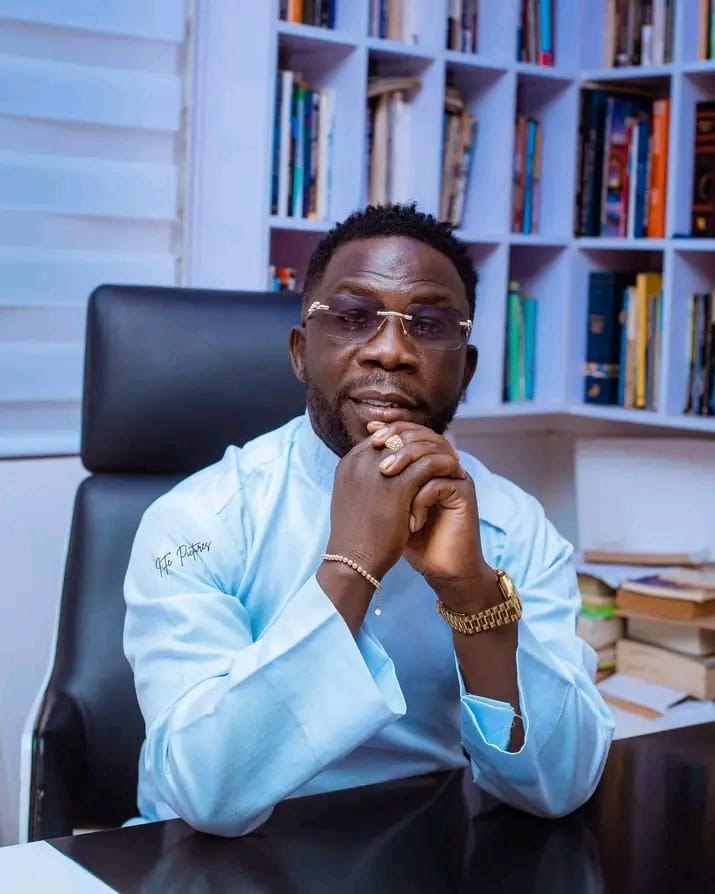
Prophet Israel Oladele of the Celestial Church of Christ, Genesis Global International Parish, has unveiled plans for the Luli Prayer Conference 2026, calling on members of the Celestial Church of Christ worldwide to embrace peace, unity and fervent prayers for Nigeria.
The Global Prophet made the announcement during a media briefing in Lagos, where he highlighted the spiritual significance of September 29, the founding day of the Celestial Church of Christ worldwide, describing it as a moment for thanksgiving, renewal and collective intercession.
According to him, this year’s conference will hold on September 29, 2026, at Genesis Global City, Alakuko, Lagos, bringing together Celestials, Christians and people of other faiths for a day of worship and prayer.
Prophet Oladele said the 2026 edition would place particular emphasis on praying for Nigeria as the country approaches another election cycle.
He noted that the church has a divine responsibility to continually seek God’s intervention for the nation’s peace, stability and progress, adding that the conference would extend beyond celebration to become a platform for prayers for Nigeria and the world.
“The Luli Prayer Conference is not just a celebration; it is a divine gathering where we unite in thanksgiving and seek God’s intervention for our nation and humanity,” he said.
The cleric also made a passionate appeal for unity within the Celestial Church of Christ, urging members across different parishes and regions to recognise their shared spiritual heritage.
He stressed that all Celestials are bound together by the legacy of the church’s founder, Reverend Samuel Bilewu Joseph Oshofa, whose vision continues to define the identity of the worldwide church.
According to Prophet Oladele, differences among members should never overshadow the common foundation laid by the founder, as unity remains essential to preserving the church’s mission.
He described Reverend Oshofa’s legacy as a rallying point capable of bringing together Celestials across the globe, regardless of branch, location or personal differences.
Looking ahead, the Global Prophet announced that the 2027 Luli Prayer Conference would coincide with the 80th anniversary of the Celestial Church of Christ, promising what he described as an “explosive” global celebration.
He said preparations for the landmark anniversary would begin immediately after this year’s conference, with activities expected to unite Celestials from around the world in celebrating eight decades of the church’s existence.
Prophet Oladele reiterated that preserving the unity of the Celestial family remains vital to honouring the vision of Reverend S.B.J. Oshofa and ensuring the continued growth of the church worldwide.
He concluded the briefing by urging members to embrace their shared identity, work together in love and continue praying for the peace and prosperity of Nigeria.
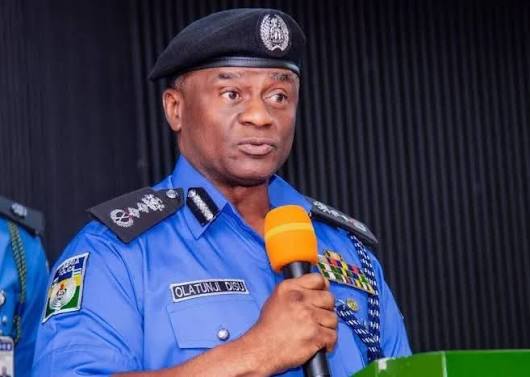
Inspector-General of Police Olatunji Disu has urged Nigerians to exercise restraint when recording police officers, describing the indiscriminate filming of officers as “very, very demoralising” to the force.
Disu made the remarks during a meeting with the leadership of the Nigerian Bar Association in Abuja, where he expressed concern that some Nigerians had begun recording police officers in situations beyond their official duties, including while eating at restaurants.
The IGP, however, acknowledged that citizens have a right to record police officers performing their duties in public. He urged Nigerians not to use such recordings to turn police encounters into social-media skits or entertainment.
The comments followed a March 17, 2026 judgment by the Federal High Court in Warri, Delta State, which affirmed the constitutional right of Nigerians to record police officers carrying out their duties in public spaces.
Justice Hyeladzira Nganjiwa, in the judgment, held that citizens could record police officers during stop-and-search operations and other public interactions for purposes including documenting and reporting their conduct.
The court also held that officers should wear visible identification, including their names and force numbers, while carrying out public duties.
The judgment further restrained police officers from harassing, intimidating or arresting citizens simply for recording their activities in public, or confiscating their devices for that reason.
The court awarded ₦5 million in damages over the violation of the applicant’s fundamental rights and a further ₦2 million in litigation costs.
The case was filed by lawyer Maxwell Nosakhare Uwaifo, who said he attempted to record an encounter with men he believed to be police officers during a stop-and-search operation along the Sapele Roundabout while travelling from Benin to Warri in May 2025.
According to the case, the officers allegedly threatened to arrest him and demanded that he stop recording. Uwaifo argued that citizens have a constitutional right to document the conduct of law enforcement officers performing public duties.
The court’s ruling established a distinction between legitimate documentation of police activity and physical interference with police operations. Citizens can record officers carrying out their duties in public, but the right does not extend to obstructing or interfering with lawful police operations.
Following the IGP’s recent comments, the Nigeria Police Force clarified that Disu was not seeking to ban citizens from recording officers.
Force New Media Officer Aliyu Giwa said the concern was about the misuse of recordings, particularly when police encounters are deliberately turned into entertainment or used to ridicule officers.
Giwa said responsible recording could benefit both citizens and police officers by providing evidence in cases of alleged misconduct while also helping to protect officers against false allegations.
The controversy has therefore centred on how the constitutional right should be exercised, rather than whether citizens possess the right to record police officers in public.

Nigeria’s press freedom environment remains under significant pressure, with journalists and other citizens facing arrests, harassment, intimidation and other restrictions on civic participation.
A 2025 Journalism and Civic Space Status Report by the Wole Soyinka Centre for Investigative Journalism documented 245 verified civic-space violations between January and December 2025, based on systematic monitoring of reports from 54 media organisations.
The report, titled Silenced Voices, Shrinking Space: Civic Freedoms Under Pressure, found that state actors were involved in 219 of the 245 incidents, with the Nigeria Police Force linked to 118 of those cases.
The violations covered more than attacks on journalists alone. They included restrictions affecting citizens, journalists and broader democratic participation, with arrests, detention, harassment and other administrative, legal and institutional measures among the documented forms of infringement.
The report recorded 145 non-violent incidents, representing 59.2 per cent of the total. Arrests accounted for 49 of those cases, while detention accounted for 21 and harassment for 15.
The findings also highlighted difficult working conditions for journalists, with stakeholders raising concerns about threats from state actors, politicians and political party agents.
Participants at a stakeholder dialogue accompanying the report’s presentation also pointed to low pay, insecure employment and economic dependence within parts of the media industry as factors that can weaken journalists’ ability to resist pressure and report independently.
A separate 2025 annual report by Media Rights Agenda documented 86 incidents involving attacks against journalists, media organisations and freedom of expression rights across 27 states and the Federal Capital Territory.
The report recorded arrests and detention as the most common form of violation, with 38 cases. It also documented 21 cases of assault and battery, as well as two killings, one involving a journalist who was killed in the line of duty.
The Nigeria Police Force was identified as the alleged perpetrator in 41 of the 86 cases recorded by Media Rights Agenda, accounting for nearly half of the incidents in its dataset. The organisation also said none of the documented cases resulted in a successful investigation or prosecution of perpetrators.
The wider picture is also reflected in international press freedom assessments. Reporters Without Borders currently describes Nigeria as one of West Africa’s most dangerous and difficult countries for journalists, citing monitoring, attacks and arbitrary arrests. Its 2026 World Press Freedom Index placed Nigeria 112th out of 180 countries, compared with 122nd in 2025.
The Committee to Protect Journalists has similarly documented arrests, attacks and harassment involving journalists in Nigeria. In a 2026 letter to President Bola Tinubu, the organisation said it had documented numerous cases of journalists being detained and mistreated, while also citing data from Nigerian press freedom organisations.
The WSCIJ report warned that the pressure on civic space has implications beyond individual journalists, as restrictions on expression and public participation can weaken accountability and democratic engagement.
-
Politics3 years ago
13 Ondo Assembly Members Disown Endorsement of Aiyedatiwa
-
Politics3 years ago
APC Group, Ondo Govt, Quarrel Over Money for Endorsement
-

 Trending News5 years ago
Stop unsavoury, inciting statements – DSS warns
-

 Others5 years ago
Adron Homes Celebrates 10 Years Of Housing Excellence
-

 Humanity5 years ago
President Buhari Commiserates With Ambassador Maureen Tamuno Over The Loss Of Her Father
-

 Others7 years ago
EX- CUSTOMS BOSS, IBRAHIM MERA’S DWINDLING FAME
-

 Business2 years ago
Bigi Carbonated Soft Drinks Treats 40 Consumers to an Epic Easter Movie Hangout
-

 Business2 years ago
Wema Bank Shines at Global SME Finance Forum Conference Awards 2024 …Awarded: • SME Financier of the Year (Africa) • Platinum Award for Best Financier for Women Entrepreneurs (Africa)