
Opinion
Dismantling the Mabeweje Defense: A Point-by-Point Rebuttal


Dapo Abiodun Ogun East critique intensifies as analyst questions roads, health spending and governance claims despite rising IGR

By Wale Onifade
1. The Revenue Figure Is a Deflection, Not a Defense
The claim that Ogun State generated N194.93 billion in IGR in 2024 is likely accurate on paper, but it is deployed as a non sequitur.
Also read: Lagos Assembly Confirms Adelabu as LASPA GM …Resolves LASUSTECH Land Dispute
IGR performance is driven heavily by Ogun’s industrial corridor, which predates Abiodun, Lagos proximity, and federal industrial policies.
Attributing that figure to gubernatorial leadership without isolating Abiodun’s specific policy contributions is textbook credit-harvesting.
More critically, high IGR coexists with deplorable road infrastructure in Ogun East, which is precisely the contradiction the original critique raised.
The revenue argument inadvertently indicts the administration: if the state is financially robust, why are Ogun East roads in crisis? The piece never answers this.
2. The Road Defense Is Circular and Self-Contradicting
Mabeweje argues that “50 percent progress in major multi-phase projects is a realistic and verifiable outcome.” This concedes incompleteness while framing it as achievement.
He then invokes federal classification of the Abeokuta-Lagos Expressway to shift responsibility, which is a legitimate partial point but strategically dishonest.
Most of the roads Ogun East residents cite, including Sango-Ijoko-Agbado-Oke Aro-Lambe-Akute, are not exclusively federal roads.
Blending federal and state road accountability into one defensive blob obscures culpability.
The piece also never cites a single completed road project in Ogun East by name, date of completion, or measurable impact. That absence is telling.
3. The Pandora Papers Dismissal Is Legally Thin
On the Pandora Papers, the governor’s only response was through an unnamed associate who admitted the non-declaration was an “oversight,” that he had meant to dissolve the companies but did not know it had not been done.
That admission, buried in Mabeweje’s “fully compliant” framing, is the most incriminating sentence in the entire record.
4. The Certificate/NYSC Controversy Is Dismissed, Not Resolved
The piece says these claims “have been repeatedly addressed in prior public records” without citing a single one. This is the most intellectually dishonest paragraph in the entire piece.
“Repeatedly addressed” is not the same as “resolved.” The NYSC controversy around Abiodun has persisted because the documentary trail remains contested, not because critics invented it.
Dismissing it as politicization while offering no counter-evidence is a rhetorical trick, and a detectable one.
5. The Re-Election Mandate Argument Backfires
Mabeweje concedes “narrow re-election margins in some areas” then pivots to “substantial support across the state.” This is a geographic sleight of hand. The Senate seat in question is Ogun East Senatorial District, not the entire state.
If his margins were thin precisely in Ogun East, that is the relevant data. Appealing to statewide popularity to defend a zone-specific mandate is analytically fraudulent.
6. The Executive-to-Senate Transfer Argument Is Untested
The claim that executive governance experience translates automatically into legislative effectiveness is asserted without evidence.
Many Nigerian governors who transitioned to the Senate became inconsequential presences, including examples within the South-West.
Legislative effectiveness requires different skills: coalition-building within a chamber, bill sponsorship, committee work, and constituency casework under a different constitutional framework.
Mabeweje presents the transition as self-evidently logical when it is, at best, a hypothesis.
7. On healthcare, the most damaging addition is the Ogun State’s own Medium Term Expenditure Framework data: only 21.5% of the health budget was actually spent between 2020 and the first half of 2024, with 78.5% unspent.
In 2024 specifically, only 9.2% of the health budget had been disbursed by mid-year, almost entirely on salaries. Mabeweje’s “significant investment in healthcare” collapses against the state’s own numbers.
On the 250-bed hospital, the facility was a lingering project from the Amosun administration, still only about 65% constructed when Abiodun claimed it.
On the AI Signature of This Piece
The text is structurally mechanical and stylistically sterile in ways that reveal automated generation or heavy AI editing. Specific markers:
List-padding at the close: The paragraph beginning “What Ogun East needs is a representative who…” is a classic AI conclusion scaffold, converting arguments into bullet-adjacent prose to simulate comprehensiveness.
Hedging language without specificity: Phrases like “measurable impact,” “strategic implementation,” and “executional credibility” recur without a single metric, name, date, or project to anchor them.
AI generates confident-sounding abstractions; human political writers use facts.
The closing aphorism problem: “History indeed rewards capacity, not rhetoric” is the kind of performative gravitas AI appends when it cannot close an argument substantively.
Defensive structure mirrors the original critique almost paragraph by paragraph, a sign of prompt-driven drafting (“respond to this criticism”) rather than organic argumentation.
Zero local texture: A genuine Ogun East political writer would name specific communities, ward-level grievances, or constituent voices.
This piece reads as if written by someone who has never been to Sagamu or Ode-omi in waterside.
The piece does not answer the foundational question my original analysis raised: given seven years, robust IGR, and federal access, why does Ogun East specifically remain underserved? Every deflection in Mabeweje’s piece circles around that question without ever landing on it. That is not journalism or political advocacy.
Also read: Lagos Assembly Confirms Adelabu as LASPA GM …Resolves LASUSTECH Land Dispute
That is managed silence, and it confirms rather than counters the original critique.


Bola Bolawole questions Nigeria’s democratic future, citing poverty, illiteracy, corruption and political rivalry as obstacles to credible elections

The All-Nigeria Rotary Peace Summit will examine how good governance, justice and equity can help Nigeria build lasting peace

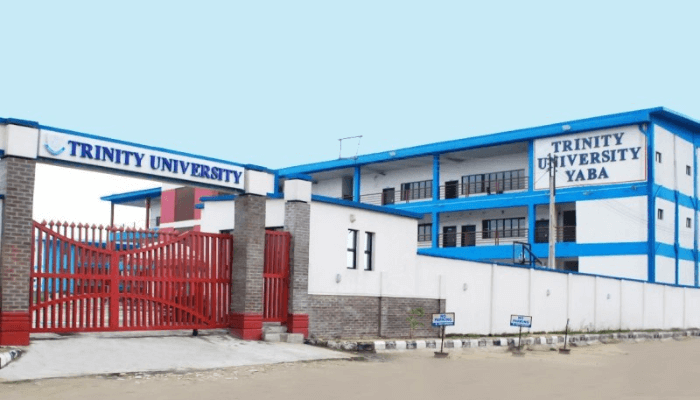
The above title is a combination of the theme of the 5th convocation ceremony of Trinity University, Yaba, Lagos, and the title of its convocation lecture delivered by Professor Bode Ayorinde. The Vice-Chancellor, Professor Clement Olusegun O. Kolawole, had kicked off the convocation activities on Monday, 12 October 2026, with a press conference, followed by other week-long activities which included the presentation of its Nursing Science and Medical Laboratory Science graduates for induction into the Nursing and Midwifery Council of Nigeria and the Medical Laboratory Science Council of Nigeria respectively.
From a private university that started with just nine pioneering students in 2019, Trinity University graduated a total of 323 students across various disciplines penultimate week, with 79 of them achieving First Class honours, two of whom got a perfect 5.0 Cumulative Grade Point Average (CGPA).
I wish every graduating student from Nigerian universities — private as well as public — had the opportunity to listen to Ayorinde’s convocation lecture titled “Navigating the Troubled World: Understanding the World, Confronting Its Troubles, and Equipping the Next Generation for Survival and Significance”, which was delivered on Thursday, 15 October 2026. A one-time member of the House of Representatives, Ayorinde is the Pro-Chancellor and Chairman of Council of Achievers University, Owo, Ondo State.
He started by saying he chose the word “navigating” deliberately because “a navigator does not simply react to events but studies the terrain, knows the direction of travel, spots the dangers, chooses a route, adjusts as conditions change, and keeps the destination in view.” According to him, the navigator must learn to “navigate a world of extraordinary opportunities and formidable challenges. It is a world of great scientific achievements and of persistent human suffering. Information is abundant, yet truth and wisdom are scarce. Communication has become instant but human beings have not necessarily become more understanding.”
To successfully make this journey, Ayorinde counselled that we must learn not to lose faith, integrity and sense of purpose. “The world is not merely a troubled place to be endured. It is a complex human environment to be understood, navigated and, where possible, transformed. Its troubles come from human choices, failing institutions, economic pressure, technological disruption, damage to the environment and spiritual disorientation.
They differ from country to country, from one person to another, and from one state to the next. Here in Nigeria, we face serious problems of security and welfare, and the opportunities for survival, let alone prosperity, are limited.” Hearing these, I sighed!
Our World Is Complex
Ayorinde then admonished that as graduates of a Christian university, their task is threefold. “First, to understand the world as it is. Second, to develop the competence and character to survive in it. Third, to use your education and faith to make it better.” He therefore built his lecture around three questions: What is the world we live in made of? What has made it troubled? How can we navigate this world and still shine?
Ayorinde divided the world into the physical and natural world (made up of land, water, air, forests, minerals, oceans, plants, animals, and the ecosystems which sustain life and which we depend on for food, shelter, energy, medicine, transport and industry); the human world or “the world of people”, as he called it; the political and institutional world (made up of governments, constitutions, courts, legislatures, regulatory authorities, international and business organisations — all of which are the bodies through which society exercises authority); and the economic and financial world (responsible for the production of goods and services, trade, employment and investment, together with banking, insurance, taxation, public finance and the distribution of resources — which all of us take part in, whether as workers, entrepreneurs or consumers).
He then charged the graduates that “understanding the economic world is essential. A degree gives you academic knowledge but financial literacy teaches you how to earn, save and invest.”
The other “worlds” that he listed include the scientific and technological world, and the question for the fresh graduates, he said, “is not whether technology will affect your life. It will. The question is whether you will understand it well enough to benefit from it and to manage its risks”; the cultural and moral world or the “world of values” where the role of education is not only to sharpen the intellect but also to “free the mind and equip the learner to weigh the values of the world around them before making choices”; and the international and interconnected world where, whereas nations are “separated by oceans and man-made barriers… yet nations are bound together by trade, finance, migration, technology, diplomacy, security arrangements and environmental systems. No nation lives in complete isolation.”
In clear reference to the Strait of Hormuz debacle, Ayorinde said “a conflict thousands of kilometres away can change the price of fuel in Nigeria.” While an interconnected world “creates room for cooperation and prosperity, it also lets shocks cross borders quickly”; as a result of which he counselled that we need to “understand the world beyond our immediate surroundings.”
Finally, he spoke of the spiritual world and described human beings as “moral and spiritual beings searching for identity, belonging and purpose in the world we live in… Rightly understood, spirituality does not pull us away from the problems of society. It strengthens our resolve to face them.”
Ayorinde then described the world in which we live as troubled, but added that this is nothing new. “Every generation has faced wars, whether local, national, regional or global, as well as disease, economic hardship, social tension and uncertainty. What sets our time apart is the speed, scale and interconnectivity of many of these challenges.”
Wars, geo-political rivalries and insecurity; poverty, unemployment and economic insecurity; inflation, indebtedness and rising cost of living; climate change and environmental degradation; misinformation, social division and the crisis of truth; loneliness, mental pressure and the crisis of meaning; the crisis of values and loss of purpose; and the crisis of drug abuse were some of the other “troubles” of our world that Ayorinde painted in a picture that troubles the soul.
Describing the rate of drug abuse, particularly among our youth, as “sobering”, he said the country’s first national drug use survey carried out in 2018 with the support of the United Nations Office on Drugs and Crime “found that 14.4 per cent of Nigerians aged 15 to 64 had used a psychoactive substance other than alcohol and tobacco in the previous year.” That, I dare to say, must be stale news! The figures must be far higher by now. He then advised that the National Drug Law Enforcement Agency be invited to talk to students on the adverse effects of drug abuse.
Adding Value to Degrees and Certificates
Ayorinde admonished that whereas university degrees remain valuable, they may no longer be enough.
“You must understand the community, the state, the country and the world in which you intend to live and prosper.” So the question for a university graduate is not just “Where can I find a job?” but “What problem can I solve? What value can I create? What can I contribute to national development?” You must also accept this basic fact that despite all the challenges the world faces, honest people still survive, and they go beyond survival to achieve significance.
So today’s graduating students should endeavour to anchor their lives in enduring values, be financially literate, use technology with judgement, look after themselves (health is wealth), expect disappointments and setbacks (tough times never last but tough people do), stay honest under pressure, live for others, and work hard. While Ayorinde stressed survival instincts, he insisted that this should not be seen as the ultimate. “We should aspire to be significant,” he added.
“The future is not shaped only by presidents, governors, chief executives or global institutions. It is also shaped by the decisions of ordinary people who choose to act responsibly. You may not all become famous. You may not all hold public office, build large businesses or become wealthy. But every one of you can become a person of integrity, competence and positive influence, and that is a worthy ambition.”
Yes, it is! You can guess that I thoroughly enjoyed the lecture, the opportunity cost of which was foregoing some other equally important engagements.
Appeal to the FG
The convocation ceremony took place the next day, Friday, 16 October 2026. In attendance were the university’s Chancellor, Dr Samuel Adedoyin, OFR, and his wife; Pro-Chancellor and Chairman of Council, Pastor Samuel O. Olatunji; the Executive Secretary of the National Universities Commission (NUC) was represented; members of the Board of Trustees and of the Governing Council; the Vice-Chancellor and principal officers of the university, Senate members, representatives of sister institutions, staff, students and invited guests.
In his address, the Vice-Chancellor explained why the university was holding two convocation ceremonies within one year. “The Governing Council of the university approved management’s recommendation to bring the convocation ceremony… near the calendar year that the students conclude their programmes of study and, thus, release them for the mandatory national youth service, their admission into foreign universities, which take them far and near, and prevent a situation where only a few of the students concerned show up, particularly after they have participated enthusiastically in their professional induction ceremonies, which usually take place before the convocation ceremony itself.”
Congratulating the graduating students, Kolawole said they had been found worthy of both learning and character, warning that no one who falls short in any of the two would be awarded the university’s honours.
The university has come a long way, he said, reeling out achievements which include increased staffing, additional classrooms, laboratories, offices and hostel facilities. “The Governing Council approved the promotion of Dr Christiana Modupe-Ade Adetunji to the rank of Professor, the first in the history of the university. In addition, five other academic members of staff are currently being processed for elevation to the professorial rank, and we trust that the process will be completed soon.”
Kolawole also disclosed that three academic programmes have been added to the programmes on offer in the university; all courses are accredited by the relevant professional bodies; the Senate of the university also recently approved the establishment of another Faculty to increase the number to four. The university has also taken interest in ensuring that its students have skills that can help them to be gainfully employed when they graduate, thereby making skills acquisition a compulsory part of its curriculum.
Kolawole did not end his speech before appealing to the Federal Government to allow “students in private universities and institutions… to benefit from the innovative financial support that those in public institutions enjoy under NELFUND. Similarly, private institutions and their workforce should also benefit from the support of TETFund because they are Nigerians who should not be discriminated against simply because they are studying or working in private institutions.”
Well said!
-
Politics3 years ago
13 Ondo Assembly Members Disown Endorsement of Aiyedatiwa
-
Politics3 years ago
APC Group, Ondo Govt, Quarrel Over Money for Endorsement
-

 Trending News6 years ago
Stop unsavoury, inciting statements – DSS warns
-

 Others5 years ago
Adron Homes Celebrates 10 Years Of Housing Excellence
-

 Humanity5 years ago
President Buhari Commiserates With Ambassador Maureen Tamuno Over The Loss Of Her Father
-

 Others7 years ago
EX- CUSTOMS BOSS, IBRAHIM MERA’S DWINDLING FAME
-

 Business3 years ago
Bigi Carbonated Soft Drinks Treats 40 Consumers to an Epic Easter Movie Hangout
-

 Business2 years ago
Wema Bank Shines at Global SME Finance Forum Conference Awards 2024 …Awarded: • SME Financier of the Year (Africa) • Platinum Award for Best Financier for Women Entrepreneurs (Africa)