
Opinion
Democracy at risk: Urgent call to halt rising intolerance of Governor Dapo Abiodun in Ogun East APC

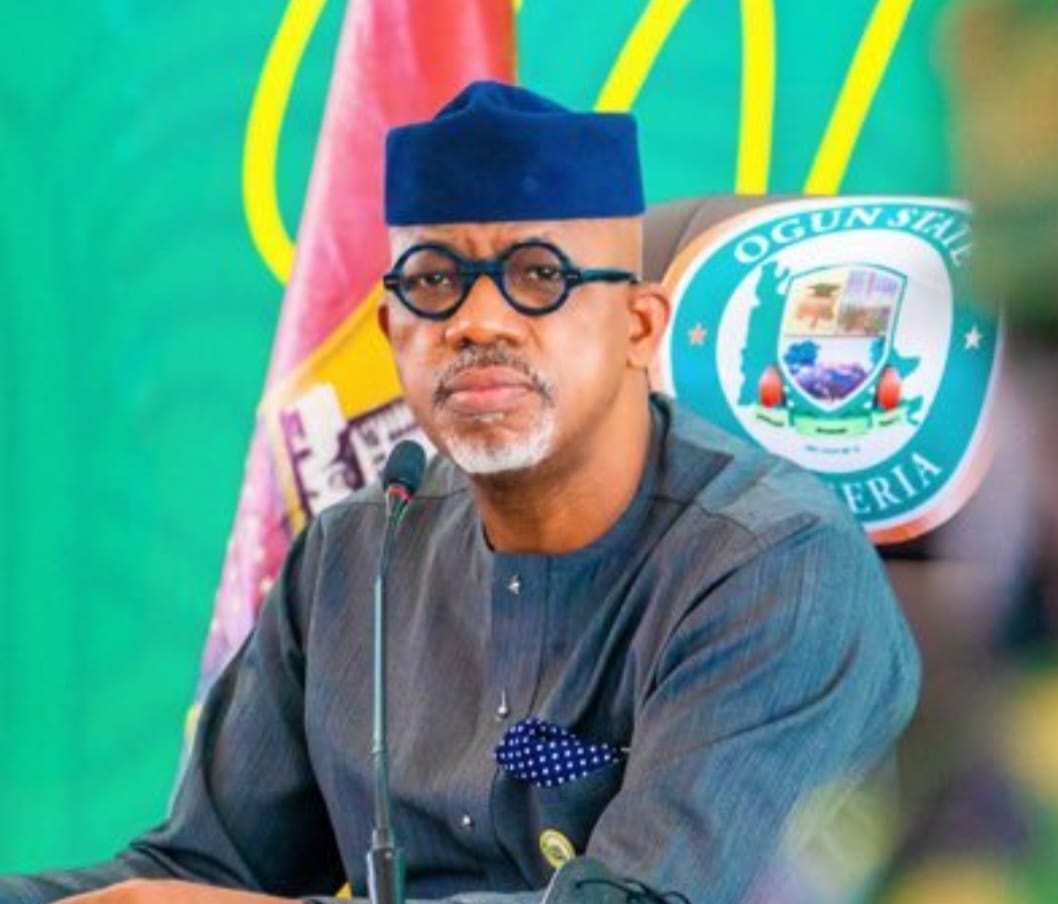
APC Ogun East crisis Abiodun deepens as allegations of exclusion and imposed consensus spark calls for urgent party intervention
By Sola Bankole

This report urgently draws the attention of our President, His Excellency, Asiwaju Bola Ahmed Tinubu, GCFR, the National Chairman of the APC, Prof. Nentawe Goshwe Yilwatda and the esteemed members of the National Working Committee of the party to the troubling developments in Ogun East Senatorial District.
Also read: Zaynab Otiti Obanor marks birthday with generous charity
Recent actions by the Ogun State Governor, Prince Dapo Abiodun, reflect a pattern of undue aggressiveness and political intolerance, raising serious concerns about internal democracy within the party. Such conduct, if unchecked, threatens the unity and credibility of the APC at a critical time in our national democratic journey.
Today Monday, 20th April 2026, a meeting hastily convened at Adeola Odutola Hall in Ijebu-Ode, Ogun State, reportedly involved the use of state apparatus and alleged financial inducements to mobilize some selected party elders/leaders and members with the sole aim to adopt him as the consensus Ogun East Senatorial Candidate.
More disturbing, directives were issued to deny access to the sitting Senator, Otunba Gbenga Daniel known as ‘OGD’, alongside other members perceived as his loyalists or aligned with those with aspirations of other political offices.
This deliberate exclusion undermines the principles of fairness, openness, and healthy competition that should define party processes.
The implications of these actions are far-reaching and deeply concerning. They risk eroding public confidence in the APC’s commitment to democratic values, while projecting an image of imposition rather than consensus.
At a time when the Renewed Hope Agenda of Mr. President emphasizes inclusiveness, justice, and national cohesion, such developments send conflicting signals that could alienate grassroots supporters and weaken party solidarity ahead of future electoral engagements.
It is therefore imperative for the national leadership to intervene decisively, reaffirming the party’s commitment to equity, transparency, and internal democracy.
A firm response will not only restore confidence among party faithful but also reinforce the APC’s image as a disciplined and principled political institution.
History will judge the strength of our leadership not by silence in the face of excesses, but by the courage to uphold justice and unity within our ranks.
It is high time that the National leadership of the APC openly take a decisive decision on the Candidates to be field for yhe elections and avert chaos in Ogun East and by extension, Ogun State in view of the desperation of Governor Dapo Abiodun.
Also read: Ogun East Ticket: How Dapo Abiodun Is Buying, Threatening And Manipulating His Way To A Senatorial Showdown
“A stitch in time, they say, saves nine.”
‘Sola Bankole, a Political Analyst/Observer, writes from Oru-Ijebu, Ogun State.


By Tai Emeka Obasi,
It is exceedingly terrible for clubs operating in a league as supremely elite as the English Premier League, EPL, to fraudulently cheat themselves to massive success.
Also read: Arteta Confirms: Myles Lewis-Skelly Stays at Arsenal
Rules are rules, and supposedly responsible club managements should comply with them in administering a game termed the beautiful game.
Manchester City is currently in the eye of the storm for all the wrong reasons.
A whopping 115 breaches were brought against the club, with reports now indicating that an independent commission found City guilty of 114 of them.
The club, however, maintains that the Premier League process remains ongoing, with significant elements still to be completed and subject to strict confidentiality.
Manchester City chairman, Khaldoon Al Mubarak, has appealed to the fans to remain calm and faithful, insisting that the club will continue to defend its position and pursue the available legal process.
According to reports, Manchester City is expected to appeal the verdict. The sanctions have not yet been announced, and the possible consequences could include a heavy fine, points deduction, stripping of titles or even relegation.
From the available reporting, however, there is no basis for football fans to start celebrating the prospect of receiving Manchester City’s trophies.
Even if titles were eventually stripped, the relevant period under investigation is 2009 to 2018.
During that period, Manchester City won three Premier League titles, in 2011/12, 2013/14 and 2017/18, as well as three League Cups, in 2013/14, 2015/16 and 2017/18.
That immediately puts a different complexion on the matter.
For instance, Manchester United finished runners-up to City in the 2011/12 and 2017/18 Premier League seasons, while Liverpool finished second in 2013/14.
But whether those titles would actually be reassigned to the runners-up is another matter entirely.
There is no automatic rule that says a stripped title simply moves to the team that finished second. Any such outcome would depend on the eventual sanction imposed by the relevant authorities.
The same applies to Arsenal and the League Cup. Arsenal were beaten by City in the 2018 final, but that does not mean Arsenal would automatically inherit the trophy if City were sanctioned.
Expert opinion has suggested that the eventual punishment could include a substantial financial penalty and a huge points deduction, potentially severe enough to threaten City with relegation.
But until the sanction is formally determined, nobody can say with certainty what punishment Manchester City will receive.
For Gunners fans, therefore, we should lower our expectations from City’s debacle. Even if Manchester City are eventually found guilty after the appeal process and even if they are relegated, Arsenal will not stroll to this season’s title.
Our last match against Brighton and Hove Albion is a huge warning that our squad is not as complete as it is generally acclaimed to be.
Also read: Arteta Confirms: Myles Lewis-Skelly Stays at Arsenal
Like we did last season, Arsenal must win the title on the pitch, not wait for Manchester City to lose it in the courtroom.
That is the real lesson.

Nigeria’s creative economy may already have the ingredients of a significant export industry, but its biggest challenge is not creating global demand. It is capturing more of the economic value generated by that demand.
Nigerian music, film, fashion and digital content have established audiences well beyond the country’s borders. Afrobeats alone has become a global commercial phenomenon, while Nigerian creators increasingly operate in international markets. Yet the growth of global reach raises a more consequential economic question: how much of the revenue generated by Nigerian creativity accrues to Nigerian creators, businesses and the wider economy?
That question sits at the heart of a broader opportunity for Nigeria. Unlike many exports, creative products can be developed domestically and sold repeatedly across international markets. A song, film, design, game or piece of intellectual property can generate income long after its initial production, creating opportunities for employment, foreign exchange earnings and business formation.
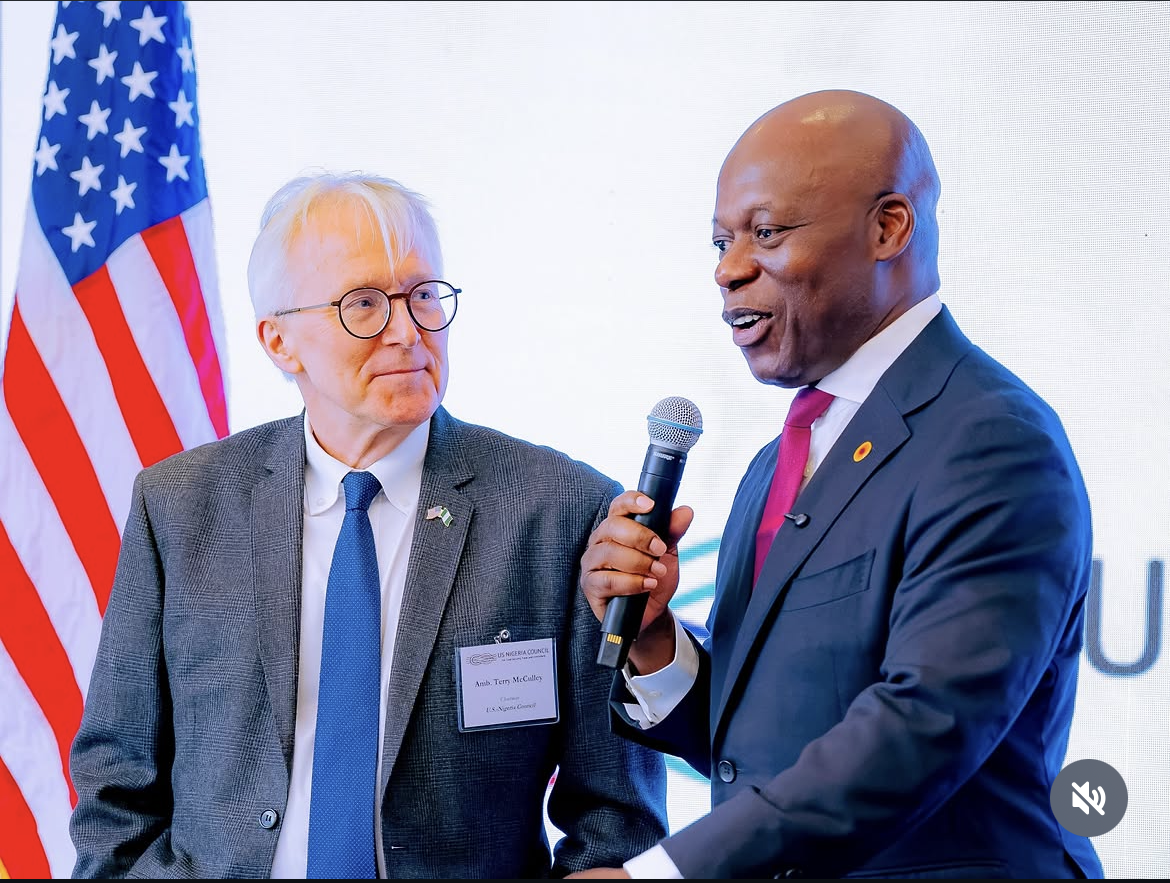
Speaking at the US-Nigeria Council breakfast during the 81st United Nations General Assembly, UNGA 81, Group Chief Executive of Oando Plc, Jubril Adewale Tinubu, argued that Nigeria should therefore rethink the economic status of its creative industries.
Nigeria’s creative economy is valued at about $6.4 billion, he noted, while the music industry generated more than $600 million in 2024. Afrobeats recorded more than 2.2 billion global Spotify streams, providing a measure of the international demand for Nigerian creative output.
The figures are significant, but the larger opportunity lies in what happens around them.
Global consumption of Nigerian creative content does not automatically translate into equivalent domestic economic value. The revenues generated by a successful creative product flow through a complex ecosystem of platforms, distributors, publishers, labels, investors, managers and rights owners. Without the financial and commercial infrastructure to ensure that Nigerian creators and companies retain a greater share of that value, rising global consumption can coexist with relatively limited domestic value capture.
This is why Tinubu’s proposition is less about entertainment policy than economic structure.
“We need to think about the creative arts differently: not just as culture and entertainment, but as an export industry,” he said.
Such a shift would require Nigeria to approach creative assets differently from traditional commodities. The country’s most valuable creative assets are often intangible, copyrights, catalogues, brands, audiences and intellectual property. Yet these assets are not always easily financed through conventional banking structures.
Developing investment models around them could allow successful artists and creative businesses to move beyond project-by-project income towards scalable enterprises. Stronger intellectual-property protection, more efficient royalty collection, international distribution networks and access to growth capital would also determine how much of the sector’s expanding global value is retained locally.
The foreign-exchange implications are particularly relevant. Nigeria’s export earnings remain heavily concentrated in commodities, especially oil. Creative exports provide another potential source of foreign revenue, while being comparatively less dependent on physical logistics.
That does not make the creative economy a substitute for traditional exports. Its importance is that it broadens the country’s export base and creates economic activity around skills, intellectual property and services.
The opportunity extends well beyond music. Nollywood, fashion, advertising, animation, gaming, publishing, photography and digital media increasingly intersect with global consumer markets. Each can generate export revenue, but each also requires commercial infrastructure to scale.
The central policy challenge, therefore, is moving from celebrating creative success to building an economy around it.
That means creating conditions under which creators can raise capital, protect their intellectual property, build companies and retain a larger share of the value their work generates internationally.
Tinubu captured the broader proposition succinctly: “Our creativity is cultural influence. It is also economic power.”
For Nigeria, the next step is converting that influence into a stronger domestic economic return.

By Bolanle BOLAWOLE,
Few days ago, a senior pastor of mine called and spoke fata-fata, as they say, about the state of our hospitals. His preambles were something else; it went something like this: Pastor Bolawole, I know you journalists are part of the problems of this country! You don’t tell our leaders the truth.
Also read: Details As Fresh 5,000 Teachers Take New Digital Tools Into Nigeria’s Classrooms
Is it because of the brown envelopes you collect from them? That is why you are in cahoots with them.” I had started wondering what was the matter before he hit the nail on the head: Someone dear to him was ill and they needed him or her (I can’t remember which one) to undergo MRI scanning but no MRI machine was available “in the whole of Ogun state”, he said.
Eventually, they had to hire a vehicle for N50,000:00 to convey the sick person to the Redeemed Christian Church of God (RCCG) medical facility at the Redemption City (formerly Redemption Camp) along the Lagos-Ibadan Expressway, Mowe, for the MRI to be done. “And they will say Redeemed (RCCG) is not doing anything!” As I made to speak, he rounded up with “I just felt I should let you know about this” and hung up.
Not a single MRI machine in the whole of Ogun state? It appears unbelievable. But come to think about it, is Redemption City, where they eventually found one, not in Ogun state? Syllogism, which I learnt in Philosophy 101, taught at the then University of Ife (now Obafemi Awolowo University), Ile-Ife, by Dr. Dipo Fashina (aka Jingo), as he then was, is instructive here. According to Google, a syllogism is a form of logical reasoning that uses deductive logic to combine two statements and arrive at a new conclusion.
A standard syllogism has three parts: The first part is the major premise, which is a general statement or rule that is assumed to be true. The second part is a minor premise, specific fact or case that relates to the major premise. The third part is the conclusion, which is the logical result that follows from the two premises.
A classic example is: All humans are mortal/Socrates is a human/Therefore, Socrates is mortal. Another example is: All mammals are warm-blooded/All dogs are mammals/Therefore, all dogs are warm-blooded.” Arising from the above, we can construct our own syllogism thus: Redemption City is in Ogun state/MRI machine was found at Redemption City/Therefore, there is an MRI machine in Ogun state! QED!
The curiosity of a journalist still pushed me to ask questions about MRI machines. What exactly are they and their use? I got the following answer: “An MRI machine is a medical imaging device that uses powerful magnets and radio waves to create highly detailed, cross-sectional pictures of the inside of the body.
Healthcare providers use MRI scans to evaluate, diagnose, and monitor a wide variety of medical conditions without using harmful radiation. It is especially effective for viewing soft tissues.
Common uses include examining the brain and spinal cord; diagnosing strokes, multiple sclerosis (MS), brain tumors, aneurysms, and spinal cord injuries.
It is also useful in detecting “tears in ligaments, tendons, and cartilage (such as in the knee or shoulder), as well as bone infections, evaluating heart damage from heart attacks, congenital heart disease, heart structure, and blood flow abnormalities. MRI machines are also used in checking organs in the chest, abdomen, and pelvis—including the liver, kidneys, pancreas, prostate, and uterus—for tumors, inflammation, or disease.
Waooh! If MRI machines are this useful; nay, indispensable, how come they are not commonplace in our hospitals? Are their costs prohibitive? I got the following response: “New clinical MRI machines typically cost between $1 million and $3 million while advanced 7T research systems can reach $7 million. Purchase Price Breakdown: New Systems: A standard 1.5T or 3T MRI scanner costs $900,000 to over $3.7 million for the hardware alone. Refurbished or Pre-Owned Systems: Used or refurbished units range from $100,000 to $700,000, depending on field strength (Tesla rating), bore size, and condition. Budget/Low-Field Open MRIs: Basic or low-field models (0.25T–0.5T) cost between $130,000 and $300,000.
Additional Ownership and Operating Expenses: The sticker price is only part of the investment; total cost of ownership involves heavy infrastructure and maintenance outlays: Installation and Site Preparation: Specialized room construction, radiofrequency (RF) shielding, cryogen venting, and structural reinforcement typically add $75,000 or more.
Maintenance and Cooling: Annual service contracts and maintenance range from $10,000 to $100,000 per year, driven heavily by liquid helium consumption used to keep superconducting magnets cold (though newer low-helium or helium-free technologies are emerging).
These are not costs that even a local government cannot afford in today’s Nigeria, especially with the quantum of money the Bola Ahmed Tinubu administration is heaping on the two tiers of government – state and local governments. But to make assurance doubly sure, as they say, I asked Google if it has any information on the availability of MRI machines in Ogun state. This is the answer I got: “Yes, an advanced MRI machine is available in Ogun state at the private specialist facility – Redeemer’s Health Village located in Redemption City, Mowe.”
It goes further to say: “Redeemer’s Health Village (RHV) houses a 1.5 Tesla MRI system featuring a wide 70 cm bore capable of accommodating plus-sized patients weighing over 300 kg. They also offer subsidized scan slots for low-income and indigent patients.” Thumbs up for RCCG, but thumbs down for Ogun state because “major public healthcare facilities in the state – such as the Olabisi Onabanjo University Teaching Hospital (OOUTH) in Sagamu and the State Hospital in Ijaiye have lacked functional on-site MRI equipment, with the State House of Assembly actively pushing for their procurement.”
It is common knowledge that our leaders at all levels devote scanty attention to the state of our hospitals, primarily because they don’t patronize them. They always fly abroad for medical treatment – and can also afford the charges in the best private hospitals available locally.
These days, we are inundated with stories of “lack of bed space” in virtually all our hospitals. The father of one of my choriters spent hours on his wife’s wrapper spread on the bare floor along the corridors of LUTH before he was attended to because there was no bed space. He died. My panel-beater’s 14-year-old girl was rejected in one government hospital after another because of lack of bed space. She died.
The unprofessional conduct of health workers is another worrisome experience that anyone unfortunate enough to approach government hospitals have had to tell ad nauseam, ad infinitum.
My treasured niece, Abosede Oluwayemi Edema, aged 54, died last June at the Federal Medical Centre, Ebute-Metta, Lagos after being left unattended from 2.00am until she fell into a coma at 4.00pm. Her blood infection, which should not have killed her if she had been adequately and promptly attended to, was left untreated till she died. Doctors’ negligence, nonchalance, unprofessional conduct, and the complicity and duplicity of her husband, sent her to an untimely grave. We can go on and on!
One story that made headline news last week was the death of one Mr. Olatunde John Kolawole, which reportedly occurred at the Lagos State Teaching Hospital (LASUTH), Ikeja. Kolawole had an accident while trying to avoid an errant tricycle rider; he promptly got to the hospital but reportedly was left unattended for many hours that eventually proved fatal.
One of the dead man’s siblings had this to say: “Your death was not just an accident… It was a failure of duty. The people sworn to protect life let you slip away. An accident didn’t kill you, but (the) negligence of LASUTH (did).”
I could feel her pain because I have been through that valley lately. It was not the cancer that my niece, Bose, bravely fought that eventually killed her; the concoctions applied on her by her husband and his family, caused the blood infection that took her to the hospital. The nonchalance of doctors at the FMC, Ebute-Metta, was the last straw that broke the camel’s back.
Issues arising from these incidents include the dearth of qualified and experienced health workers in our medical facilities. JAPA has turned our hospitals into a ghost of their former selves – and our governments appear to be doing nothing about it. They don’t patronise our hospitals anyway.
The remaining medical personnel are criminally over-worked and stretched beyond elasticity level; with many collapsing and dying on duty. Little wonder, then, that they have become somewhat nonchalant and cavalier while on duty. “Do your best and take a rest or leave the rest” now appears the mantra. In addition to shortage of hands, available facilities have not grown in tandem with population explosion, leaving gaps that cannot be filled overnight.
Factor in the widespread corruption cankerworm and you begin to see how deplorable, to say the least, the situation has become in our hospitals.
There also is the question of the free rein given to Okada and Keke riders in many South-west states.
It was the mercy of God that saved my family from mourning two years back when an Okada rider suddenly made a u-turn into the lane of my son’s power bike. All they need to hear is a shout of “okada”! Pronto, they stop! They turn! Anything! Something has got to be done about these pests.
But until citizens become more proactive and begin to hold the feet of our leaders to the fire, nothing will change. Fela said it all in his song, “Suffering and Smiling”: For as long as we keep smiling back at them, they won’t see our pains; but the moment we begin to bare our fangs, they will feel our pains – and act appropriately!
PHCH’s hideous tariff hike
I read somewhere recently that the Government said it preferred that consumers be metered than for PHCN to hike tariffs.
Either the government is not aware of what is happening in the power section or it is duplicitous and complicit. PHCH has silently been adjusting its tariff without any commensurate improvement in service delivery. I got to know this – and with empirical evidence – last week when I recharged. I usually do this on a yearly basis. PHCN surreptitiously reviews tariff upward and or upgrade end-users from a lower-paying to a higher-paying Band without notice. On September 22nd, 2025, I bought 1488.8 KWh for N50,000.00 (Fifty Thousand Naira) only.
One year after, specifically on September 16, 2026, the same N50,000.00 (Fifth Thousand Naira) could only fetch me 1015.5 KWh, a loss of 473.3 KWh! A whopping 46.61% increase within a space of one year without any commensurate improvement in services provided! Tell me, where are we going in this country?
Also read: Details As Fresh 5,000 Teachers Take New Digital Tools Into Nigeria’s Classrooms
When the government flaunts parameters and economic indices indicating that things are looking up, but citizens counter that their life isn’t improving, it is because of hidden and hideous costs such as PHCN’s that is not allowing the common man to enjoy the fruits of government’s efforts at revamping the economy. Must we fold our arms and look – and suffer in silence?
(Published in the ON THE LORD’S DAY column in the Sunday Tribune newspaper edition of Sunday, 27 September, 2026).
-
Politics3 years ago
13 Ondo Assembly Members Disown Endorsement of Aiyedatiwa
-
Politics3 years ago
APC Group, Ondo Govt, Quarrel Over Money for Endorsement
-

 Trending News5 years ago
Stop unsavoury, inciting statements – DSS warns
-

 Others5 years ago
Adron Homes Celebrates 10 Years Of Housing Excellence
-

 Humanity5 years ago
President Buhari Commiserates With Ambassador Maureen Tamuno Over The Loss Of Her Father
-

 Others7 years ago
EX- CUSTOMS BOSS, IBRAHIM MERA’S DWINDLING FAME
-

 Business2 years ago
Bigi Carbonated Soft Drinks Treats 40 Consumers to an Epic Easter Movie Hangout
-

 Business2 years ago
Wema Bank Shines at Global SME Finance Forum Conference Awards 2024 …Awarded: • SME Financier of the Year (Africa) • Platinum Award for Best Financier for Women Entrepreneurs (Africa)