Connect with us

Opinion

Amb. Yusuff Maitama Tuggar: A Leader Committed to Positive Change

Published

on

By Adebayo Adeoye

adron lemon friday

No doubt many have lost hope in the nation’s democratic process, but the beauty of democracy can always be restored when the people begin to enjoy the much-needed dividends of good and credible governance. This reality has brought many to the conclusion that the electorate must consciously choose leaders who understand governance and know their onions.

The realities of various protests and public criticism have opened the eyes of many to the urgent need for a new set of individuals who are ready and committed to facilitating positive change. There is a growing demand for a generation of sound minds with the courage to pull the bull by the horns and do the needful to move communities to a place where hope is not only rekindled but dreams are turned into reality.

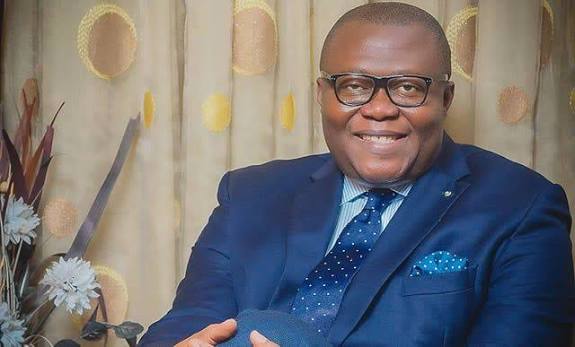
It is for these reasons that many people increasingly point to Ambassador Yusuf Maitama Tuggar, an experienced diplomat of high repute and a brilliant mind, as a symbol of hope for a new Bauchi State. This growing public yearning is fueled by his passion for using public service as a viable tool for societal re-engineering, rather than any personal declaration or ambition on his part.

As part of his grassroots advocacy and passion for community building and development, Tuggar, in June last year, expressed sympathy for affected traders and condemned the demolition exercise. He pledged support for their recovery and rebuilding efforts. The demolitions, which affected shops along Kano Road and other parts of the Bauchi metropolis, left thousands of small business owners in despair.
Understanding how pivotal education has become to the wholesome development of human nature, Amb Yusuf Maitama Tuggar the Minister of Foreign Affairs this January has granted a scholarship to 40 indigent students to study at the Aminu Sale College of Education in Azare, Bauchi State. No doubt upon the completion of their studies they will contribute immensely to the educational advancement of the zone.

In Nigeria, public leadership has long carried an unwritten expectation: that national prominence should never sever local responsibility. Community foundations linked to political figures often serve as informal bridges between state institutions and grassroots needs. Through the Ambassador Yusuf Maitama Tuggar in Bauchi State appears to reflect this tradition modest in publicity, yet steady in local impact.

Its most visible contribution lies in humanitarian welfare. Periodic distribution of food items, grains, and basic relief materials has provided short-term stability to vulnerable households, particularly in rural communities where inflation, climate pressures, and employment gaps remain acute. Through his intervention on the 15th of December 2024, the ECOWAS Emergency Flood Response supported 850 households across Katagum, Jama’are, Zaki, Gamawa, and Giade local government areas, with a total of 1,000 households benefiting from the initiative. Last he made a personal donation of 20 Million Naira to the same zone to cushion the effects of flooding.
This, among many other actions, has showcased his milk of kindness and deep concern for the welfare of the people.

The current Minister of Foreign Affairs has consistently demonstrated belief in policies and initiatives that have direct impact on the welfare of the people. Many believe that much can be achieved in Bauchi State through proper governance, adequate leadership and effective representation, values he has continued to exemplify in public service. His track record suggests that he would bring governance closer to the grassroots if ever called upon to serve at that level.

Beyond his current role as Minister of Foreign Affairs, Tuggar’s career is marked by deep-rooted political heritage, extensive private sector experience in the energy sector, and recent high-level diplomatic achievements.

Indeed, the growing calls for a bright mind like him to lead Bauchi State reflect the people’s desire to move away from recycling mediocrity towards purposeful leadership with clear vision and plans for governance.

42 / 100 SEO Score

Opinion

Yahaya Bello: Funding the Structure, Not the Pocket Is the Winning Formula in Kogi

Published

on

Yahaya Bello

By Seun Oloketuyi,

adron lemon friday

Former Kogi State Governor Alhaji Yahaya Bello believes one of the biggest lessons from his political experience is that money alone does not win elections. For him, where that money is directed can make all the difference.

Also read: Gbenga Daniel Urges Stronger Security at Freedom Online 7th Annual Lecture

Bello shares this perspective in Seun Oloketuyi’s forthcoming book, How to Win an Election in Nigeria, where he reflects on the political strategy behind his electoral successes in Kogi State.

According to him, campaigns should focus less on handing money directly to voters and more on building a strong political structure capable of mobilising support at the grassroots. “Fund your structure, not the voter’s pocket,” Bello said.
He argued that last-minute cash distribution should not be mistaken for a winning strategy, stressing that genuine political strength is built long before election day.

For Bello, the people and networks supporting a candidate are more important than simply having money to spend when voting is around the corner.

His experience in Kogi, he said, showed the importance of having a well-organised structure that could translate political support into actual votes.

Bello’s reflections offer a different perspective on the role of money in Nigerian elections, particularly the difference between spending to build political strength and spending simply to influence voters at the last minute.

Also read: Gbenga Daniel Urges Stronger Security at Freedom Online 7th Annual Lecture

More of his thoughts on electoral strategy, grassroots politics and the lessons from his years in Kogi politics are featured in Seun Oloketuyi’s How to Win an Election in Nigeria, scheduled for release on September 6.

66 / 100 SEO Score
Continue Reading

Opinion

The Zamfara Masterminds: Loyalty, Structure and the Unstoppable Engine of the 2027 APC Campaign

Published

on

Zamfara


adron lemon friday

​By Adeola Agoro,


​When in 2011 Abdulaziz Yari became the governorship candidate for the All Nigeria Peoples Party (ANPP) in Zamfara State just after one term of Alhaji Mahmud Aliyu Shinkafi, many political observers were not surprised.

Also read: Governor Dauda Lawal woos investors, highlights Zamfara’s economic opportunities at CEO Forum

​Although Mahmud Shinkafi, former deputy governor to His Excellency Senator Ahmed Sani Yerima was one of the few deputy governors to ever be solidly supported by their former bosses to succeed them in 2007, political realignments and party shifts altered the dynamic relationship after a short while in office.

​So it was no surprise when Abdulaziz Yari, a deeply loyal protégé and key political strategist of Yerima got the party ticket and won the Zamfara governorship election in April 2011.

​Over the years, both Yerima and Yari have worked together to make the state a formidable political stronghold and a reference point for administrative continuity.

​Unlike most states carved out of older states, which often grapple with initial structural hurdles, Zamfara State, since its creation from the old Sokoto State in October 1996 and its democratic consolidation under Senator Yerima’s pioneer executive tenure starting in 1999, has continued to stand tall and maintain a distinct, independent presence on the political map of Nigeria.

​The Political Strengths of Yerima and Yari

​Senator Ahmed Sani Yerima (The Godfather & Stakeholder Mobilizer): A consummate strategist and the undisputed patriarch of grassroots mobilization in Northern Nigeria, Yerima’s ability to build bridges across political, traditional and religious institutions gives him an extraordinary capacity to unite diverse interest groups and command deep-rooted loyalty at ground zero.

​Senator Abdulaziz Yari (The Master Tactical Administrator & DG): A seasoned political organizer who served as ANPP State Chairman, House of Representatives member, two-term Governor of Zamfara State (2011–2019) and Chairman of the Nigeria Governors’ Forum (NGF), Yari brings fierce operational discipline, tactical executive coordination and national consensus-building skills to the table.

​That both men who are undisputed political gladiators are now positioned at the core of the 2027 APC Presidential Campaign Council, with His Excellency Senator Abdulaziz Yari serving as Director-General and His Excellency Senator Ahmed Sani Yerima serving as Stakeholder Mobilizer, is a masterstroke in political planning, strategic alignment and electoral organization.

​To understand the political weight behind the All Progressives Congress (APC) Presidential Campaign Council, one must look at the unique narrative of Zamfara State – a political domain built on deep-rooted loyalty, strategic leadership and administrative continuity.

​When the political landscape was redrawn during Nigeria’s return to democracy in 1999, Zamfara stood ready to chart its own course.

Under the executive leadership of His Excellency, Senator Ahmed Sani Yerima, the state established a distinct identity, proving that it could stand tall, independent and politically formidable on the national stage.

​The Unbroken Bond

​Long before stepping into executive leadership, Abdulaziz Yari had built a reputation as an exceptionally loyal party administrator and key strategist.

Throughout these roles, Yari viewed Yerima not just as a leader, but as a political mentor.

​Unlike many political dynamics across the country where mentor-protégé relationships fray over time, the bond between Yerima and Yari has remained unbroken.

Their connection is built on deep-rooted mutual respect: Yari has consistently maintained absolute loyalty to his mentor, while Yerima has always respected Yari’s sharp administrative mind and organizational capacity.

​A Strategic Masterstroke for 2027

​Today, the inclusion of these two formidable leaders at the core of the APC Presidential Campaign Council brings that exact same spirit of loyalty, structure and strategic brilliance to the national stage.

​With His Excellency, Senator Abdulaziz Yari bringing his tactical discipline, administrative efficiency and nationwide consensus-building skills to the campaign as Director-General and His Excellency, Senator Ahmed Sani Yerima deploying his legendary grassroots influence and bridge-building capabilities as Stakeholder Mobilizer, President Bola Ahmed Tinubu’s re-election campaign possesses an unbeatable leadership engine.

​While Yari coordinates the national operational machinery as Campaign DG, Yerima engages high-level stakeholders, political blocs, traditional institutions and grassroots groups across all 36 states.

​Their combined track record, vast national networks and deep popularity bring an unbeatable structural shield to the presidential campaign, guaranteeing a sweeping, decisive victory for the APC.

Also read: Governor Dauda Lawal woos investors, highlights Zamfara’s economic opportunities at CEO Forum

​Their story stands as living proof that when loyalty, strength, administrative genius and mutual respect come together, political success naturally follows.

70 / 100 SEO Score
Continue Reading

Opinion

Has Tinubu lost his grip on the Nigerian media?

Published

on

Tinubu


adron lemon friday

By Bola BOLAWOLE,


You must have heard it said that President Bola Ahmed Tinubu has the Nigerian media in his pockets. You may want to wonder how “deep” Tinubu’s pockets are that he can swallow all Nigerian media organizations! In some sense, that idiomatic expression can be true: Tinubu belongs to the tribe of a few Nigerians with “deep” pockets; meaning that they have near-limitless financial resources and clout with which they can buy or influence anything and anyone. Don’t forget that even the Scriptures say “money answereth all things” (Ecclesiastes 10: 19 KJV).

Also read: Governor Dauda Lawal And The New Zamfara State

You will also remember that a similar thing was said of the late MKO Abiola, winner of the annulled June 12, 1993 presidential election, the freest and fairest in Nigeria’s chequered history, but which was annulled for inexplicable reasons by military dictator, Gen. Ibrahim Babangida.

But is media ownership not too diffused in Nigeria to allow an individual to put the entire Nigeria media in his or her pockets – including even social media? Are proprietary interests not too conflicting and competing for that to happen? Are today’s Nigerian journalists not too educated, too enlightened, too sophisticated, too urbane, and too professional for a single individual to pocket all of them? What of ideological differences, with many journalists fiercely rejecting pecuniary, “brown envelop” and yellow journalism even at the point of the bayonet?

Many of today’s journalists are proud species and professionals to the core who are committed to their watchdog role of holding the government accountable to the people, regardless of whose ox is gored and without exercising any fear or favor. Yes, there are “white legs” in every profession but Professor Richard A. Joseph’s “prebendalism”, where sentiments such as religion, ethnicity, race, personal relations, and such other sense of entitlements trump merit will hardly allow for a single individual to pocket the media in its entirety.

I got thinking along these lines after reading two of my highly respected columns last Sunday. One was Sonala Olumhense’s “Sonala Olumhense Syndicated” titled “The 2027 election is a survey on stupidity” published on the back page of the Sunday PUNCH newspaper of August 30, 2026.

It was in a very, very bad taste. Sonala, as the Editorial Page editor of The GUARDIAN newspaper, had invited me to the Editorial Board of the then self-proclaimed (and justifiably so!) ‘Flagship” of the Nigerian media. In fact, my first-ever publications in any newspaper were in The GUARDIAN under Sonala’s editorship. They were titled “If I should die unemployed” and “How not to plead for prisoners of conscience.”

Sonala’s line of argument in his piece referenced above hurts, but not the choices he made because he is entitled to them – although, in the same breath, he had denied other Nigerians the right to make their own choices! That faux pas did nothing to diminish Sonala in my estimation, but I felt sorry he went overboard in his desperation to pull Tinubu down but, in the end, promoted vacuity when he said “When there is the kind of menace that APC represents, CREDIBLE OPPOSITION IS ANYONE ELSE (my emphasis) on the ballot.” No sir!

The second of my “Sunday tonic” that got me thinking was Idowu Akinlotan’s “PALLADIUM” on the back page of THE NATION newspaper of Sunday, August 30, 2026 titled “Osun, 2027: APC contends with hostile media.” Reviewing the Ekiti and Osun off-season governorship elections, the one won by APC and the other lost by it, Akinlotan concluded that the Nigerian media was (has become) anti-APC/Tinubu. Can that be true? When and where did it start? Was the media at any point pro-APC/Tinubu? What went wrong? First, snippets from Akinlotan’s piece before we draw our own conclusions:

“Hard as they tried, leaders of the All Progressives Congress (APC) failed to penetrate the reinforced armour of media establishments opposed to their electoral successes since 2023. The ruling party’s fortunes have not changed. Most loathe the ruling party. That the APC won in 2023 without their help and despite their opposition has left the said media enraged. As the party prepares for the 2027 campaigns, and given the unyielding posture of the said media houses, it must by now have made up its mind to go it alone. The party is unable to win new media friends, and has perhaps given up.

“To make a headway (in the) next polls, it must first reflect on the deeply contrasting Ekiti and Osun governorship elections. On June 20 and August 15, the two elections were conducted, barely two months apart, with few intervening variables, and in the same Yoruba region. If it hopes to win next year, it should review newspaper publications of the period June 21 and 22; and August 16 and 17, all representing before and after the poll reports. The media reports were both revealing and troubling.

“Before the Ekiti poll, the papers displayed a sense of resignation, warning darkly about the consequences of rigging the poll or denying the electorate the right to elect a governor of their choice. But the poll went seamlessly, the outcome predictable weeks before, as former governors of the state queued behind the incumbent, Biodun Oyebanji. For media houses which had repeatedly rhapsodised democracy and freedom of choice unfettered by electoral shenanigans, it was expected they would capture the popular mood and abjure the projection of their beliefs and prejudices on the electorate. From casting doubt on the integrity of the polls in their June 20 reports, the media went on, a day after the poll on June 21, to feign objectivity that Mr. Oyebanji was Ieading in the vote count amid vote-buying allegations, unconvincing turnout, and other insinuated malfeasances. There always had to be a but!”

Mr. Akinlotan was right to a great extent. I had written off the Ekiti election, ever before it was conducted, as a coronation of sorts because the opposition, embroiled at the national and local levels by court cases, INEC deregistration threats, internal squabbles and inability to form a united front, did not stand a chance in the election.

The media grudge that Akinlotan spoke about here was actually visible.

But when it came to Osun where opposition Gov. Ademola Adeleke was giving APC a hell of trouble, the opposition media, if I may call it that, came alive, and when Adeleke was coasting home to victory, they celebrated it the way they never celebrated Oyebanji in Ekiti; same when Adeleke was eventually announced as the winner of the election.

Let me start by saying that Akinlotan’s advice that Tinubu should ignore the “opposition” media and go it alone will not serve the president any good.

A better option is to find out what went wrong with a man who courted and cultivated the media, and who was loved and supported by it, and why the reverse is now the case – if we are to take Akinlotan’s narrative as the gospel truth.

Besides, enough evidence has emerged that elections are not won here on social media or by newspaper endorsements.

One: Tinubu started on a wrong footing with the first appointment of a spokesperson. The guy was clearly a misfit for the office. Two: The initial in-fighting within Tinubu’s media team seriously harmed and hampered their performance and dented their image. Three: The truculence of some of Tinubu’s presidential aides, instead of being accommodating and conciliatory, offended and isolated many of their professional colleagues. Four: Some names on Tinubu’s media team embarrass true professionals. Five: Has Tinubu’s media team been proactive enough? How often, how persistently, do they reach out to their professional colleagues with vital information? They should constantly court and cultivate their professional colleagues and not expect it to be the other way round.

Historically, the media is adversarial. It started by fighting the Colonial government for the country’s Independence. I do not think the media has totally purged that advocacy from its bloodline.

It is an aberration when we describe the government and the media as “partners in progress.” The media’s duty is to hold the government accountable to the people by constantly holding government’s feet to the fire – but it should also give kudos when it is richly deserved, just like Babafemi Ojudu did recently on the Lagos-Calabar expressway signature project of the Tinubu administration.

Traditionally, the media supports the underdog. In Osun, Gov. Adeleke was the perceived underdog whereas in Ekiti, the disparate opposition parties were the underdog.

Professionally, the media is sensational. Bad news makes better news. Hence we were taught that when a dog bites a man, it is not news but when a man bites a dog, bedlam! Sensational news sells newspapers better and faster. Ask readers themselves! They determine what they would like to read!

Respectfully, I do not think Akinlotan’s scare-mongering is the right way to go.

Tinubu should instead re-invent his media team to become more conciliatory and accessible to their professional colleagues – be they so-called opposition or friendly media. Engage with them more frequently.

If people are made to see the other side of any issue, many of them will become more supportive and compassionate.

When people are shut out, deliberately or inadvertently, you lose the right to complain that they are hostile.

Besides, dissenting voices oil the wheel of democracy. Effective media relations takes no one as an enemy but as inescapable partners in the same Nigerian project, even if we see things from different or conflicting prisms or perspectives.

Office-holders should always have it at the back of their mind that there is a terminal date to every appointment.

Also read: Governor Dauda Lawal And The New Zamfara State

If in doubt, ask yourself where are the men and women who occupied the office and sat on the same seat that you occupy today? You, too, will become history!


(Published in the TREASURES column on the back page of the NEW TELEGRAPH newspaper of Wednesday, 2 September, 2026).

72 / 100 SEO Score
Continue Reading

Trending News